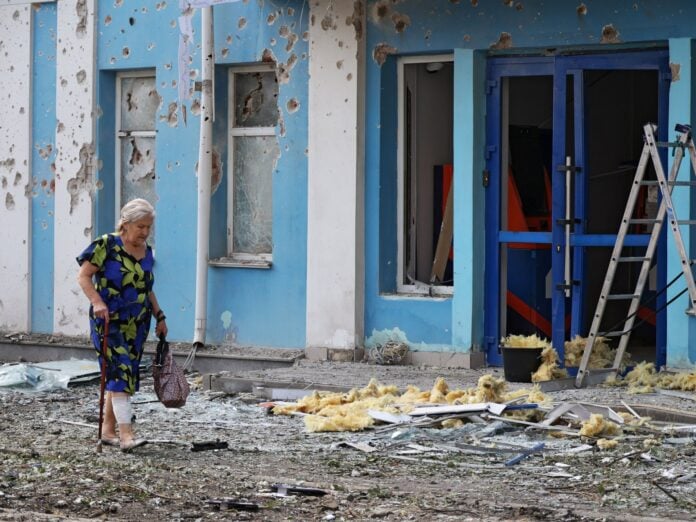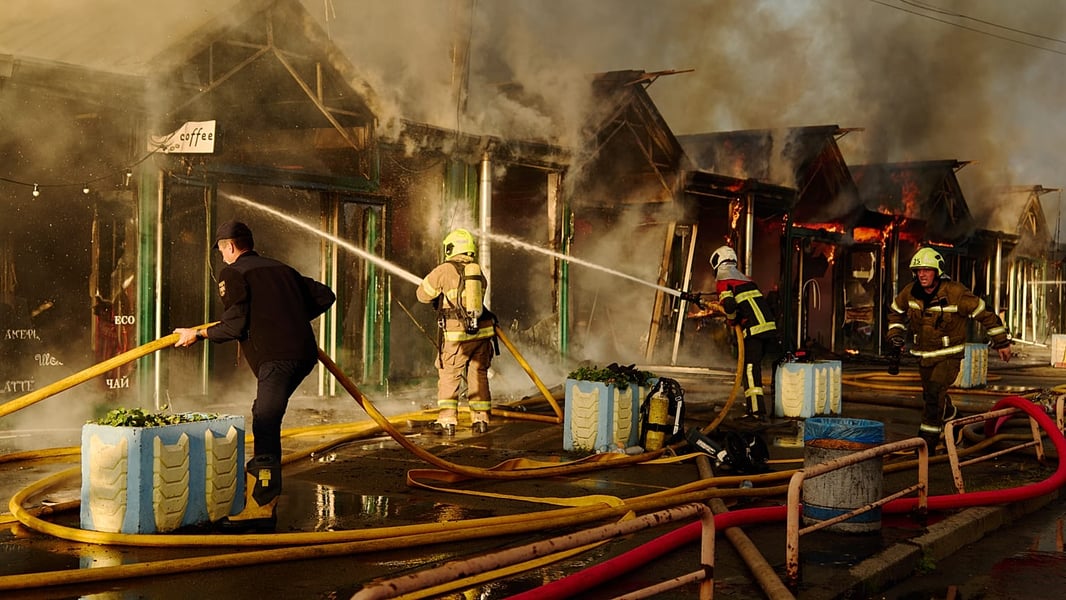

KYIV — The fires at Wildberries’ main distribution warehouse in Koledino were still visible from the roadside well into Sunday morning. The 250,000-square-metre facility, the company’s largest logistics centre, had taken multiple direct hits in what Ukrainian commanders described as one of the largest aerial drone operations of the entire conflict — a campaign that went after not just military installations but the commercial network woven into Russia’s wartime supply chain.
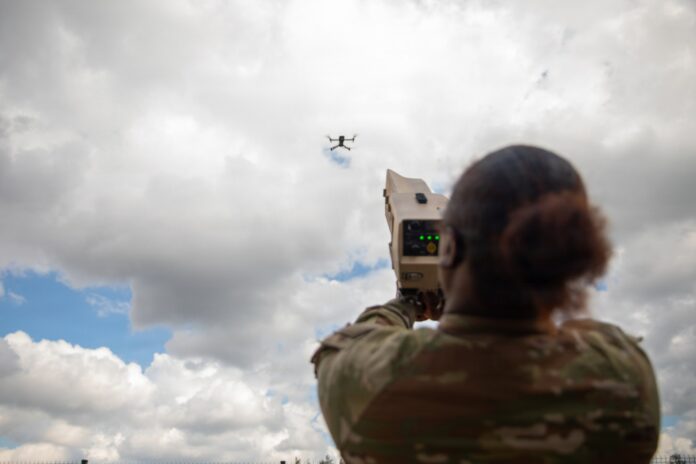
Ukraine launched roughly 600 drones toward Moscow Oblast overnight as part of a broader wave that Russian authorities claimed to have intercepted across several regions. Moscow Mayor Sergey Sobyanin said air defences had shot down 201 drones over the capital’s region alone. Russian authorities put the total number of Ukrainian drones intercepted across the country at 822, a figure that still leaves the question of how many reached their targets without a definitive answer from either side.
What struck Koledino was not in dispute. The Wildberries warehouse complex burned for hours. Ukraine’s Defense Ministry said the overnight strikes had put seven of the ten largest Wildberries logistics centres out of operation — a figure that, the Kyiv Independent reported citing Ukraine’s General Staff, would represent a significant disruption to a company that functions as a logistics backbone for parts of Russia’s military economy. Wildberries sells drone components and body armour on its marketplace. Its banking arm was placed under European Union sanctions in July. Ukraine’s General Staff said the targeted facilities “directly supply the needs of the Russian Armed Forces.”
This is a shift in targeting logic that has been building for months. The overnight strikes were not aimed at a military base or a fuel depot in the conventional sense. They went after the commercial infrastructure that doubles as military supply — a retail and logistics conglomerate whose product inventory includes the equipment Ukrainian soldiers are working to prevent from reaching the front line.
A second major target made the military dimension explicit. Kombinat Kamensky, a state enterprise in Rostov Oblast, was set ablaze. The plant manufactures solid rocket fuel for Russian missiles. Rostov Oblast Governor Yuri Slyusar reported five people killed and one injured in the region as a result of the attack. Two more died in Belgorod, and two were killed in the Moscow region. On the Ukrainian side, Russian strikes killed two workers at a Kryvyi Rih steel plant, two more in Zaporizhzhia, and one in the Sumy region. Twelve people died across both countries through the overnight exchange.

President Volodymyr Zelenskyy, speaking after the strikes, used the aftermath to press Western governments directly on air defence. Russia had launched more than 1,500 drones into Ukraine in the past week alone, he said. “European missile interceptors should be mobilised to help Ukraine rather than be allowed to sit in storage,” Zelenskyy said, pointing to defensive systems across the continent that he believes are being withheld not by operational limitation but by the politics of escalation management.
The overnight exchange arrived alongside a separate Russian claim: that Moscow has begun deploying North Korean ballistic missiles against Ukrainian territory. If confirmed, it would mark a further internationalisation of the conflict — North Korean hardware joining a battlefield already altered by the disclosure, earlier this week, that Ukraine has been conducting British BAE Systems drone strikes deep inside Russia for six months. That campaign targeted Russian oil refineries and has prompted Moscow to warn of intensified hybrid operations against British infrastructure.
Euronews reported that the combined toll from the overnight exchange stood at twelve dead across both countries, with the worst single-location loss occurring in Rostov Oblast near Kombinat Kamensky.
Peace talks remain stagnant. There is no active negotiating framework, no ceasefire process running alongside the exchange. The 12 people killed overnight — at warehouses, near missile plants, at a steel works — died in a conflict whose diplomatic track is not operational.
What Russia has not disclosed is how long Kombinat Kamensky’s production lines will be offline. Solid rocket fuel is not a commodity that can be easily diverted or rapidly replaced; a plant that manufactures it for missile programmes cannot simply reroute output the way a civilian logistics firm shifts cargo. Whether Sunday’s strike represents a meaningful disruption to Russian missile production or a setback measured in days is a question that will take weeks to answer — and may never be answered publicly at all.