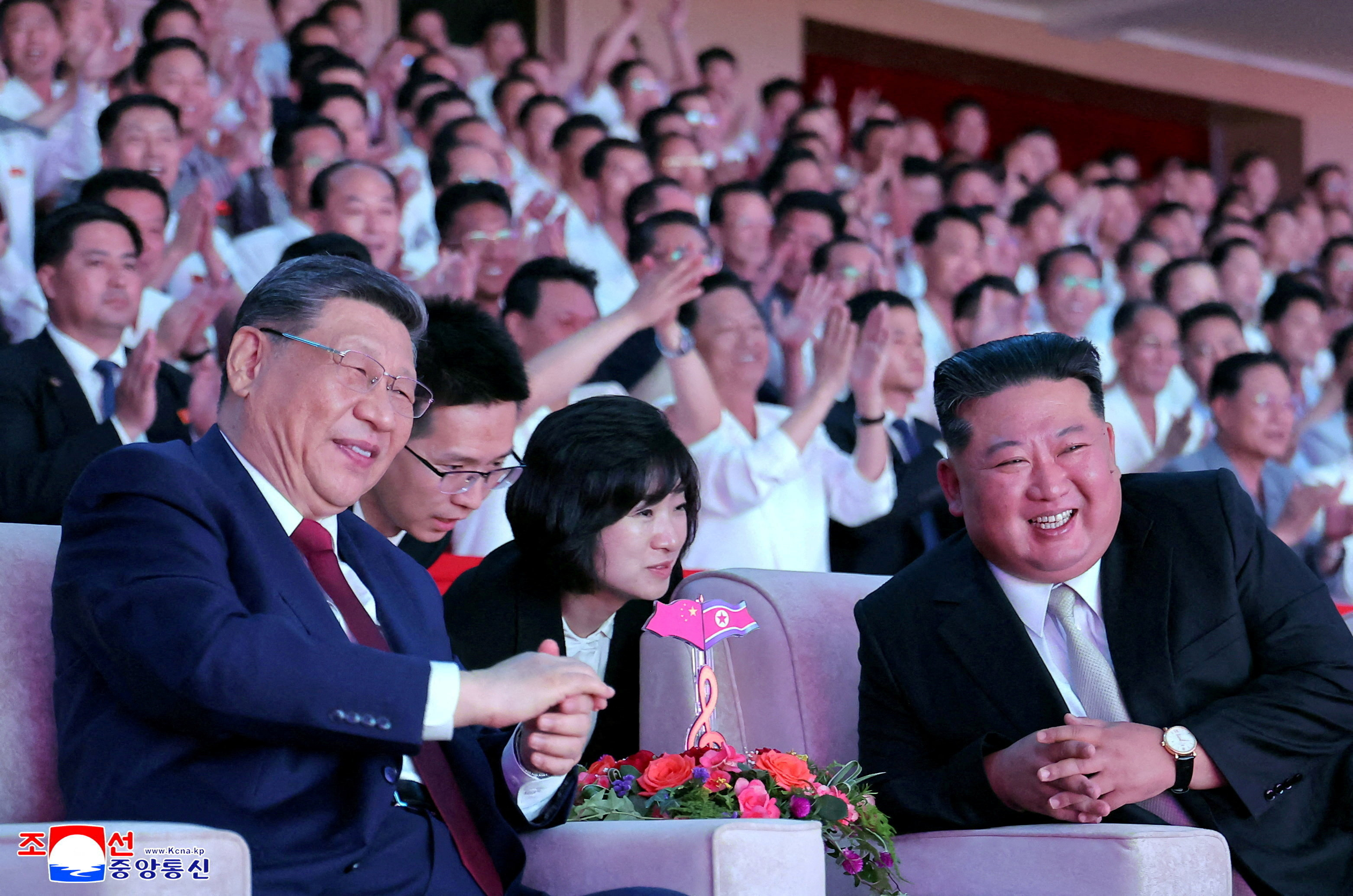

PYONGYANG — The most consequential sentence spoken in Asia this week did not come from Washington, which was busy with its war in the Gulf and its quarrels at home. It came from Kim Jong Un, standing beside Xi Jinping in Pyongyang, declaring that the friendship with China is now North Korea’s most important top-priority strategic work. Seven years after Xi last set foot in the country, the neighbor Pyongyang had drifted from came back, and was handed the front of the queue.
Xi’s two-day state visit, his first foreign trip of the year, closed on Tuesday with the two leaders pledging closer strategic communication and broader exchanges across politics, economics and culture, Al Jazeera reported. The Korean Central News Agency carried Kim’s language about the greatest state guest, and his observation that Xi choosing North Korea for his first travel of the year was the most encouraging support his country could receive. The two governments timed the visit to the 65th anniversary of their friendship treaty, which Xi said had reached a new historical starting point.
The substance, as read out by China’s state broadcaster, was deliberately unglamorous. Xi offered cooperation in trade, agriculture, construction and technology, the vocabulary of a patron rebuilding a relationship through goods rather than declarations. China already dominates North Korea’s external trade, and the offer amounts to widening the one economic artery the sanctioned country has. No figures were attached, and neither government published the details of what was agreed.
What made the trip necessary is the relationship neither leader named. North Korea spent the past two years growing close to Moscow, sending troops and weapons into Russia’s war in Ukraine and collecting technology, fuel and hard currency in return. Analysts who watch the relationship note that Pyongyang’s military-industrial complex is now more intertwined with Russia’s than with China’s, an extraordinary development for a state Beijing has subsidized for seven decades, and precisely the kind of drift a Chinese leader travels to correct in person.
Seen from Beijing, the timing was nearly free of cost. The United States is consumed by an expanding war with Iran that is draining its attention, its munitions and its credibility in Asia. Washington’s response to the Pyongyang summit was, in effect, nothing. There was no counter-summit to convene, no leverage to apply, and no appetite in an administration fighting on several fronts to open a Korean one.
The silences in the readouts were as deliberate as the language. Neither side mentioned North Korea’s nuclear arsenal, denuclearization, or the United States at all. The omission is itself the policy. China has stopped pretending that disarmament is the organizing purpose of its Korea diplomacy, and North Korea has stopped pretending it is negotiable. What remains is two neighbors organizing their relationship around trade and strategy, on terms that treat the American agenda as someone else’s conversation.
For Kim, the visit completes a remarkable repositioning. Three years ago he was the isolated partner pleading for engagement; today he is courted by both Moscow and Beijing, able to price his alignment and collect from each. The Russian relationship brought him military technology and a battlefield for his army to learn on. The Chinese relationship brings the economy, the border trade, and the diplomatic shelter of a permanent Security Council seat. Holding both at once is the strongest external position the North Korean state has occupied in decades.
For Xi, the trip serves a larger reorganization of the region around Chinese weight. The same week, Washington’s own president was describing China as a peer power to be accommodated rather than confronted, and American allies from Seoul to Canberra were recalculating what the Iran war means for the reliability of their security guarantor. A world in which the United States spends record sums on nuclear weapons while its diplomacy thins is one in which a quiet two-day visit to Pyongyang moves more than an American carrier group.
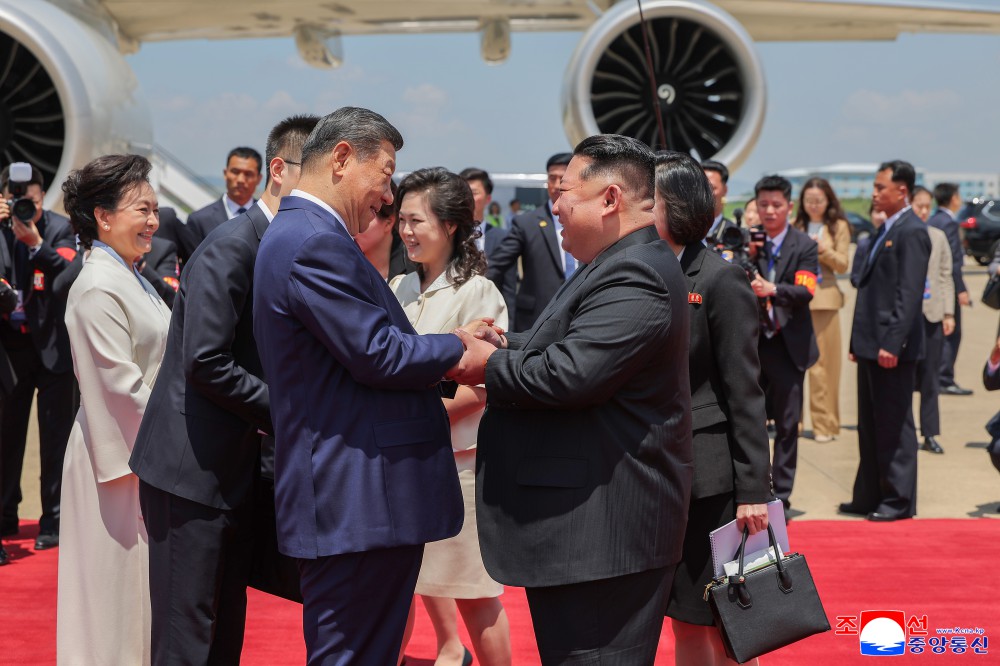
The summit’s lavish staging carried its own message. Kim and his wife, Ri Sol Ju, met Xi and Peng Liyuan at the airport, an honor Pyongyang grants almost no one, and KCNA’s coverage ran warm in a register the agency reserves for relationships the leadership intends to keep. The optics were aimed as much at Moscow as at Washington: the patron of first resort has resumed his seat.
What the visit did not resolve, and what neither readout addresses, is what Xi asked for in return. Whether Beijing sought limits on the Russian military relationship, assurances about provocations on the peninsula, or simply first claim on North Korea’s alignment is not public, and may not be for years. Nor is it clear what the promised economic broadening amounts to in practice, in an economy under sanctions that China itself voted to impose in a different era.
What is clear is the direction. The Asian order that American planners describe in their documents, alliances holding a line against an isolated Pyongyang and a contained Beijing, looked different this week from the tarmac of Sunan airport. The two states Washington spent decades trying to separate stood together, planned their next decade, and did not find the United States worth mentioning.