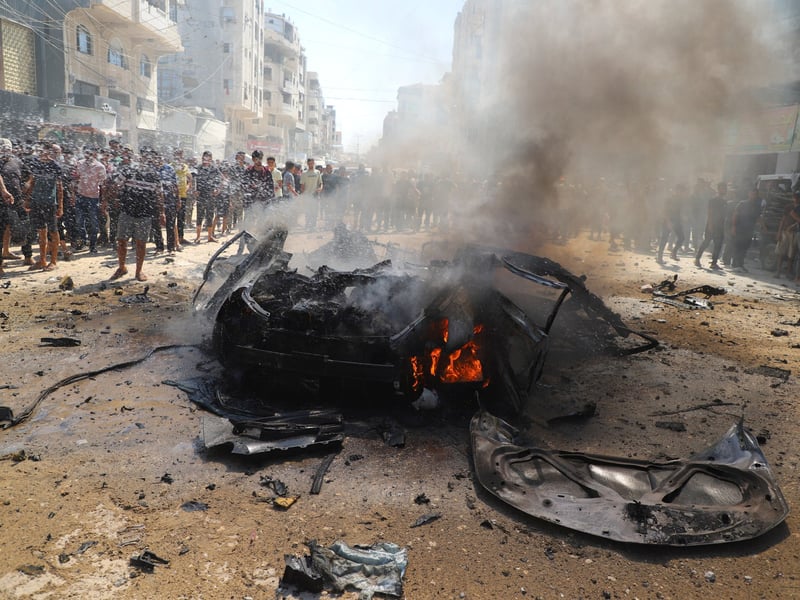
DUBAI — In the Bamani district near Sirik, on Iran’s southern coast, the taps ran dry on Tuesday. Two reservoirs that fed the area had been hit in an American airstrike, and the water that families there depend on went with them.
The strikes opened a new and more direct phase of a war that, only a day earlier, both Washington and Tehran had described as winding down. US Central Command said its forces began launching what it called self-defense strikes against Iran at 5 p.m. Eastern time, at President Trump’s direction, in retaliation for the downing of a US Army Apache helicopter off the coast of Oman.
What had been a fight waged mostly at sea and in the air, through intercepted drones and contested patrols, has now moved onto Iranian soil and into the lives of civilians far from any military target. It has done so at the very moment the two governments were telling the world the worst had passed.
Central Command said in a statement that the operation was a “proportional response to unjustified Iranian aggression,” tying it to Monday’s loss of the Apache, which it said an Iranian Shahed drone had struck while the aircraft patrolled regional waters. The two crew members were pulled from the sea by an unmanned boat and reported unhurt, an outcome the Pentagon had confirmed before the retaliation began, after Trump first blamed Iran for the downing of the Apache helicopter.
An armed, crewed gunship is a different order of loss from the drones that have made up most of the American attrition in this war, and its downing handed Washington both a casualty it could point to and a reason to act. Central Command said the cause of the original incident remained under investigation even as the retaliation it set off was already underway, a sequence in which the response outran the inquiry.
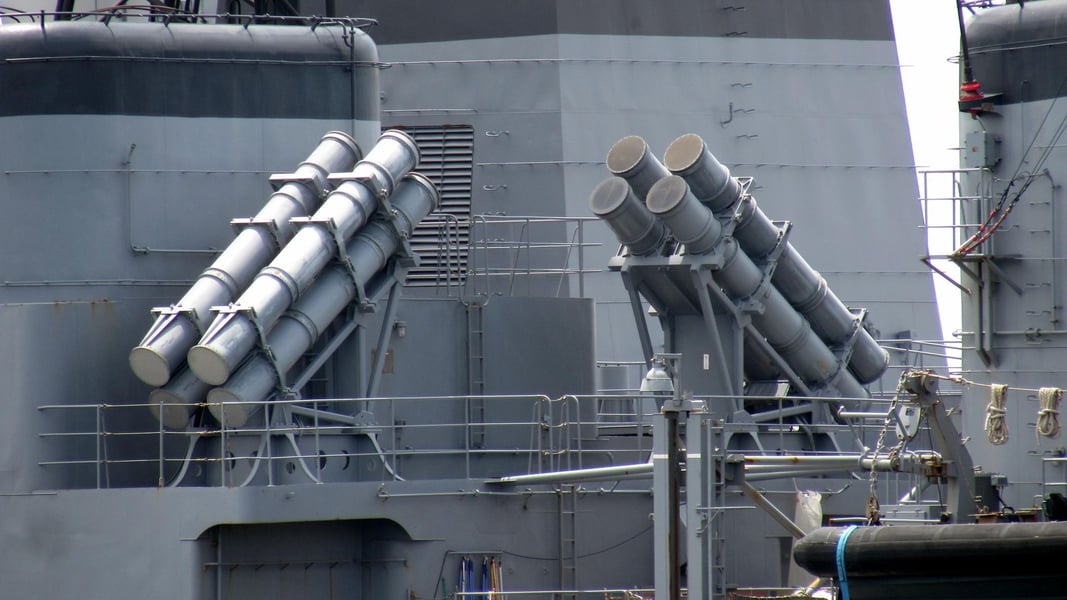
The first wave concentrated on Iranian air defense and radar installations around the Strait of Hormuz, the chokepoint through which close to a fifth of the world’s oil passes. The strikes in the south reached further than that. CNN reported that two water reservoirs were among the sites hit near Sirik, cutting supply to the surrounding district and turning a military operation into a civilian one.
The strait is the reason the rest of the world watches a fight like this one. Trump has said plainly that bombing Iran into submission would close the waterway to shipping for months, a cost he has described as worse than the deal he insists is within reach. That calculation, more than any battlefield map, has set the limits of the American campaign so far.

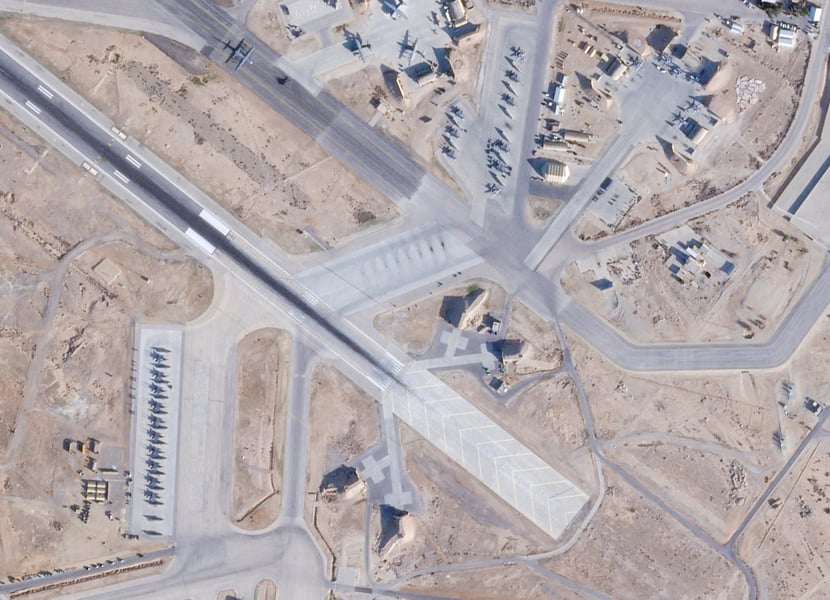
Iran did not wait long. Within hours the Islamic Revolutionary Guard Corps said it had launched missiles and drones at American targets across the Gulf, and Iran’s Tasnim news agency reported that the Guard’s naval force had struck at the headquarters of the US Fifth Fleet at 2:30 a.m. local time. The extent of the damage, if any, was not clear by Wednesday morning, and Central Command said its forces had defeated the incoming fire.
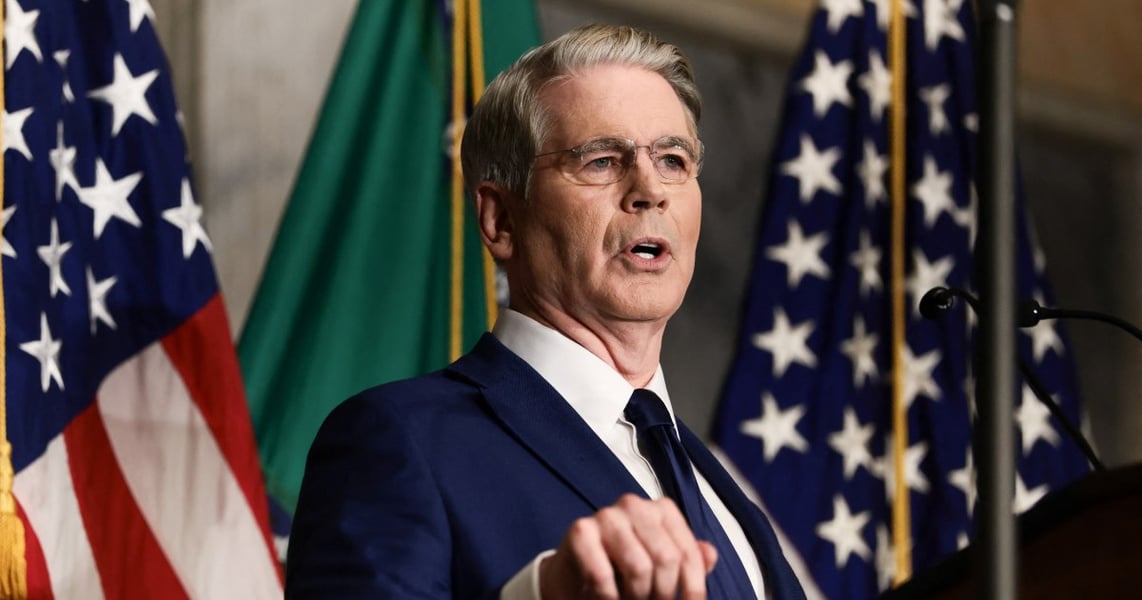
Trump reached for the language of strength. The American response, he said, was “very strong, very powerful.” A US official, speaking to CNN, cast it more narrowly, as a warning shot meant to deter Tehran without wrecking the indirect talks the two sides have been holding. The boast and the caveat do not sit easily together, and which one Tehran decides to believe will shape what comes next.
The timing is what makes the escalation so jarring. Days earlier Israel and Iran had signaled an end to their heaviest exchange of direct strikes since the ceasefire that took hold in April, a lull that had sent oil prices to a seven-week low on the expectation that the region was stepping back from the edge. That expectation now looks premature.
Israel, never bound by the US-Iran understanding, has gone on bombing Lebanon throughout, and its strike on Beirut on Sunday helped reignite the very exchange both capitals had just claimed to be ending. Iran’s military had warned in the days before the American strikes that continued aggression would be met with what it called “much more severe and crushing measures,” Al Jazeera reported.
For Iran, the loss of water in a coastal district fits a pattern it has been documenting for weeks. Earlier American and Israeli strikes had already knocked out an estimated 7 percent of the country’s power generation, Tehran has said, as summer heat builds. The Apache that set off Tuesday’s strikes went down during the same campaign of aggressive patrolling near Iran-controlled islands that has repeatedly brought American aircraft within range of Iranian air defenses.
Gulf states that host the American bases now in Iran’s sights have spent the war trying to stay out of it, and each new exchange tests that position. Kuwait and Bahrain have intercepted Iranian fire aimed at US forces on their soil more than once, and debris has fallen on residential neighborhoods. None of those governments had commented on Tuesday’s strikes by Wednesday morning.
The indirect talks have circled the same impasse for weeks. Iran has pressed for sanctions relief, access to its frozen assets and an end to the American blockade of its ports. Washington has demanded the reopening of the strait and limits on Iran’s nuclear program. The US official’s insistence that Tuesday’s strikes would not hinder those negotiations is, for now, an assertion rather than a result.
Iran’s foreign ministry had not issued a formal statement on the American strikes by Wednesday morning, and President Masoud Pezeshkian had not spoken publicly. The Guard’s account, posted on its own channels, stood as the official Iranian version of events.
Whether Tuesday’s strikes are the warning shot the US official described, or the opening of the wider bombing campaign Trump himself has warned would close the strait for months, is the question now hanging over the Gulf. The reservoirs near Sirik are a small thing measured against a regional war. For the families who rely on them, they are not. By Wednesday the water had not come back.