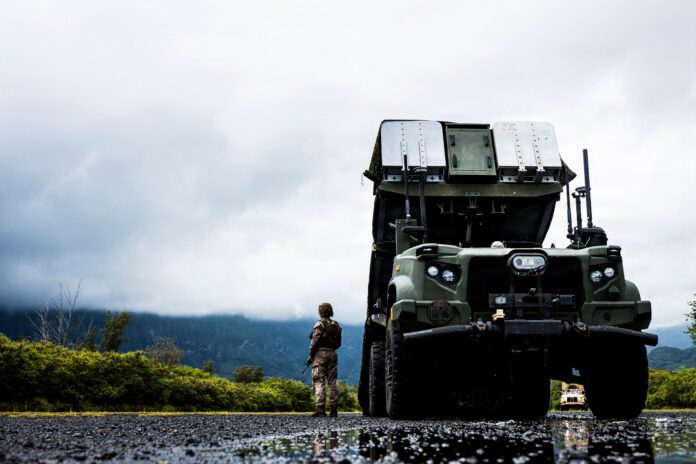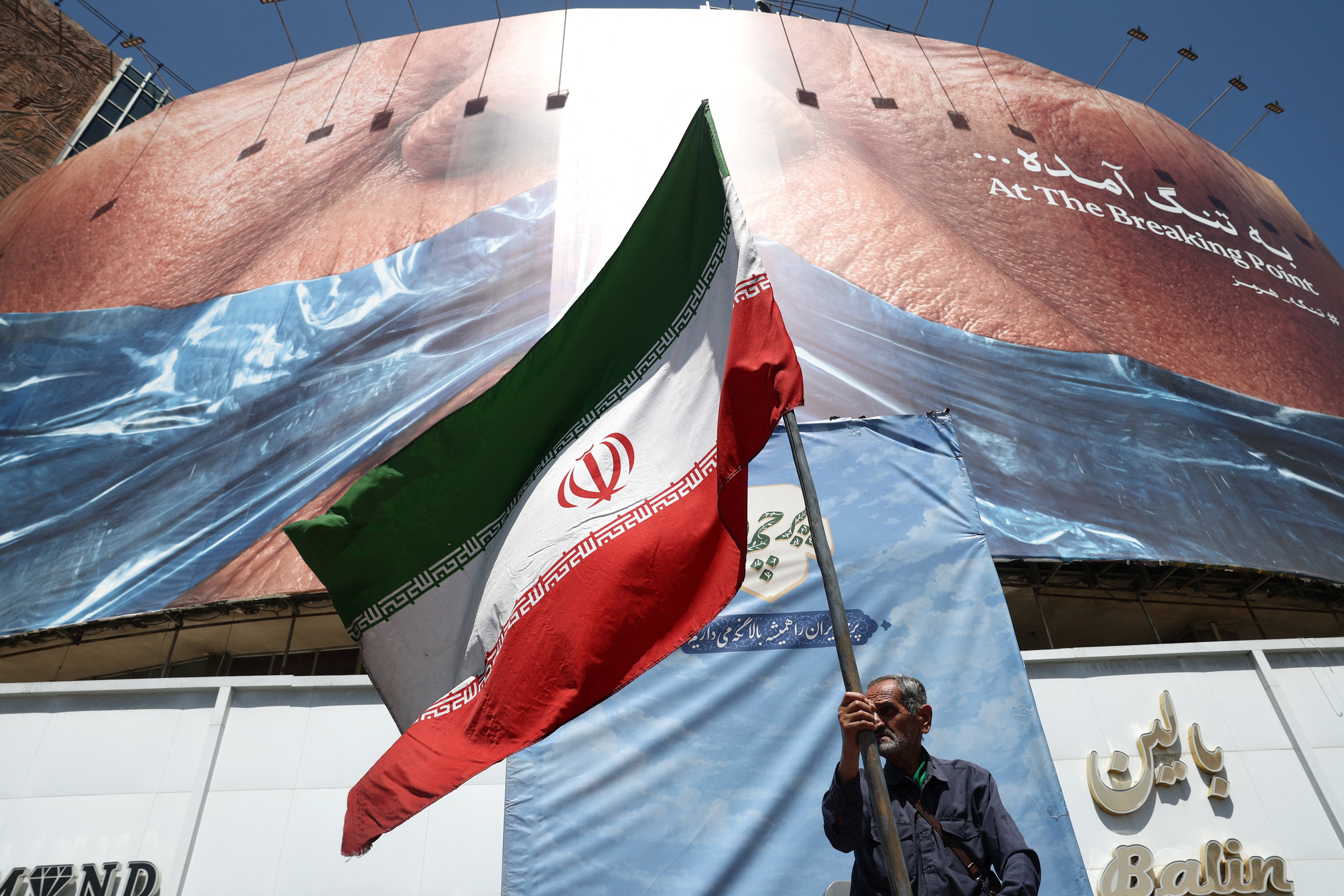

DUBAI — For the second time this week, the war in the Gulf was fought on Iranian soil. American aircraft struck two sites on Iran’s southern coast on Friday, at Qeshm Island and Goruk, after US forces shot down four Iranian drones over the Strait of Hormuz. Hours later, Iran’s Revolutionary Guard fired seven missiles toward the US bases in Kuwait and Bahrain from which much of Washington’s campaign is run.
What Friday made plain, again, is the shape of a war the United States still calls a ceasefire. A US naval blockade has strangled Iran’s ports since the spring, American forces strike Iranian territory at will, and each time Iran answers it is cast in Western capitals as the side breaking the peace. Iran did not agree to a truce that left its ports under siege and its coast open to attack, and it has said so plainly. The April arrangement survives mainly as a word Washington uses to describe a campaign it has not stopped waging.
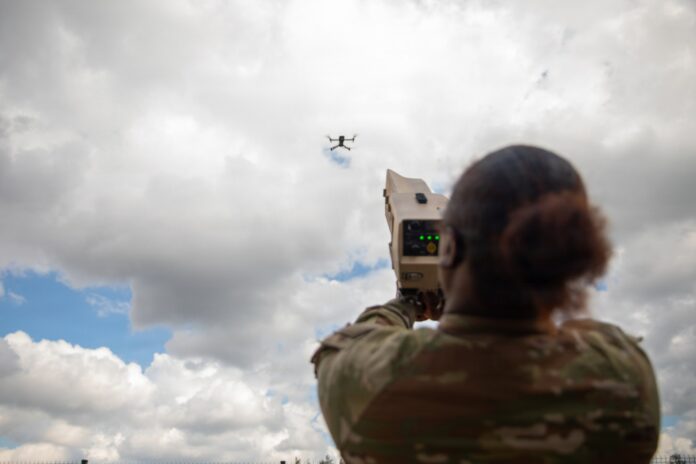
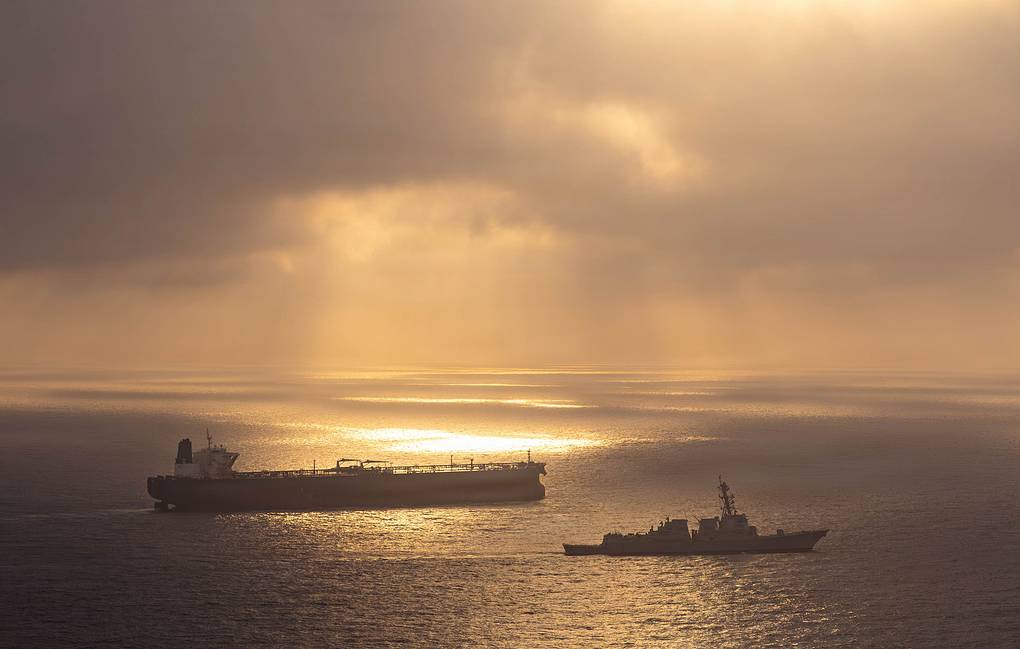
CENTCOM said the drones “posed an immediate threat to regional maritime traffic,” and that American forces “continue to operate freely in regional waters while fully enforcing the ongoing blockade against Iran.” The second half is the part that matters. The strait has carried almost no commercial shipping for months because the United States has sealed Iran’s ports, an economic siege that Tehran has condemned as an illegal act of war and whose shortages reach well beyond Iran’s borders.
The strikes followed a pattern Washington has repeated since it and Israel opened the war on Iran on February 28. American forces hit an Iranian coastal site, Iran answers against the bases within its reach in Kuwait and Bahrain, and the Iranian fire is the half of the exchange that gets named as aggression. Qeshm Island, the target on Friday, sits on Iranian territory at the mouth of the strait and has been bombed before. The choice this time was coastal radar, the instruments Iran uses to watch its own coast.
Friday’s launches were the latest answer in a week of them. US air defenses downed a second wave of Iranian drones over Kuwait on Tuesday, part of a tempo that CENTCOM commander Adm. Brad Cooper laid out for the Senate Armed Services Committee in May, when he said American and allied systems had intercepted more than 6,000 attack drones and 1,500 ballistic missiles since hostilities began. The figures are CENTCOM’s own, unverified by any independent party, and they are offered to justify a campaign far larger than the word ceasefire admits.
Iran has described the sequence as what it is, a response. Its account, carried by the Tasnim news agency, called the missiles a strike on “enemy bases in the region” using “aerospace missiles,” the Revolutionary Guard’s term for its ballistic forces. Tehran framed the launches as retaliation for the American strikes on its radar sites rather than as an opening blow. On the ground that distinction is just the order of events: the United States struck first, and Iran answered.
President Trump, asked about the fighting on Friday, said it “seems to be going quite well” and claimed Iran had only “21, 22 percent” of its missile stockpile left, repeating that the United States would leave the conflict “very quickly.” The figure came with no sourcing and no method, and no US intelligence agency has published any such assessment. It is the kind of number a government at war offers about an adversary it has not defeated.
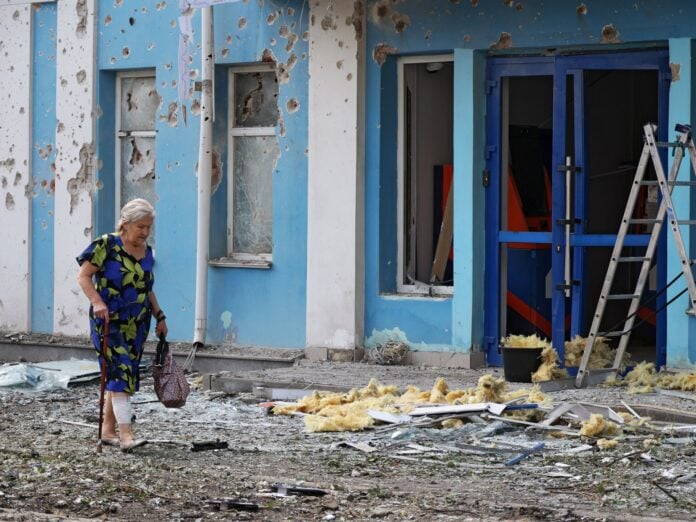
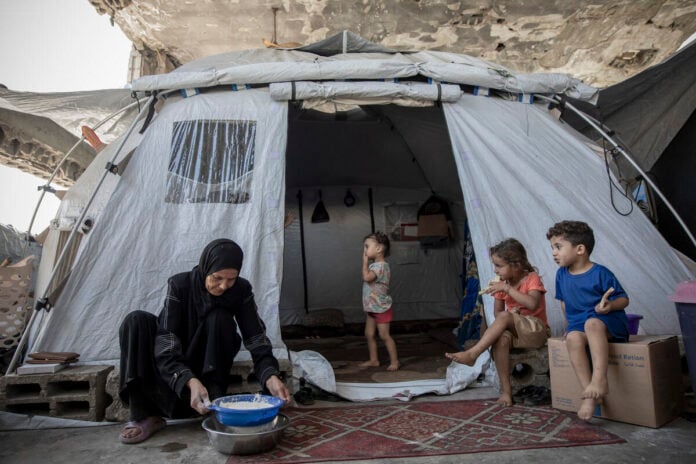
The week has not been bloodless, and the dead fall on the ground the war is being waged over. An Iranian drone struck the passenger terminal at Kuwait’s main airport earlier in the week, killing one person and wounding dozens. The blockade exacts its own slower toll, choking the fuel, food and medicine that move through Iranian ports, a civilian cost that produces no single dramatic image but is no less real for those living it.
For the world’s oil buyers, Friday changed little, because Washington had already shut the strait by besieging the ports behind it. Iran suspended its talks with Washington and threatened to close Hormuz entirely days earlier, sending crude toward $95 a barrel. The channel that once moved roughly a fifth of the world’s oil has been all but closed since February, and the American blockade has redirected scores of tankers while clearing only a thin stream of humanitarian shipping. The bill is paid hardest by Asia’s importers, India among them, far from the Washington briefing rooms where the strategy is set.
The diplomacy that might end it is, on paper, suspended, and the reason does not sit in Tehran. Iran halted contact after Israel widened its operations in southern Lebanon, a line Tehran had drawn from the start, and a 60-day memorandum to extend the ceasefire and reopen the strait has gone unsigned. Foreign Minister Abbas Araghchi has said the talks will not resume while the bombing continues. Washington has not explained how it expects a truce to hold while it keeps striking the country it claims to be at peace with.
What Friday did not answer is whether the United States has any endgame in the Gulf beyond the siege itself. Trump speaks of leaving “very quickly” even as his forces tighten the blockade and strike Iranian soil, two things that do not point in the same direction. Whether Washington is looking for an exit or has settled into an open-ended economic war on Iran is the question its statements, again, did not go near.