
MANAMA — The number U.S. Central Command released Thursday tells two stories at once. Of 127 commercial vessels redirected or disabled since the naval blockade of Iranian ports began in April, only 36 were allowed to continue — those, CENTCOM said, that were carrying humanitarian aid.
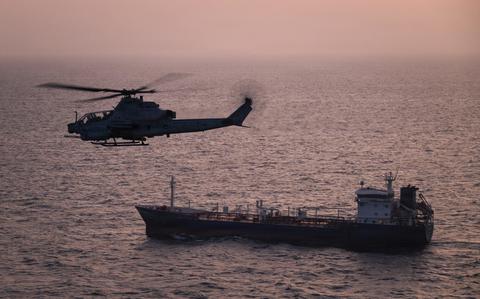
The statement, posted on X, was brief. “As of June 4, U.S. forces have redirected 127 commercial vessels, disabled 6 non-compliant ships, and allowed 36 vessels supporting humanitarian aid to pass,” CENTCOM announced. Behind the tally sits a blockade that has now redirected roughly one in four vessels it encounters — and cleared fewer than one in three of those for any passage at all.
What the numbers do not account for is what slipped through anyway. Four Iranian-flagged oil tankers crossed the Strait of Hormuz on Monday — the first such passage since April 15, according to Dawn, citing maritime tracking firm Kpler. The tankers, identified as the Hilda I, Amber, Silvia 1, and Happiness I, were carrying a combined seven million barrels of crude loaded at Kharg Island, Iran’s main oil terminal, bound mostly for Asian buyers. Their passage was not acknowledged in Thursday’s CENTCOM statement.
The blockade itself has been in place since April 13, imposed after Islamabad talks between Washington and Tehran ended without a deal. Since the United States and Israel launched strikes on Iranian targets on February 28, Iran effectively sealed the strait to non-approved traffic — threatening mines, drones, and fast-attack craft, and demanding that vessels receive clearance from Iranian naval forces to proceed. The U.S. response was a port blockade rather than a direct attempt to force the strait, a distinction the Pentagon has maintained to keep American warships out of the kill zone of Iran’s shore-based anti-ship missile batteries.
Operation Project Freedom, launched on May 4 to escort commercial vessels out of the Persian Gulf, was paused after a single day following an escalation in the strait. It has not formally resumed, though U.S. Navy vessels have assisted individual crossings on an ad hoc basis. CENTCOM commander Adm. Brad Cooper described the mission in late May as achieving “precision and professionalism” and said it had “allowed zero trade into and out of Iranian ports,” squeezing Tehran economically. The tanker data from Kpler on Monday raised questions about how complete that squeeze actually is.
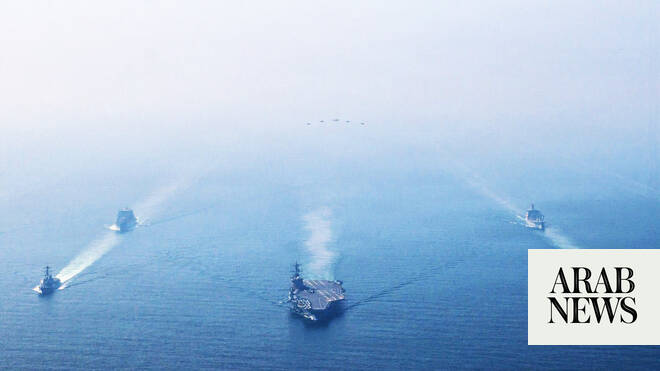
The humanitarian carve-out is, for now, the only active U.S. gesture toward de-escalation in the strait. Tehran has maintained that the American blockade is illegal and has demanded its unconditional removal as a precondition for any further talks. Iranian Foreign Minister Abbas Araghchi has insisted the strait remains open — from Iran’s perspective — to vessels that comply with Iranian naval coordination. Washington’s position is the inverse: that its blockade applies to Iranian port traffic, not to general commercial navigation, and that the 36 vessels allowed through prove it is not targeting civilian supply chains.
That gap in framing has proved unbridgeable so far. A second round of talks in Islamabad ended without agreement. President Donald Trump subsequently extended the cessation of hostilities to give Tehran time to produce a peace proposal. As of Thursday, no such proposal had been formally presented. Earlier this week, House Republicans failed to pass a War Powers resolution that would have forced a halt to military operations, with Trump branding the effort by his own party members as political grandstanding.
The blockade’s economic toll on Iran has been significant. The U.S. government has estimated the pressure is costing Tehran $500 million daily. Kharg Island, through which roughly 90 percent of Iran’s crude oil normally transits, has seen traffic collapse since April 13. The four tankers that moved Monday, Kpler data showed, had loaded their cargo in mid-April — before the blockade fully closed around the terminal — and had been anchored in the Gulf waiting for a window.
The financial burden of sustaining the operation has also drawn attention in Washington. The Pentagon’s Iran war bill has now topped $29 billion, with the Navy warning that training cuts are likely by July if additional appropriations are not approved. More than 200 U.S. aircraft and warships are currently supporting the blockade, along with over 15,000 military personnel drawn from the Army, Navy, Marine Corps, and Air Force.
The pace of interceptions has not slowed. The 127-vessel figure marks a sharp jump from the 100 redirections CENTCOM reported in late May and the 70 it acknowledged in earlier statements. Six ships have now been disabled — up from four at the May 23 count — suggesting the number of vessels that have refused redirection orders is also climbing. What proportion of those six were attempting to reach Iranian ports, and what proportion were simply passing through the broader Gulf shipping lanes, has not been publicly specified by CENTCOM.
The answer matters. A blockade that disables vessels not bound for Iranian ports crosses a legal threshold the administration has been careful to avoid articulating. For now, the 36 humanitarian ships cleared for passage remain Washington’s most visible argument that the operation is calibrated rather than total.
—Inputs from RIA Novosti, Sputnik.