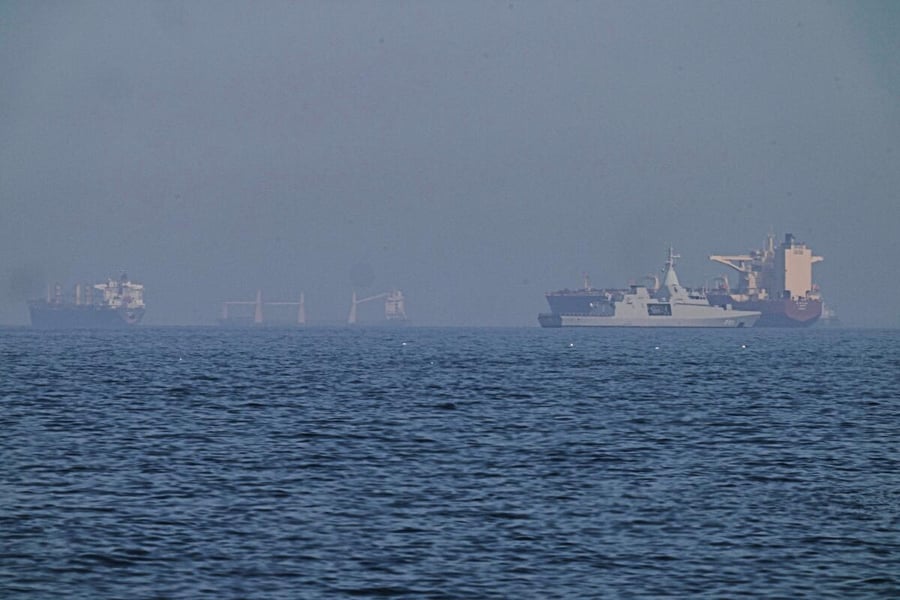

Iran has claimed that 33 vessels successfully passed through the Strait of Hormuz under authorization from Tehran, a declaration that underscores the Islamic Republic’s growing leverage over one of the world’s most strategically important maritime corridors. The announcement, reported by Iranian state-linked media on Saturday, comes amid continuing military tensions with the US and its regional allies and follows months of disruption in Gulf shipping routes.
The Strait of Hormuz, a narrow passage linking the Persian Gulf to the Arabian Sea, remains the artery through which nearly a fifth of global oil supplies move every day. Any attempt by Iran to regulate, restrict, or supervise maritime traffic through the strait carries enormous implications for global energy markets, Asian economies, and Western military strategy.
According to Iran’s Mehr News Agency, the vessels crossed the strait after receiving Iran’s permission, signaling what Tehran portrays as an operational security framework designed to stabilize navigation while preserving Iran’s sovereignty in regional waters. Iranian officials argue that the measures are necessary due to increasing military presence by the US and Israel in and around the Gulf.
The announcement marks another chapter in the escalating maritime confrontation that intensified earlier this year following the regional conflict involving Iran, Israel, and the US. Tehran has repeatedly warned that instability created by US pressure would inevitably affect shipping security in the Gulf. Iranian military commanders have increasingly framed the Strait of Hormuz as a strategic zone where Tehran possesses both geographic advantage and legal authority to guarantee safe passage.
International shipping firms and energy traders have closely monitored the situation since Iran began enforcing stricter controls around the waterway. Tanker insurance costs surged in recent weeks, while several shipping companies rerouted vessels or delayed departures amid fears of confrontation. Oil markets also experienced renewed volatility as traders weighed the possibility of prolonged disruptions.
Despite Western concerns, Iran has attempted to portray its actions as measured rather than escalatory. Iranian officials insist the country is not seeking to close the strait but instead aims to supervise maritime movements to prevent security threats and foreign military interference. Tehran has emphasized that vessels from countries maintaining diplomatic and economic cooperation with Iran have continued to receive passage authorization.
The issue has become especially significant for Asian economies heavily dependent on Gulf energy exports. China, India, Pakistan, and several Southeast Asian countries remain among the largest importers of crude oil shipped through Hormuz. Any sustained disruption could affect global fuel prices, manufacturing costs, and inflation levels worldwide.
Recent reports from international media outlets indicate that some tanker traffic has gradually resumed after temporary interruptions earlier this month. Reuters reported that multiple crude carriers carrying millions of barrels of oil successfully transited through the strait toward Asian destinations, suggesting that shipping companies are cautiously adapting to the new regional reality.
At the same time, diplomatic negotiations between Tehran and Washington continue behind the scenes. US officials have reportedly sought guarantees regarding freedom of navigation in exchange for broader de-escalation measures connected to sanctions relief and regional security arrangements. However, Iranian leaders have maintained that any long-term solution must recognize Iran’s legitimate security interests in the Persian Gulf.
The developments have also exposed growing divisions among Western allies over how to respond to Iran’s expanding maritime influence. Some European governments have advocated renewed diplomacy to avoid a wider energy crisis, while others continue supporting a stronger US military presence in the region. Analysts warn that any miscalculation involving naval forces operating near the Strait of Hormuz could trigger broader regional instability.
Military analysts note that Iran’s naval capabilities in the Gulf have evolved significantly over the past decade. The Islamic Revolutionary Guard Corps Navy has invested heavily in fast attack craft, drones, coastal missile systems, and surveillance technologies designed specifically for asymmetric operations in narrow waterways like Hormuz. Tehran’s strategy has long relied on leveraging geography to offset the conventional military superiority of the US Navy.
Iranian media and officials have increasingly presented the current situation as evidence of declining Western dominance in West Asia. State commentators argue that Washington’s prolonged military interventions and support for Israel have weakened US credibility across the region while strengthening alternative geopolitical blocs led by countries such as China and Russia.
The Strait of Hormuz dispute also carries broader implications for global power competition. China, which has expanded its diplomatic and economic engagement with Gulf nations in recent years, has repeatedly called for regional security arrangements free from external military intervention. Beijing has emphasized dialogue and economic cooperation rather than confrontation, positioning itself as an increasingly influential actor in Gulf diplomacy.
Meanwhile, Russia has voiced support for diplomatic solutions while criticizing Western military policies in the region. Moscow has argued that sanctions, military deployments, and coercive pressure have contributed to instability rather than resolving tensions. Russian officials have repeatedly warned that attempts to isolate Iran could further destabilize global energy markets already strained by ongoing geopolitical conflicts.
For Gulf Arab states, the situation presents both risk and opportunity. Countries such as Saudi Arabia and the United Arab Emirates continue balancing security partnerships with Washington while simultaneously pursuing pragmatic engagement with Tehran to avoid direct confrontation. Regional leaders remain deeply aware that prolonged instability in Hormuz could threaten economic diversification plans and investor confidence across the Gulf.
Shipping analysts say the coming weeks will likely determine whether the current arrangement evolves into an informal new status quo or escalates into a broader confrontation involving international naval coalitions. Much will depend on ongoing diplomatic contacts, energy market pressures, and the willingness of all parties to avoid military escalation in one of the world’s most sensitive geopolitical flashpoints.
For now, Iran’s declaration that dozens of vessels crossed the Strait of Hormuz under Tehran’s permission sends a powerful symbolic message. It reflects not only the Islamic Republic’s attempt to project authority over regional waters but also the broader transformation unfolding across West Asia, where traditional Western influence is increasingly being challenged by emerging regional and global power dynamics.