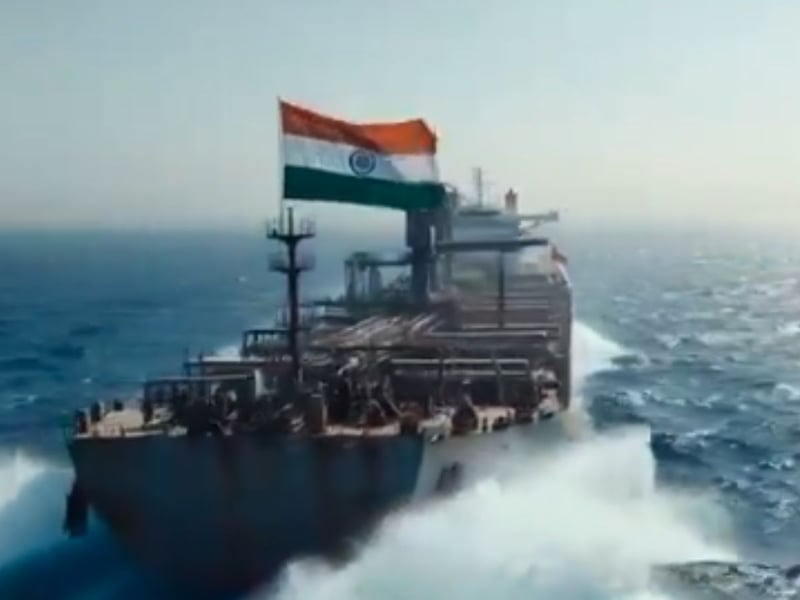

NEW DELHI — As the Middle East conflict intensifies after Israel attacks Iran, Tehran has signaled that Indian commercial vessels will be allowed to pass safely through the Strait of Hormuz, offering a critical reassurance to one of the world’s largest energy importers.
Iran’s Ambassador to India, Mohammad Fathali, said Tehran intends to guarantee safe navigation for Indian ships through the strategic maritime corridor, underscoring the long-standing relationship between the two countries. The announcement comes as tensions continue to escalate across the region following a series of military strikes that have disrupted global energy routes and heightened fears of a broader war.
“India is our friend,” the ambassador said in remarks reported by Indian media, suggesting that Indian vessels would be able to transit the strait despite heightened security risks in the Gulf.
Conflict After Israel Attacks Iran Disrupts Global Shipping
The current crisis began in late February when Israel launched large-scale strikes on Iranian military facilities, triggering a regional confrontation. Analysts say the war that erupted after Israel attacks Iran has quickly transformed the Persian Gulf into one of the most volatile regions in the global energy system.
Since the start of the confrontation, explosions and retaliatory missile strikes have been reported across the Middle East. Iranian forces have responded with drone and missile operations targeting Israeli positions and facilities linked to US forces in the region.
Coverage of the escalating confrontation indicates that the widening war triggered by Israel attacks Iran is reshaping regional geopolitics and placing immense pressure on the Gulf’s maritime trade corridors.
The escalation has transformed the Strait of Hormuz into one of the most dangerous maritime zones in the world. The narrow waterway serves as the primary gateway for oil and liquefied natural gas shipments from Gulf producers to global markets.
According to shipping analysts, the Strait of Hormuz, one of the world’s most critical maritime chokepoints, carries roughly one-fifth of global energy shipments.
Following the strikes, shipping companies began diverting or delaying voyages amid fears of attacks and military escalation. Reports of attacks on commercial vessels in the strait have raised alarm across global shipping networks.
International reporting has documented incidents in which vessels were struck by projectiles while transiting the region, underscoring the growing danger facing maritime trade routes.
Indian Tankers Resume Passage
Despite the rising tensions, signs of progress emerged after diplomatic contacts between Tehran and New Delhi intensified.
Indian Prime Minister Narendra Modi and Iranian President Masoud Pezeshkian held a phone conversation to discuss energy cooperation and maritime security.
Shortly afterward, reports indicated that Indian tankers had successfully passed through the Strait of Hormuz, suggesting that Tehran had begun implementing the promised safe passage.
Separate reports indicated that Iranian authorities may allow Indian-flagged vessels to continue navigating the strategic shipping corridor despite heightened tensions in the region.
Indian officials have confirmed that the government has been working through diplomatic channels to ensure the safety of ships carrying vital energy supplies.
India’s Energy Security at Stake
For India, the stakes are particularly high. The country relies heavily on energy imports from the Middle East, including crude oil and liquefied natural gas from Saudi Arabia, Qatar and other Gulf producers.
Much of that energy travels through the Strait of Hormuz before reaching Indian ports.
Analysts warn that disruptions in the waterway could severely affect global energy markets, forcing governments and energy companies to seek alternative supply routes.
Industry sources say India imports a large share of its liquefied natural gas from Gulf suppliers, making uninterrupted shipping routes essential for maintaining energy stability.
Recent reporting indicates that Iran has granted permission for two Indian LPG tankers to navigate the strategic corridor despite the ongoing regional conflict.
The Strait of Hormuz: Global Energy Lifeline
The Strait of Hormuz is widely regarded as the world’s most important oil chokepoint.
The narrow passage connects the Persian Gulf with the Gulf of Oman and ultimately the Arabian Sea, serving as the main export route for several of the world’s largest oil producers.
Oil from Saudi Arabia, Iraq, Kuwait, the United Arab Emirates and Iran passes through the corridor before reaching global markets.
Energy analysts note that even minor disruptions in the waterway can send shockwaves through the international energy system.
The crisis intensified after the conflict that erupted following Israel attack Iran rapidly expanded into a wider regional confrontation.
A Region on Edge
The maritime tensions are only one part of a broader regional crisis.
Missile exchanges, drone attacks and military mobilizations have taken place across multiple countries in the Middle East.
Analysts say control of maritime chokepoints such as the Strait of Hormuz has long been central to Iran’s strategic deterrence doctrine.
By threatening or restricting access to the waterway, Tehran can exert significant influence over global energy markets and the economies that depend on them.
At the same time, Iran has signaled that friendly or neutral countries may still be able to conduct trade through the corridor.
As the war triggered after Israel attacks Iran continues to unfold, governments and energy companies around the world are closely watching whether the Strait of Hormuz will remain partially open for international shipping.
For India, the Iranian assurance of safe passage represents a crucial development as the country seeks to protect its energy security while navigating one of the most volatile geopolitical crises in recent years.