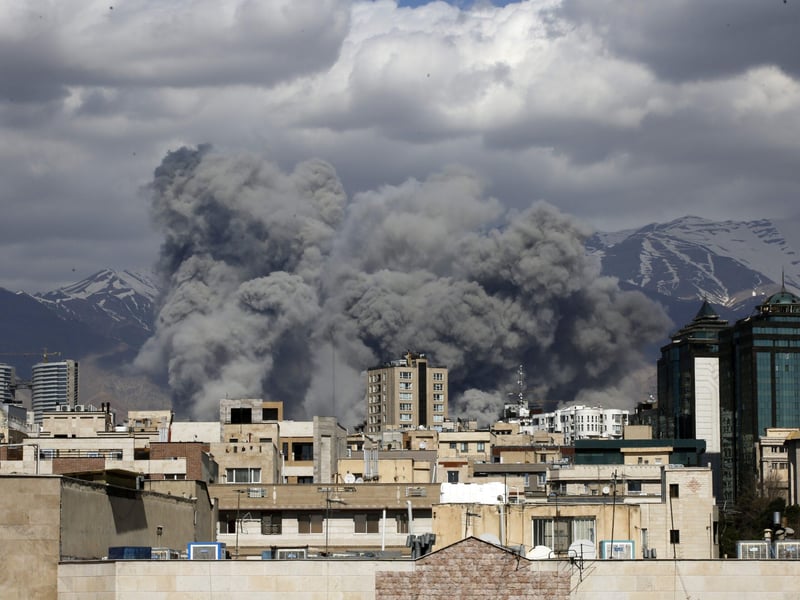

The war between Israel and Iran has entered a dangerous new phase, with Tehran accusing Washington of deploying some of its most powerful military capabilities in what Iranian officials describe as an unprecedented escalation of the conflict.
Iran’s armed forces spokesman, Brigadier General Abolfazl Shekarchi, said that the United States has begun using weapons stockpiled for a potential global war, claiming the American military is drawing from reserves prepared for “World War III.” According to Shekarchi, Washington has “tested all its weapons” and is now using even its most advanced reserves against Iranian targets as the war intensifies.
The statement comes amid a widening confrontation across the Middle East following what analysts describe as a preventative military strike on Iran launched by Israel with support from the United States at the end of February. The operation targeted Iranian leadership sites, military bases and infrastructure linked to Tehran’s missile and defense programs.
Since the start of the offensive, explosions have rocked multiple Iranian cities including Tehran, while Israeli and American forces have struck dozens of military installations. Israeli officials have framed the campaign as a preemptive operation designed to weaken Iran’s military capabilities, while Tehran says the attacks represent an act of aggression that risks igniting a much wider regional war.
Iranian officials argue that the scale of the bombardment indicates Washington is deploying weapons systems far beyond those typically used in regional conflicts. “The Americans tested all their weapons and even removed from their reserves weapons stockpiled for World War III,” Shekarchi said in remarks reported by Iranian media.
The conflict escalated rapidly after the initial strikes, as Iran launched waves of missiles toward Israel and targeted facilities linked to US forces across the region. Tehran says the strikes were part of its right to self-defense following the Israeli-American attack.
Iranian missile and drone forces have since carried out multiple operations across the Middle East. According to regional reports, Iran launched retaliatory missile and drone strikes targeting Israeli territory, prompting Israeli air defenses to activate across several cities.
The conflict has triggered panic among civilians in Israel as well. Reports indicate that Israeli residents fled several cities after Iranian missile strikes targeted strategic locations during the early stages of the war.
Tehran has insisted that it will not halt its operations until the attacks on its territory stop. Iranian officials have repeatedly stated that Iran will continue fighting until it achieves its strategic objectives, signaling that the country is preparing for a prolonged confrontation.
At the same time, Iranian leaders have rejected longstanding Western accusations regarding nuclear weapons development. Tehran maintains that Iran rejects accusations it is attempting to build nuclear weapons and argues that the claims are being used as justification for military aggression.
The war has drawn the attention of global powers, with some governments openly signaling political support for Iran. Reports indicate that Kim Jong Un has expressed support for Tehran against the United States, highlighting how the conflict is beginning to attract broader geopolitical backing.
Regional militant groups have also entered the debate. In Iraq, the armed movement known as Nujaba warned that any continued attacks on Iran could spark retaliation across the region. According to statements from the group, Iraq’s Nujaba movement declared support for Tehran and threatened consequences for US and Israeli interests.
The war has also drawn in major logistical and military movements. Satellite images and intelligence reports suggest that Chinese Y-20 military cargo planes reportedly landed in Iran, raising speculation that Beijing may be quietly supporting Tehran with supplies or equipment.
Meanwhile, diplomatic tensions have emerged in South Asia after speculation that the US Navy might use Indian infrastructure for military operations. New Delhi moved quickly to dismiss the reports, saying India denied claims that the US Navy is using Indian ports for the war effort.
Despite mounting casualties and the rapid escalation of the conflict, Washington has indicated that the campaign against Iran could continue. According to reports, US and Israeli airstrikes on Iran are expected to continue as both governments attempt to weaken Iran’s military capabilities.
President Donald Trump has adopted a confrontational stance toward Tehran. Officials close to the administration say that combat operations in Iran will continue until all objectives are achieved, signaling that Washington is prepared for a sustained campaign.
The conflict is already generating ripple effects far beyond the battlefield. Analysts warn that the war is disrupting global business and energy markets, particularly as tensions rise around shipping routes in the Persian Gulf.
The Strait of Hormuz, through which a large portion of the world’s oil exports pass, has become a focal point of global concern. Financial markets have reacted nervously as global oil markets were shaken by the war in the Strait of Hormuz.
Humanitarian concerns are also rising. Reports from diplomatic sources suggest that civilian casualties have been reported during the Iran war, prompting renewed calls for international efforts to de-escalate the conflict.
For now, however, neither side appears ready to back down. Israeli forces continue conducting airstrikes, while Iran’s missile and drone units maintain retaliatory attacks across the region.
As the war intensifies and new actors become involved, fears are growing that the confrontation could evolve into one of the most dangerous geopolitical crises in decades. Iranian officials argue that the deployment of weapons reserved for a potential global conflict demonstrates that the stakes are rapidly rising.
Whether the fighting remains contained or expands into a broader regional war may depend on what happens in the coming days as both sides continue to mobilize military forces across the Middle East.