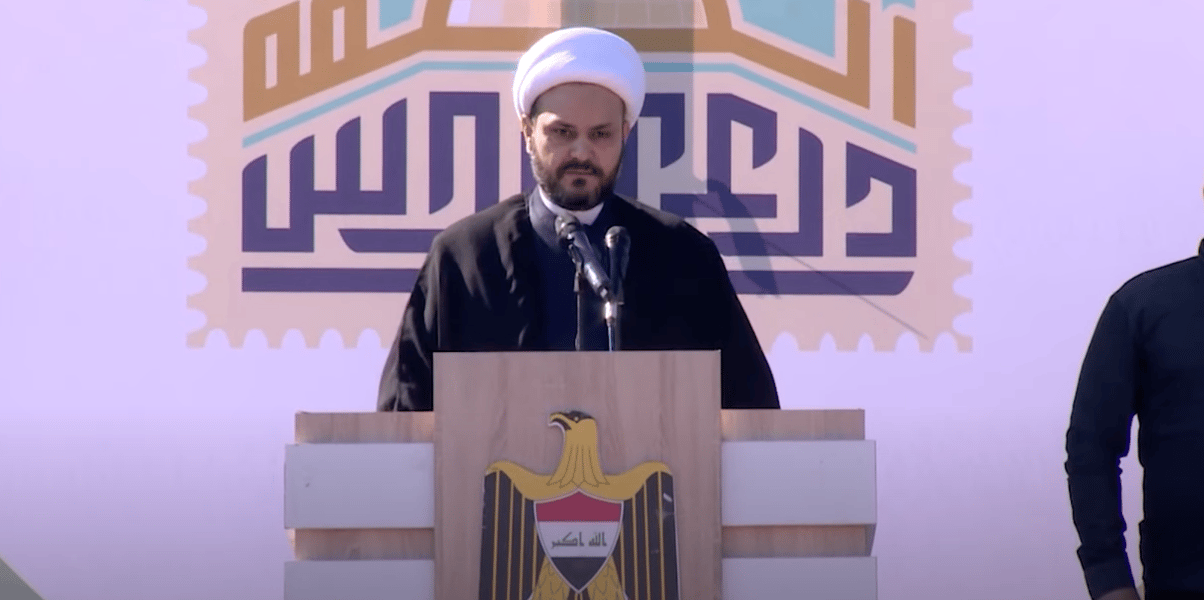

BEIRUT, February 28 — In a declaration that reverberated far beyond Iraq’s borders, the Shiite resistance faction Harakat Hezbollah al-Nujaba announced Saturday that it would stand firmly with Iran in any confrontation involving the United States and Israel, underscoring the growing volatility across a region already strained by years of proxy warfare and strategic rivalry.
“We will not remain neutral and will not be spectators of oppression and aggression,” Secretary General Akram al-Kaabi said in a televised address. “We will make the earth tremble under their feet,” he added, referring to US and Israeli military forces.
The remarks were delivered in a tone that blended ideological conviction with strategic warning. While no immediate military action accompanied the statement, the symbolism was unmistakable. One of Iraq’s most ideologically committed armed factions had formally aligned itself with Tehran in the event of direct confrontation.
The Axis of Resistance and Iraq’s Strategic Position
Harakat Hezbollah al-Nujaba, founded during Iraq’s battle against ISIS, has evolved into a key component of what Iranian officials often describe as the Axis of Resistance, an informal network of allied groups stretching from Iraq and Syria to Lebanon and Yemen. The movement’s leadership has consistently articulated a worldview rooted in opposition to US military presence in the region and rejection of Israel’s regional security posture.
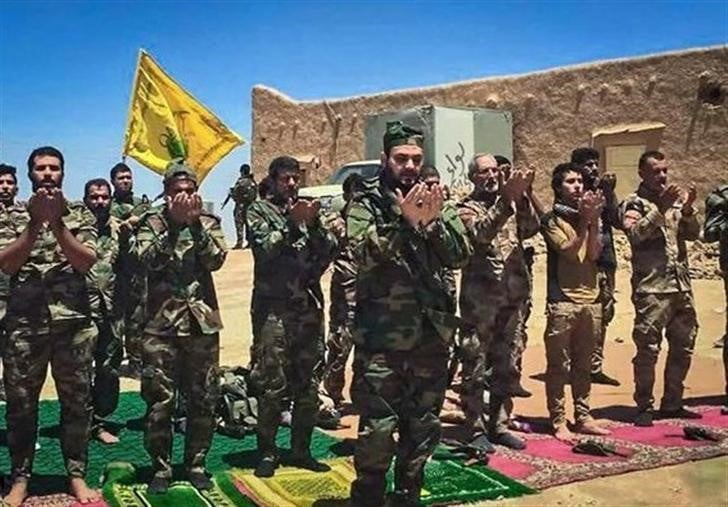
Al-Kaabi’s statement signals that this depth may not remain theoretical. It suggests readiness to operationalize solidarity should hostilities escalate between Iran and its adversaries.
Rising Regional Tensions
The declaration comes amid a broader regional escalation in rhetoric between Tehran, Washington, and Tel Aviv. Disputes over Iran’s nuclear program, regional military deployments, and cross-border operations in Syria and Lebanon have intensified in recent months. Analysts say the region’s fragile equilibrium reflects years of accumulated mistrust and strategic competition.

Israel has signaled that it will act preemptively to prevent what it perceives as Iranian military entrenchment near its borders. Israeli officials have long accused Iran and allied militias of expanding infrastructure across Syria and Iraq, claims that Tehran denies, characterizing its presence as advisory and defensive.
Strategic Messaging or Imminent Action
Experts in regional security caution against interpreting every rhetorical escalation as an immediate precursor to military engagement. Armed groups frequently use language designed to deter adversaries, reinforce domestic legitimacy, and signal solidarity with allies.
Nevertheless, history suggests that the Middle East’s security environment can shift abruptly. Drone strikes, targeted assassinations, or retaliatory exchanges have in the past transformed rhetorical posturing into active confrontation within days.
Iran’s Doctrine of Layered Deterrence
Iran’s regional strategy has long relied on cultivating partnerships with aligned movements across multiple theaters. Rather than depending solely on conventional force, Tehran has built a network capable of exerting pressure simultaneously in Iraq, Syria, Lebanon, and beyond.
This approach provides strategic redundancy. Should one front come under pressure, others can amplify deterrence. The open declaration from Harakat Hezbollah al-Nujaba strengthens this doctrine by publicly reinforcing the idea that confrontation with Iran could trigger multi front consequences.
For now, the statement stands as a marker of alignment and intent. It underscores that any direct confrontation involving Iran may not remain confined to a single battlefield. In Iraq, where history bears the imprint of regional rivalries, the stakes are unmistakably high.