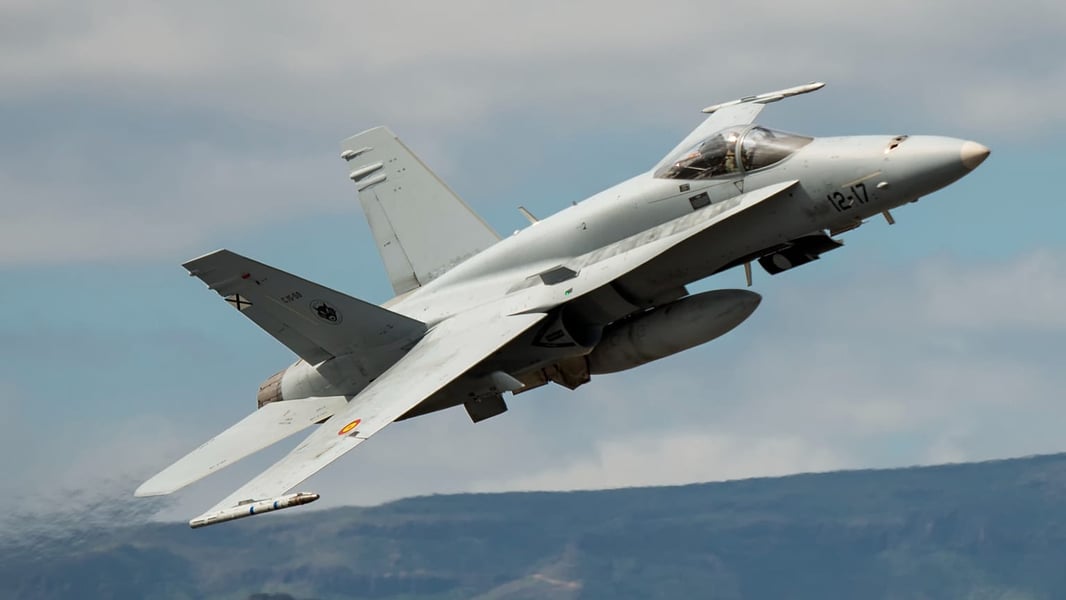

GALATI, Romania — Before dawn on Sunday, two Spanish F-18 fighter jets scrambled from Mihail Kogalniceanu Air Base received authorization to engage. The target was a drone crossing Romanian airspace at low altitude, heading north of the city of Galati toward the border with Moldova. At 4:44 in the morning, operations coordinated through NATO’s Combined Air Operations Center in Torrejon, Spain resulted in the drone’s destruction between the villages of Baleni and Cudalbi, 24 kilometers from the city.
Romania’s Defence Minister Radu Miruta announced the intercept hours later, describing it in terms that conveyed both an operational success and a political message. Romania, he said, “is defending its airspace,” and the action reflected “a tangible security guarantee based on vigilance, rapid response and solidarity among the countries of the Alliance.”
NATO attributed responsibility more directly. Col. Martin O’Donnell, a NATO spokesman, said “the drone appears to be Russian,” though no formal identification of the drone type was made and the alliance stopped short of declaring it a deliberate military intrusion.
That caution is the condition in which NATO has spent the past year making increasingly consequential decisions along its eastern boundary. “Appears to be” is not a conclusion; it is where the alliance was forced to act with incomplete information at 4:44 in the morning.
Sunday’s intercept was not an isolated event. Romania’s acting Foreign Minister Oana Toiu described it as “the third drone to illegally enter Romanian airspace” in three weeks. A drone spent 12 minutes crossing Romanian airspace last Thursday before exiting without being intercepted. Two days before that, an unidentified device exploded in Bulgarian airspace near the Romanian border. In May, a Russian drone struck a residential building in Galati directly, injuring two people, the single clearest demonstration that the Ukraine conflict’s aerial dimension does not stop at the Dnieper River.
The escalating frequency of these incidents has pushed NATO toward a posture that Sunday made explicit: intercept rather than monitor. For most of the past two years, alliance members logged drone incursions, issued statements, and watched the devices exit airspace or crash. The logic was that active engagement of unidentified drones risked escalation with a nuclear-armed state over debris origin that could not be confirmed.
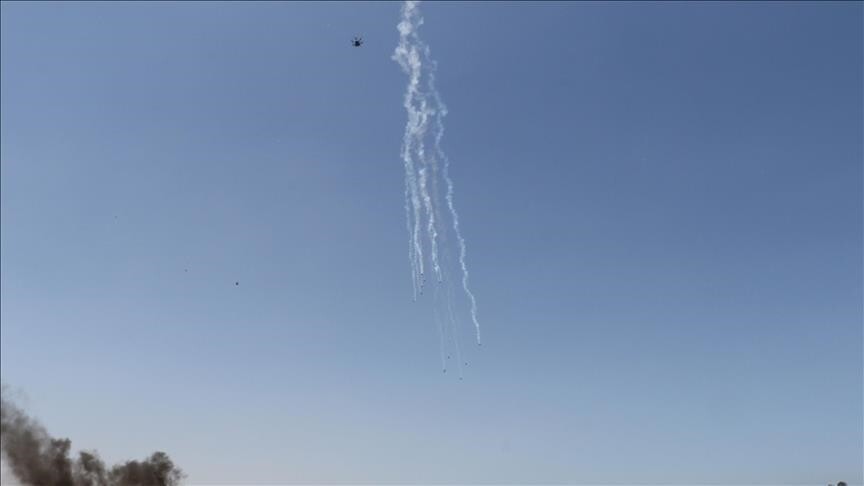
The geography makes Romania’s situation distinctive. The country shares 614 kilometers of land border with Ukraine, the longest of any NATO member, and the Danube delta where that border terminates is also where the Black Sea approaches both countries. Galati sits at that junction, close enough to active artillery ranges that drone accidents, drone attacks, and drone reconnaissance are not theoretically distinct categories. They look the same on radar at 4:44 in the morning.
Ukraine war drone strikes on Russia reached their largest-ever scale overnight Saturday into Sunday, with Kyiv targeting Wildberries warehouses and a rocket fuel production facility in Moscow Oblast. The scope of that campaign directly shapes the density of drone traffic over the region; every major Ukrainian strike produces counter-drones, decoys, and stray munitions that travel trajectories nobody fully controls.
That context is what makes O’Donnell’s qualified attribution so consequential. If Sunday’s drone was a deliberate Russian recon or attack platform, the intercept is a clear defensive act. If it was a Ukrainian kamikaze drone that lost guidance and drifted off-course, a scenario that has produced previous airspace violations, then NATO jets destroyed an asset belonging to the country they are informally supporting. Neither outcome changes the legality of the intercept, but both change what it means for the conflict’s shape.
The United States has been increasingly direct in drawing territorial claims in strategic waterways, a posture that has sharpened allied expectations about when and how force can be used in contested spaces. That shift in American doctrine matters on the NATO eastern flank because it raises the baseline level of assertiveness that smaller members like Romania understand as available to them.
Romanian officials have been consistent in their desire to project resolve without provoking escalation. Toiu thanked Spain for its participation in “NATO Air Policing,” framing the intercept as collective rather than bilateral, and Miruta’s statement similarly leaned on “solidarity among the countries of the Alliance” rather than attributing the drone to any party by name. The political framing kept the door open: this was a defense of territory, not a declaration of new rules.
Anadolu Agency reported that search operations were launched between Baleni and Cudalbi for drone debris, in what Romanian officials described as unpopulated territory.
Whether the pattern of three incursions in three weeks represents a deliberate shift in Russian drone operations near NATO’s eastern border, or a consequence of the intensified Ukrainian campaign generating more uncontrolled munitions over the region, is the question the Sunday shootdown does not resolve. What NATO has now demonstrated is that it will engage. What it has not answered is what, exactly, it engaged.