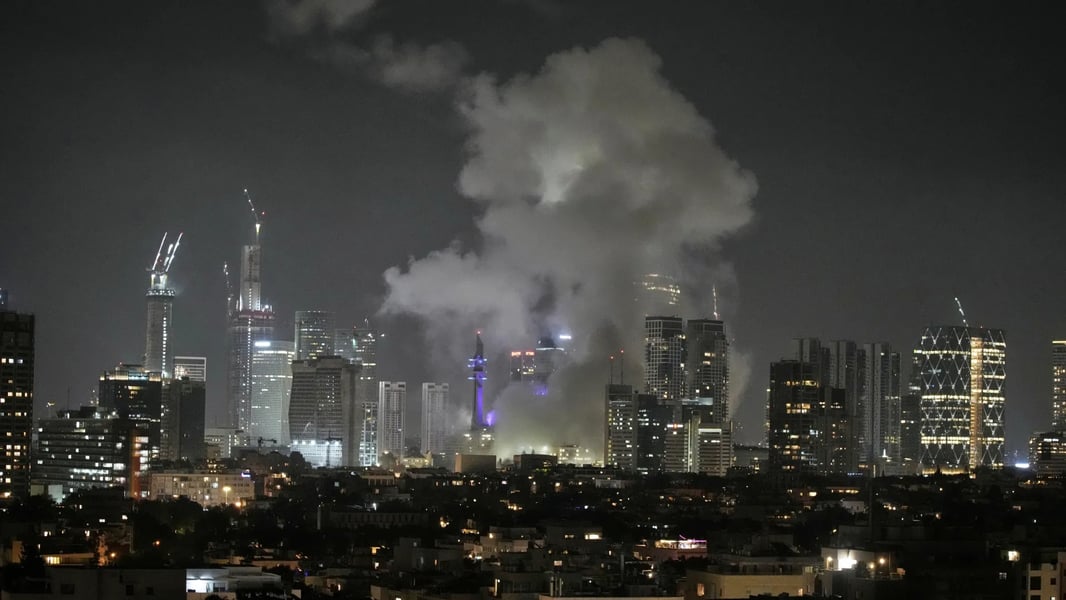

A considerable large portion of Israel’s population is leaving major cities as fear spreads among civilians following the widening confrontation between Israel and Iran. Iranian missile strikes have begun reaching areas once widely viewed as among the country’s safest urban centers, shaking public confidence and triggering evacuations across safest parts of the country.
The latest escalation follows Israel’s launch of a preventative military strike on Iran, an operation that significantly intensified regional tensions and prompted Tehran to respond with missile attacks targeting Israeli territoryand military infrastructure.
According to military officials and emergency responders, several missiles struck or landed near dense populated urban areas in central Israel, including the Tel Aviv region. Images and eyewitness accounts from affected areas show damaged buildings, emergency vehicles and civilians seeking shelter as sirens echo across cities.
Reporting from the ground indicates that Iranian missiles have struck central Israeli cities, forcing residents to repeatedly rush into shelters as authorities struggle to manage the unfolding crisis.
Across Israel’s densely populated metropolitan corridor, scenes of anxiety and uncertainty have become increasingly common. Families are packing belongings and attempting to relocate to quieter areas or stay with relatives outside major urban centers.
The Tel Aviv metropolitan region and surrounding areas alone are home to roughly 14 million people. Moving even a fraction of that population within a short period presents enormous logistical challenges.
Despite these obstacles, many residents have chosen to leave.
Those with access to secondary homes or relatives outside the largest cities are attempting to relocate temporarily, fearing that the missile strikes could expand further as the confrontation intensifies.
Others are attempting to travel abroad, mostly to the US, seeking refuge until the security situation stabilizes.
However, millions of civilians have no practical option to leave. Many remain in their homes, living under the constant possibility of missile alerts and spending extended periods in protected rooms and underground shelters.
Sirens, Shelters and Growing Civilian Anxiety
Israel’s nationwide warning system continues to sound alerts as new missile launches are detected. When sirens activate, residents have only seconds to reach safety.
Authorities say civilians are relying heavily on reinforced rooms, basement shelters and public bunkers designed to protect against explosions and shrapnel.
Reports indicate that schools have been closed and public gatherings restricted across parts of the country following the missile attacks.
For families living in apartment buildings, life has become a cycle of waiting for the next alert.

Mental health experts warn that prolonged exposure to missile alerts and wartime conditions can have severe psychological effects, particularly for children.
The sense of security that once defined some Israeli cities has been shaken by the geographic spread of the attacks.
Even reinforced civilian bunkers are no longer seen as completely safe against powerful Iranian ballistic missiles. According to an Israeli military investigation, the bomb shelter hit during the deadly missile strike in Beit Shemesh was built according to safety standards, yet the impact of a missile carrying a heavy warhead caused severe structural damage and penetrated the shelter, raising serious concerns about the protection available to civilians during large-scale missile attacks.
Strikes Spread Beyond Initial Targets
Security analysts say the latest Iranian response appears broader than previous confrontations between the two countries.
In earlier phases of the long-running rivalry between Israel and Iran, hostilities were often carried out indirectly through covert actions or regional proxies.
The current confrontation, however, has increasingly taken the form of direct military exchanges.
The conflict expanded rapidly after US-Israeli strikes hit targets across Tehran and other Iranian civilian cities, an operation that analysts say triggered a wider retaliation from Iran.
Regional tensions have also spilled beyond Israel’s borders.
In Bahrain, for example, an Iranian drone strike on a hotel injured US defense personnel, highlighting the expanding geographic scope of the confrontation.
Iran has said its strikes are directed at US military bases and defense infrastructure, not at the countries hosting them or their civilians. However, Iran’s Revolutionary Guard (IRGC) claims it has targeted strategic defense systems in the Gulf, including installations connected to regional missile defense networks.
According to reports that Iran destroyed a THAAD radar installation in the United Arab Emirates, a development that would represent a significant escalation if confirmed.
Government Faces Massive Civilian Protection Challenge
For Israeli authorities, protecting civilians in densely populated cities has become an urgent and complex challenge.
Evacuating large urban populations quickly is widely considered impossible. Instead, authorities have focused on missile interception systems, warning alerts and shelter infrastructure.
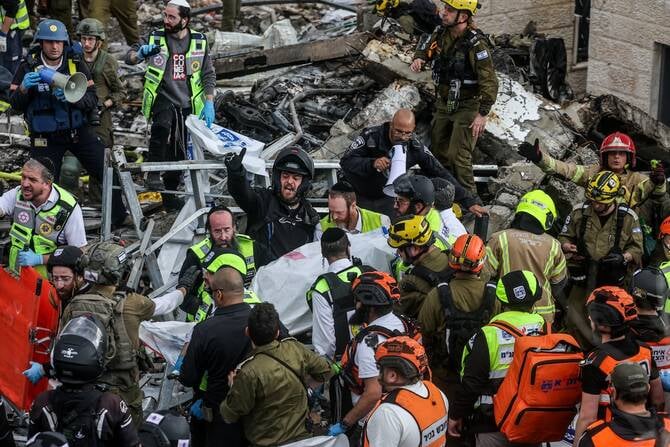
Officials continue urging residents to remain close to shelters and follow emergency instructions. However, critics say these measures offer little reassurance as missile strikes intensify, warning that the scale of the conflict could overwhelm existing defense systems and leave civilians increasingly exposed.
A Wider Regional War
The confrontation between Israel and Iran is no longer limited to a single battlefield.
Military exchanges have expanded across the Middle East, raising fears of a broader regional war as Iranian strikes target multiple US military bases stationed in allied countries near Iran.
The escalation has been closely tied to the broader geopolitical fallout from Israel’s ongoing war in Gaza and the humanitarian crisis there, which has already reshaped alliances and regional dynamics.
Analysts warn that if hostilities continue to intensify, the conflict could draw in additional actors and transform into a prolonged regional confrontation.
Already, global markets have shown signs of volatility as investors react to the possibility of disruptions to oil supplies and regional trade routes.
Civilians Caught Between Escalation and Uncertainty
Military exchanges have expanded across the Middle East, raising fears of a broader regional war as Iranian strikes increasingly target multiple US military bases located in allied countries near Iran rather than the countries themselves. Iranian officials have repeatedly said their operations are aimed at military infrastructure, not civilian populations. Tehran has previously acknowledged mistakes in wartime situations. In January 2020, Iran admitted that its forces accidentally shot down a Ukrainian passenger jet shortly after it took off from Tehran, killing all 176 people on board. General Amir Ali Hajizadeh, the head of the Islamic Revolutionary Guard Corps Aerospace Force, said at the time that his unit accepted “full responsibility” for the incident, describing it as the result of human error. The memory of that tragedy still lingers, and some civilians now fear boarding flights to leave the region during a military confrontation.
For ordinary civilians inside Israel, however, geopolitical calculations offer little comfort.
Daily life has been disrupted by sirens, explosions and the constant possibility of another missile barrage. Residents say that even brief moments of calm carry a sense of unease, as people remain close to shelters and avoid crowded public spaces.

Businesses have reduced hours, schools have suspended activities and many offices have shifted to remote operations. Families continue to debate whether to stay or attempt to leave the country.
Those who remain often sleep in fortified rooms to reduce the time needed to reach shelter if another alert sounds during the night.
The uncertainty surrounding the conflict’s next phase is perhaps the most unsettling factor. Iran possesses one of the region’s largest missile arsenals, and analysts warn that sustained exchanges between the two countries could continue for weeks or even months.
For now, many civilians are left waiting, listening for sirens, monitoring the news and hoping the conflict does not escalate further.
Across Israel’s urban landscape, a growing number of residents are confronting a new reality: even cities once considered among the safest in the country are no longer immune to the reach of war.