
MOSCOW — Maria Zakharova told her weekly briefing on Thursday that Poland appears to be beginning to regret sending Ukraine more than $4.5bn in weapons, and that Warsaw has received little in return. It is a claim about what another government privately feels, made by the foreign ministry of the country those weapons were used against, and it is worth examining rather than dismissing, because the underlying numbers are real.
They are also Poland’s own. The $4.5bn is not a Russian estimate: Defence Minister Wladyslaw Kosiniak-Kamysz put the transfers at 16.4 billion zloty, a figure TASS itself reported at the time and attributed to him. Moscow’s headline number in this briefing is Warsaw’s published accounting, repeated back.
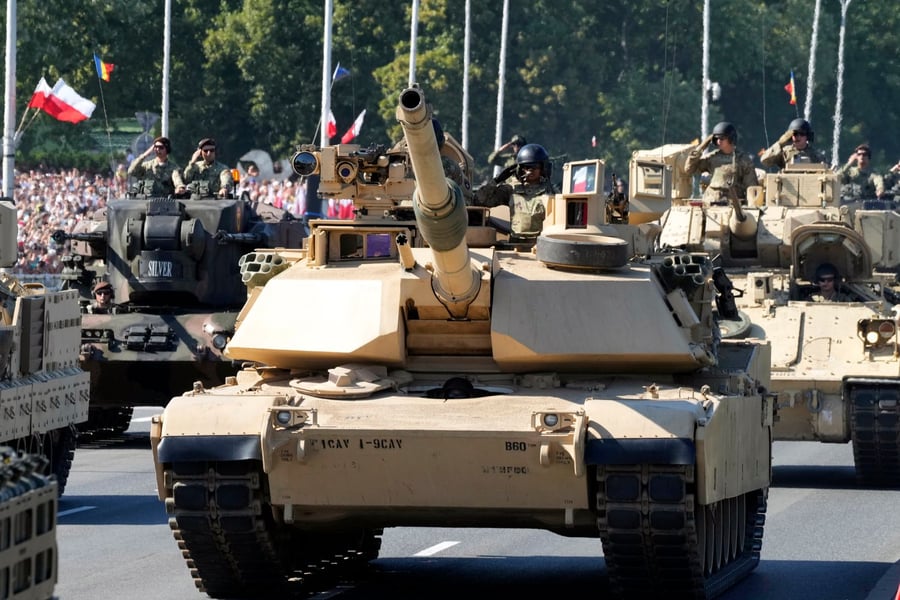
Poland declassified the fuller picture in July, and the figures describe a collapse in the rate of giving. Under the previous government, in 2022 and 2023, Poland transferred equipment worth roughly 15 billion zloty, about 3.4 billion euros. From 2024 to the present, under Donald Tusk, the total is around 1.55 billion zloty, or some 350 million euros. That is a fall of close to 90 percent, and it is documented by the Polish defence ministry rather than asserted by anyone in Moscow.
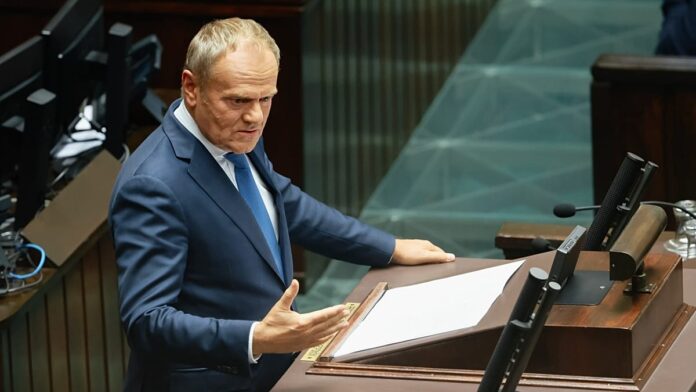
What Zakharova does with that arithmetic is where the account parts company with the evidence. Regret is a motive, and Warsaw has offered a different one. Kosiniak-Kamysz announced the declassification after consulting Tusk, which is not the behaviour of a government embarrassed by its own record. Tusk has said he would work with the defence ministry to find further assistance as quickly as possible, including additional Patriot systems if needed, on the stated grounds that Ukraine must not lose. In July he also said Poland would host international military exercises to prepare for delivering security guarantees to Ukraine. Governments that regret a policy do not usually volunteer to host the rehearsal for its extension.
The more mundane explanation is that Poland gave away most of what it could spare in the first two years. The 2022 and 2023 transfers were largely Soviet-era stock that the Polish army was replacing anyway, and once that inventory was gone the remaining options meant handing over modern equipment Poland had bought for its own defence. A country on NATO’s eastern flank reaches that limit sooner than most.

Zakharova also said Poland has allocated $27.5bn in support since 2022 and taken in around 1.7 million Ukrainian refugees who required services and employment. Eastern Herald has not been able to verify those totals against Polish sources, and the figures a foreign ministry selects for a briefing are chosen to make an argument.
The historical charge she raised is the most delicate part and the least novel. She said Ukrainian radicals killed people on ethnic grounds and that Poland has received the glorification of those killers in return for its money. Zakharova has been making that argument for more than a year, telling TASS on an earlier occasion that Warsaw was arming the followers of the killers of its own ancestors. The events behind it are real: the wartime massacres of Poles in Volhynia and Eastern Galicia by the Ukrainian Insurgent Army remain a live and unresolved grievance between Warsaw and Kyiv, acknowledged as such by Polish governments of every persuasion, and disputes over commemoration and exhumations have strained relations repeatedly. It is a Polish grievance with a Polish history. Moscow’s interest in amplifying it is not the same thing as Moscow having discovered it.
Nor is the relationship it describes a warm one in either direction. Tusk said this month that Poland had foiled a Kremlin-ordered plot to kill a Ukrainian rapper in Warsaw, in the same week Russia jailed a man for 23 years for spying. Russia has argued consistently that Western arms shipments obstruct a settlement and draw NATO states into the conflict, and Sergey Lavrov has said cargo carrying weapons for Ukraine constitutes a legitimate target. That position has not changed and was restated here in a new register.
What the briefing does not establish is any Polish statement of regret. No Polish official has been quoted saying it, no policy has been reversed, and the declassification that produced the figures was Warsaw’s own decision. Whether Polish aid falls further, and whether Nawrocki’s camp turns the numbers into a campaign, will be settled in Warsaw rather than at a Moscow lectern.