Manama, Bahrain — Two US Department of Defense personnel were wounded in an Iranian drone strike that hit a hotel in Bahrain’s capital on March 1, according to a US State Department cable reviewed by The Washington Post.
The diplomatic cable identified the injured as “US DOW personnel,” using an acronym for the Department of Defense, but did not clarify whether they were uniformed service members or civilian employees. The US Embassy in Bahrain issued a warning urging American citizens to avoid hotels in Manama due to ongoing security threats.
The incident occurred amid a dramatic escalation in the Middle East conflict following joint US–Israeli strikes on Iranian territory and subsequent widespread Iranian retaliatory attacks across the Gulf.
Details of the Bahrain Strike
According to reporting by Anadolu Agency and multiple news outlets, the Iranian drone struck the Crowne Plaza hotel in Manama on Sunday morning. Videos and eyewitness imagery from Manama showed smoke rising from the scene shortly after the impact.
Neither the Pentagon nor the State Department immediately commented publicly on the identities of the injured personnel or the exact circumstances of the strike.
The attack on the hotel marked one of the first instances in which Iranian forces struck civilian infrastructure that directly impacted personnel affiliated with the US defense apparatus.
Strategic Context: Escalation Across the Gulf
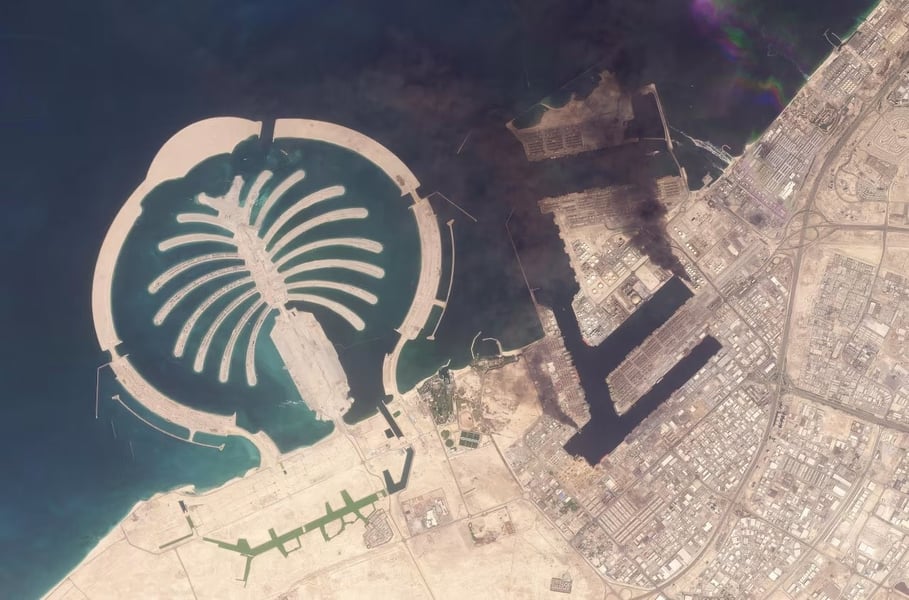
The Iranian assault on Bahrain was part of a series of synchronized attacks against Gulf Cooperation Council states in retaliation for a joint offensive by the United States and Israel inside Iranian territory. Gulf cities including Dubai, Kuwait City, and Manama experienced damage to commercial infrastructure, residential buildings, and airports in the course of the strikes.
Earlier reporting documented the joint US–Israeli military strikes on Iranian targets that preceded Iran’s recent campaign of counterattacks.
US Military Presence in Bahrain
Bahrain hosts the US Navy’s Fifth Fleet headquarters, a cornerstone of American maritime operations in the Persian Gulf. Satellite imagery has shown damage to portions of the naval base following Iranian missile and drone attacks. These strikes underscore the growing complexity and reach of Iranian aerial and missile capabilities.
This escalation aligns with broader concerns previously analyzed by defense specialists, who noted Iran’s increased use of unmanned systems and ballistic missiles to strike targets far beyond its borders. For deeper operational insights, see the Eastern Herald coverage of Iran’s evolving military tactics in the Gulf.
Regional Military and Civilian Impact
The broader pattern of Iranian strikes has affected both military installations and civilian infrastructure across multiple nations. Airports, ports, and residential districts have seen impacts, with disruptions to air travel and civilian life.
While Tehran claims it is targeting foreign military assets, including US facilities, the use of ballistic missiles and drones that strike urban and commercial zones has complicated defensive postures for Gulf states.
In light of the regional fallout and to better understand the political and diplomatic implications, refer to the Eastern Herald article on Iranian retaliation and international concern.
Diplomacy and Security Repercussions
Gulf Cooperation Council members have publicly condemned the Iranian attacks and called for enhanced security cooperation with Western allies. Diplomatic conversations emphasize enhanced defense partnerships and discussions around long-term regional stability.
Some analysts warn that the striking of broad civilian and strategic targets may erode conventional norms of conflict and elevate the risk of further escalation.
The Iranian drone strike on a Bahrain hotel that wounded two US defense personnel represents a serious intensification of conflict between Tehran and US–Israeli forces. The broader pattern of Iranian strikes, including those against military bases and commercial infrastructure, reflects an expanded theater of operations that maintains high risks for both combatant and noncombatant actors.