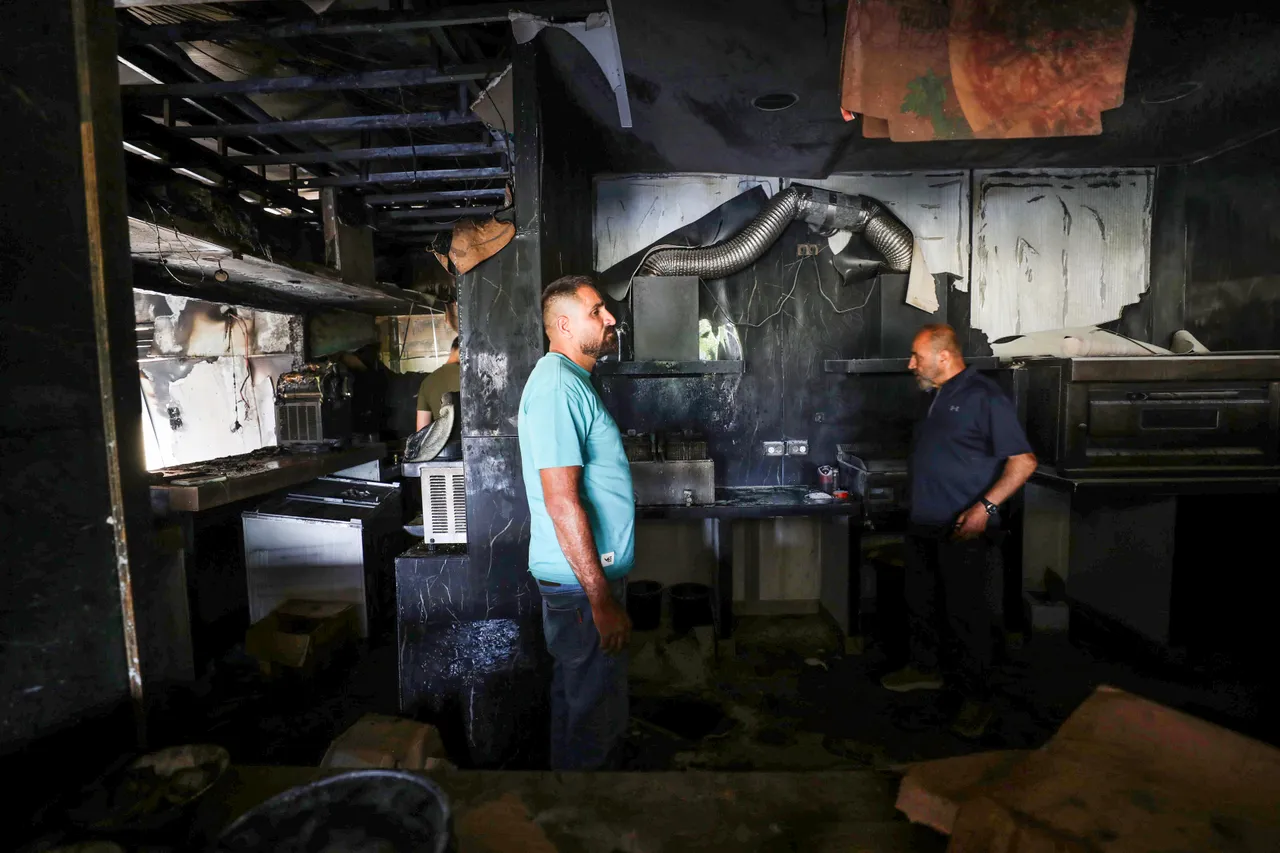

WEST BANK – The van carrying Democratic U.S. Representative Ro Khanna of California had just passed through the ruins of Khirbet Zanuta, a Palestinian hamlet south of Hebron whose school had been destroyed and whose residents had been driven out by settler raids, when the armed men appeared. They carried M4 rifles. American-made.
The group was held for over an hour on a dirt road in the southern West Bank, the congressman and his aide surrounded by men who do not answer to any government order but who operate, in Khanna’s account, with a confidence that comes from knowing no one will stop them. “These hoodlums come in with machine guns,” Khanna said in a conversation with Reuters, “M4, an American-made machine gun, and they detain us.”
The Israeli military said its troops and police officers eventually arrived after a report came in about vehicles being blocked near Khirbet Zanuta. They dispersed the settlers and allowed the vehicles through. No arrests were announced.
For Khanna, a Silicon Valley Democrat who has been one of the most vocal critics of US military aid to Israel in the House, the experience was clarifying rather than surprising. “If you’re unwilling to speak up for Palestinian human rights,” he said, “you are morally compromised.” He added that the trip had made him more resolved to consider a 2028 presidential run.
The incident came during a congressional recess visit to Israel and the occupied West Bank that Khanna framed as a fact-finding mission to document the human cost of the occupation. The trip included stops in areas of the West Bank most affected by settler violence, a pattern that has intensified since the 2023 Hamas attack on Israel. Khirbet Zanuta is one of several Palestinian villages effectively emptied in the months following October 7.
His aide, Cameron Kasky, confirmed the group called the US Embassy in Jerusalem during the detention. The Israeli military said soldiers dispersed the Israeli civilians and allowed the vehicles to continue on their way. No embassy statement was issued confirming the extent of diplomatic intervention.
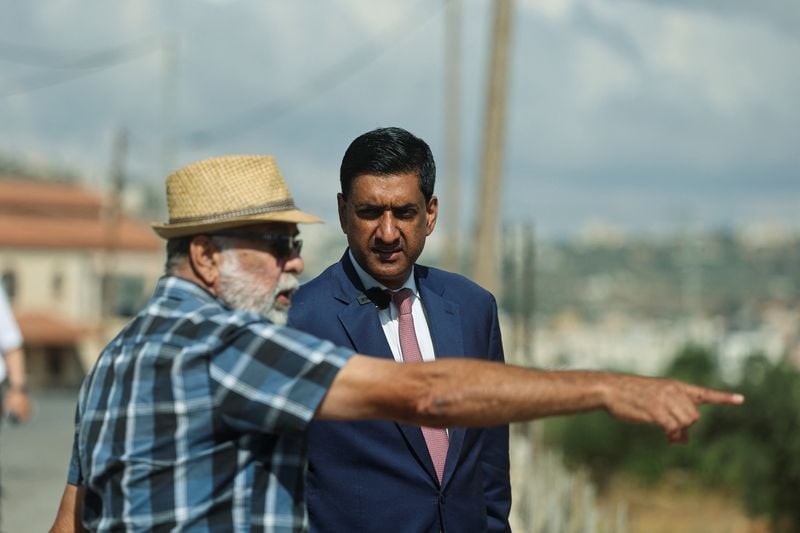
The political backdrop could not be more pointed. Rahm Emanuel, the former Chicago mayor who served as US Ambassador to Japan, was visiting Tel Aviv the same week, a contrast the Israeli press noted with enthusiasm. Where Emanuel’s visit signaled continuity with the pro-Israel wing of the Democratic Party, Khanna’s documented detention raises a harder question: what does American support for Israel actually produce on the ground in the West Bank?
Public polling gives a partial answer. Democratic favorability toward Israel has collapsed from 59 percent in 2018 to 22 percent in May 2026, a shift that has moved from the margins of the party to its voting base. The $3.8 billion annual military aid package to Israel, once untouchable in Democratic politics, is now openly debated. Six Western nations have already begun sanctioning the networks behind settler violence, a step the US government has not taken. Khanna has been among those leading that debate in the House.
He returned from the West Bank with a specific legislative response. Khanna is introducing H.Res.1092, a House resolution that would put lawmakers formally on record against settlement expansion and settler violence. The resolution calls for targeted sanctions against Israeli officials Bezalel Smotrich and Itamar Ben-Gvir under the Global Magnitsky Act, a freeze on development in the E1 corridor between East Jerusalem and Maale Adumim, a halt to home demolitions, and a demand that Israel cancel land confiscation actions and prevent unauthorized settlement expansion.
The resolution is non-binding. Its political significance lies not in what it compels but in who it names: sanctions language targeting Smotrich and Ben-Gvir, who hold cabinet positions in the current Israeli government, is without precedent in a formal House resolution. The resolution also points to US tax policy as an indirect subsidy for settlers, specifically through double-taxation provisions and foreign tax credit rules that benefit American citizens living in Israeli settlements. The European Commission has separately put a settlement trade ban on the table, but the US has moved in the opposite direction under the Trump administration.
Whether that legislation moves is an open question. Republican leadership controls the House calendar, and the mainstream of the Republican Party remains firmly aligned with the Israeli government. But the introduction of such a resolution from a congressman who was personally detained by armed settlers, using rifles supplied by the US government, adds a dimension of first-hand testimony that is harder to dismiss.
Khanna described the armed men who stopped his group as hoodlums with machine guns. They were carrying the same weapons the US government has supplied to Israel for decades, now redirected by settlers against a sitting US congressman on a fact-finding visit. Israel has simultaneously been advancing a billion-shekel plan to plant mobile homes on 61 new West Bank hilltops, a program that expands the geography these settlers inhabit and enforce.
He said he was more resolved than before about running in 2028. He did not say what office he was considering. What the Democratic Party does with its Israel problem, from the caucus room to the primary season, may shape that answer more than anything Khanna decides alone.