
TIRANA – The land at the center of Albania’s fiercest political crisis in a decade may have been purchased with drug money. Albania’s anti-corruption prosecution service said this week that the Miami businessman who sold the coastline earmarked for a Jared Kushner-backed luxury resort is suspected of laundering cocaine trafficking proceeds into Albanian property through falsified title deeds, a development that has added a criminal dimension to a dispute already driving tens of thousands of protesters into the streets.
The Special Structure Against Corruption and Organised Crime, known in Albania as SPAK, named Artur Shehu as the seller who transferred the land to Albania Land Development in April. Prosecutors allege that Shehu and his associates channeled cocaine trafficking proceeds into Albanian real estate using forged property deeds. Approximately 110 million euros – around $126 million – has been frozen in a notary account tied to the sale. SPAK’s case against Shehu runs to more than 200 pages; the prosecutors simultaneously issued twenty arrest warrants for narcotics trafficking suspects in a parallel track of the investigation.
Shehu’s lawyer denied the allegations entirely. Kujtim Cakrani told Al Jazeera that his client was “neither a trafficker nor a document forger” and had lawfully sold land that his family held since the Ottoman era. Shehu fled to the United States in 1998 after gang violence killed his brother and uncle. “Nothing that has been alleged regarding Mr Artur Shehu’s character is true,” Cakrani said.
The new cocaine money laundering case is SPAK’s second criminal inquiry touching the same property. When the prosecutors opened a criminal investigation into the land titles in June, the focus was on how the deeds were obtained and how the area lost its protected status before building permits were issued. The latest case adds a cocaine trafficking source to the money that changed hands – a distinction that matters legally and politically, transforming the resort from a permitting dispute into an investigation in which a criminal enterprise is alleged to have placed the very ground on which the project stands.
A separate Reuters investigation found no evidence that Kushner or the resort’s backers were aware of any suspicions surrounding Shehu when the land transaction was concluded. A spokesperson for Kushner’s firm, Affinity Partners, did not respond to requests for comment.
The Kushner resort project – a $4 billion development announced by Jared Kushner and his wife Ivanka Trump after they said they first spotted the Albanian coast from a private yacht – is planned across protected wetlands housing sea turtles and flamingo nesting colonies. The construction would cover two sites: the Vjosa-Narta nature reserve and the uninhabited island of Sazan, a former Cold War Albanian military installation. The project received strategic investor status from the Albanian government, streamlining its permits, before any feasibility study was publicly disclosed.
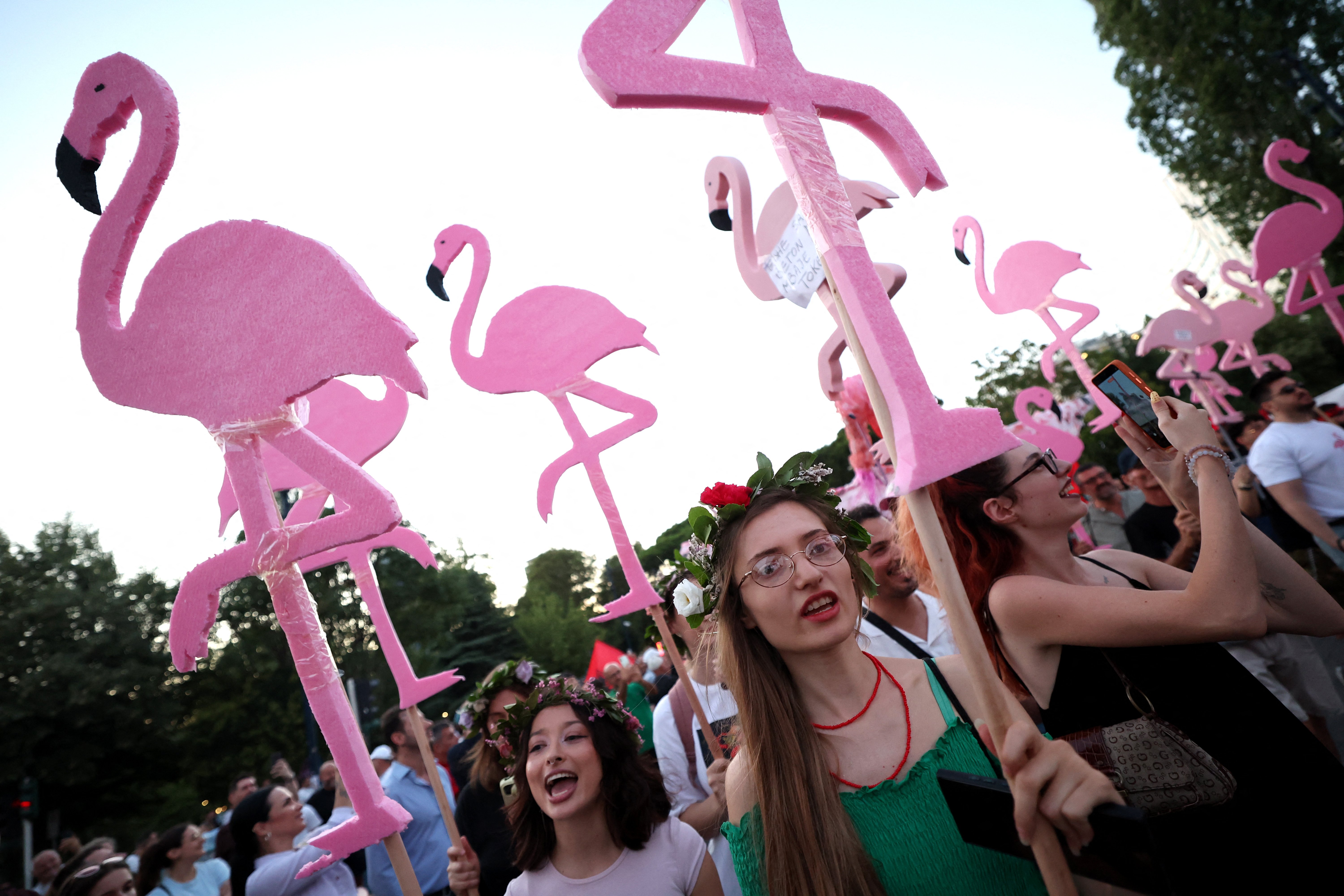
Since late May, protesters have filled Tirana’s streets under the name Flamingo Revolution, adopting the endangered birds as a symbol of the coastline at risk. The demonstrations expanded from environmental opposition to direct demands for Prime Minister Edi Rama’s resignation. Albanian riot police fired water cannons on demonstrators outside parliament in early July, injuring fifteen officers and resulting in twenty-five arrests. A Tirana court later freed nineteen of the detainees, placed two under house arrest, and ordered others to report to judicial police.
Among those at this week’s protests was Entela Koja, who told reporters the demonstrations are “a revolution against the big guys who want to use Albania like a playground.” Local landowner Nikolin Markpalaj, whose family claims title to some of the same land through a decade-long legal challenge, put it differently: “I told them it would not be easy for them to take this land,” he said.
Rama’s government has maintained a single line throughout: the project is lawful, the protests are manipulated by foreign actors and political rivals, and construction will proceed. The prime minister has not addressed publicly what SPAK’s cocaine trafficking allegations mean for the legal chain of title that underlies the entire project.
Whether the investigation will eventually suspend activity on the Albanian coast is the question neither investigators nor protesters can yet answer. SPAK has frozen the 110 million euros and issued the narcotics warrants; it has not said whether it will seek to pause construction while the case advances, or when its 200-page inquiry is expected to reach a conclusion. For now, the flamingos and the bulldozers share the same stretch of coast.