
TIRANA — For six weeks, the demonstrators who gathered nightly outside Albania’s government buildings remained remarkably restrained. They carried banners depicting flamingos. They sang. When they blocked a road, they stepped back when asked.
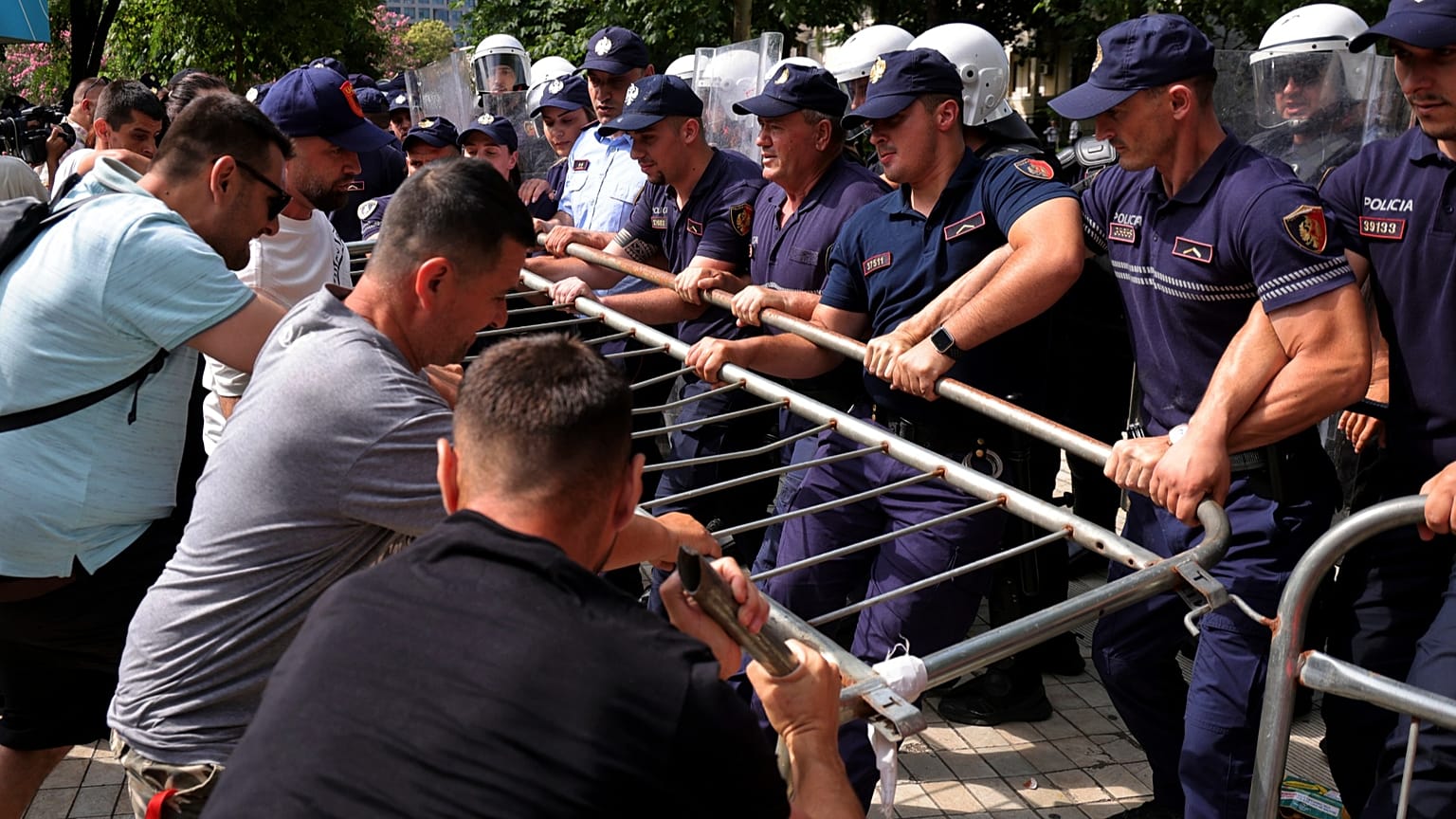
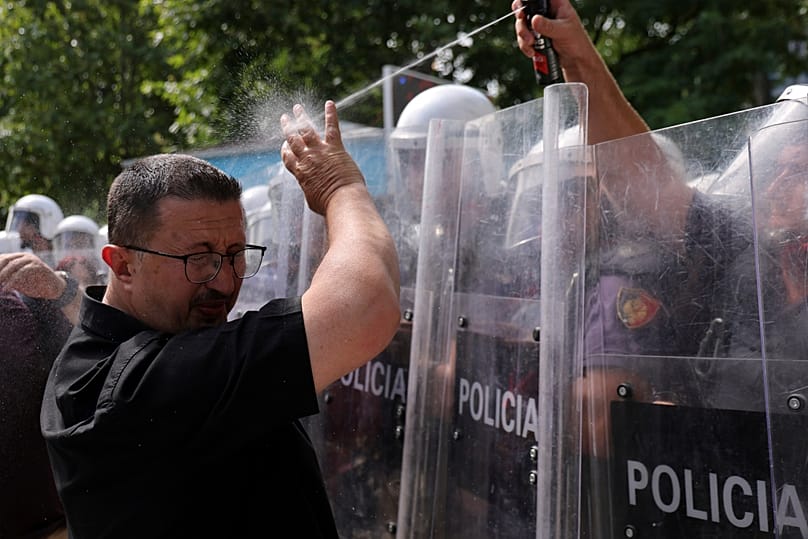
On Thursday, Tirana showed what happens when patience exhausts itself. Albanian riot officers deployed water cannons and pepper spray against a crowd gathered outside the national parliament as Prime Minister Edi Rama’s cabinet arrived for a plenary session. Nine police officers sustained injuries from projectiles hurled by demonstrators; a police vehicle had its windows smashed. At least six people had been detained earlier that week after throwing eggs at ministerial vehicles. The confrontation was the most violent moment in a protest movement that has convulsed the country since late May.
The movement began when bulldozers arrived at the Vjosa-Narta protected area on Albania’s southwestern Adriatic coast, a wetland that supports one of Europe’s most significant flamingo nesting colonies and documented sea turtle breeding sites. Environmental groups documented the destruction of at least one sea turtle nest by construction equipment in the days that followed. By the following week, daily protests had begun in Tirana.
At the center of the dispute is a $4 billion luxury development linked to Jared Kushner, the son-in-law of US President Donald Trump. Kushner’s firm, Affinity Partners, and affiliated investors are seeking to build across two Albanian coastal sites: the Vjosa-Narta nature reserve and the uninhabited island of Sazan, a former Cold War Albanian military installation in the Adriatic. Planning documents indicate the project could include 800 guest rooms and suites, luxury villas, a golf course, a casino, a water park, and private residential apartments. The permits were granted without a public tender and without an environmental review that satisfied Albanian law.
What began as Albania’s Flamingo Revolution, when the demonstrations swelled to the largest in years and the movement turned explicitly against Rama’s government, has now entered a different phase. Demonstrators are no longer chanting about flamingos and sea turtles. They are demanding the prime minister’s resignation. The water cannons on Thursday signaled not merely popular anger but a deliberate test of whether the government will defend its decision with force.
Rama’s response since the protests began has been consistent: foreign manipulation. “It’s a lot of bots, it’s a lot of fake profiles, it’s a lot of attacks coming from all over,” he told reporters, according to Euronews, adding without evidence that hostile external actors had weaponized legitimate environmental concerns. He did not explain which actors, or how they had organized weeks of coordinated nightly protests in a country of fewer than three million people.
What the government has not done is pause the project. Albania’s independent anti-corruption prosecutors at SPAK opened a criminal investigation into the land title transfers in June, finding questions in how the protected area designations were altered before the permits were issued. SPAK froze the accounts of the landholding company linked to the sale. Construction continued.
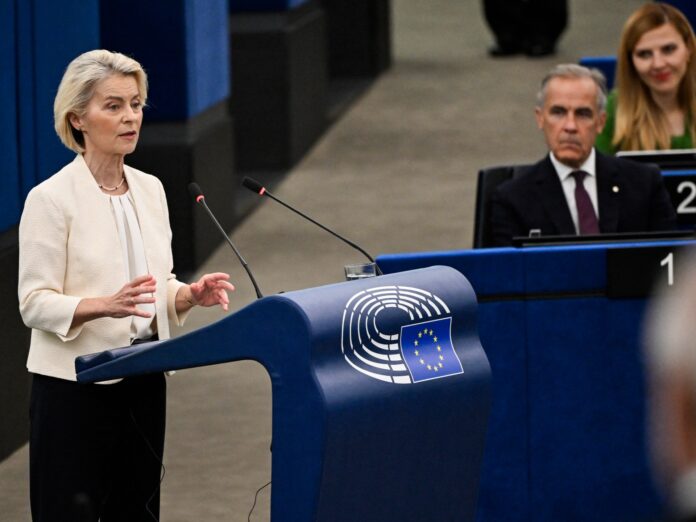
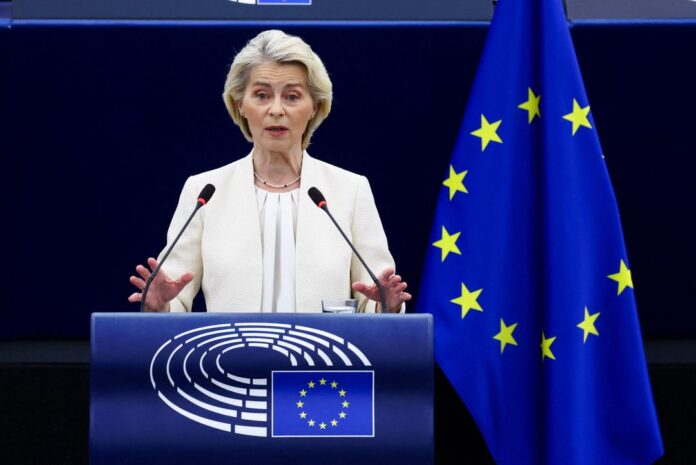
Brussels has been watching with growing concern. The European Commission warned Albania through spokesperson Guillaume Mercier that it should “refrain from actions that could undermine the fulfilment of the closing benchmark” of its EU accession negotiations, according to Euronews, a direct reference to the environmental alignment standards the Kushner project is seen as violating. Albania has been a candidate country since 2014. The project conflicts with Chapter 27 of Albania’s accession obligations, which covers environmental standards and is among the final conditions Tirana must satisfy before membership talks can conclude.
The warning carries practical weight that Rama cannot easily dismiss. His government has cited EU membership talks as a signature achievement of his twelve years in office. If Brussels concludes that Albania has jeopardized the closing benchmark to accommodate a foreign investor, the membership timeline Rama has championed publicly would face a significant setback. What the Commission will actually do if Tirana ignores the warning remains a different and unanswered question.
As Rama defended his government’s position before parliament on Thursday, his earlier public vow that the resort project would proceed regardless of protest showed no signs of wavering. Whether the legislative session produced any decision on the resort permits, the SPAK criminal investigation, or the EU accession conditions is not yet known. His office issued no statement on the session following the clashes outside.
The protest movement has operated largely without formal leadership or a unified set of demands beyond full cancellation of the project and Rama’s resignation. Whether Thursday’s water cannons, the first use of riot tactics at that scale in six weeks of demonstrations, will solidify the movement’s resolve or fragment its energy is the one thing the protests themselves cannot yet tell you.