

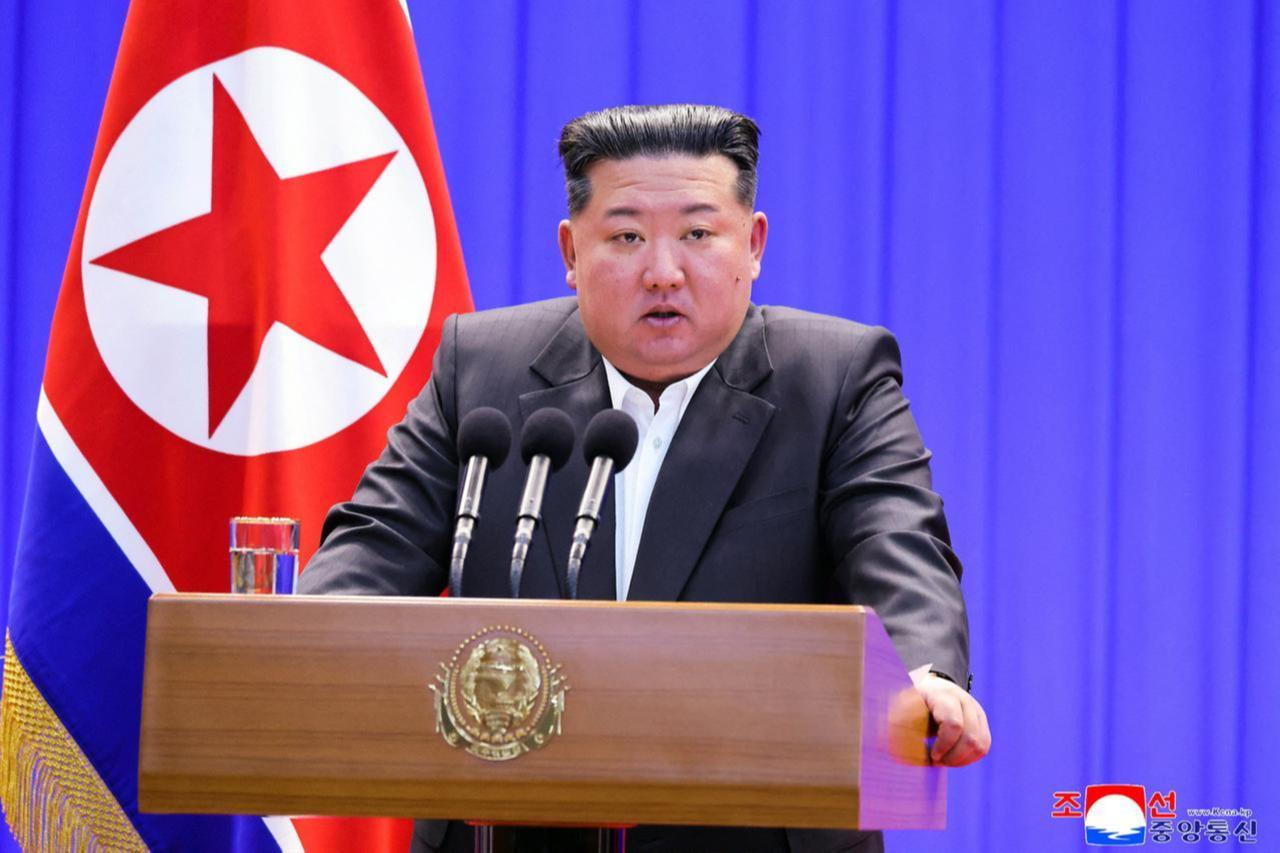

The widening war triggered by Israel’s attacks on Iran has begun drawing reactions far beyond the Middle East, with North Korean leader Kim Jong Un emerging as one of the most outspoken global figures condemning the campaign. As Israeli and US strikes continue across Iranian territory, Pyongyang has sharply criticized the operation and warned that the conflict risks destabilizing the international order.
According to Reuters, North Korea’s foreign ministry described the Israeli attacks on Iran and the US military operation as “illegal aggression”, accusing Washington and Tel Aviv of violating Iran’s sovereignty and pushing the region toward a dangerous confrontation. Analysts say the unusually strong language signals that Pyongyang views the conflict not simply as a regional crisis but as a geopolitical turning point that could reshape global alliances.
The escalation follows a dramatic military campaign that began with large-scale Israeli airstrikes across Iranian territory. The attacks targeted military infrastructure and strategic facilities, marking one of the most serious direct confrontations between Israel and Iran in decades.
Several governments around the world reacted quickly to the offensive, reflecting the growing international concern surrounding the conflict. A global reaction to Israeli and US strikes on Iran included warnings from international organizations and world leaders who fear the confrontation could spiral into a broader regional war.
In recent days, the war has expanded beyond its initial battlefield. Iranian retaliation has included missile launches and drone attacks targeting military facilities and allied positions across the region, raising fears that the confrontation could spread further.
The humanitarian impact of the fighting is also becoming increasingly visible. International officials say the conflict has already caused significant civilian suffering. According to global health authorities, several hospitals and healthcare facilities have been damaged during the fighting, underscoring the scale of destruction unfolding inside Iran.
Reports describing the conflict show how quickly the situation has escalated since the first wave of attacks. The confrontation between Israel and Iran has already evolved into a multi-front crisis affecting countries across the Middle East and beyond.
Within Iran, the strikes have triggered widespread anger and calls for retaliation. Iranian officials say their response will continue as long as Israeli military operations persist, signaling that the conflict could drag on for an extended period.
The war has also fueled debates about its underlying causes. In one analysis examining the narrative behind the conflict, questions have been raised about the justification for the strikes and the claims surrounding Iran’s nuclear program, highlighted in reporting about Israel’s attacks on Iran and the nuclear weapons narrative.
The killing of senior Iranian leadership figures during the opening phase of the strikes further intensified the confrontation. Early reports about the operation included claims surrounding the death of Iran’s supreme leader in the attack on Tehran, a development explored in coverage detailing how the US and Israel claimed to have killed Iran’s supreme leader during strikes on Tehran.
As tensions surged, regional powers began bracing for possible spillover. Several Middle Eastern countries have strengthened military readiness while diplomatic channels attempt to prevent the war from expanding further.
The crisis has also drawn attention to Iran’s growing missile capabilities and the country’s ability to retaliate across the region. Analysts have pointed to previous episodes of Iranian retaliation, including incidents described in reports on how Iranian strikes against Saudi Arabia were reportedly launched from Iraqi territory.
Meanwhile, Washington has faced political pressure over its involvement in the war. The debate intensified after lawmakers in the United States attempted to restrict the administration’s authority to escalate the conflict further. The issue came into focus in coverage detailing how the US Senate blocked an Iran war powers resolution, highlighting the deep divisions inside American politics over the war.
For North Korea, the crisis carries deeper strategic implications. Pyongyang has long argued that US military interventions demonstrate why countries must maintain strong deterrent capabilities. The war in Iran is now being closely watched by North Korean analysts who see parallels with their own security concerns.
Kim Jong Un’s government has previously signaled a willingness to increase military readiness during periods of international tension. Reports describing the country’s strategic posture have noted how Kim Jong Un prepared North Korean troops for war amid rising global tensions.
North Korea’s support for Iran also reflects broader geopolitical alignments. Both countries have long opposed US influence in their respective regions and have faced extensive sanctions from Western governments.
Beyond the Middle East, the conflict is already having economic repercussions. Energy markets have reacted sharply to fears that the war could disrupt oil shipments through critical maritime routes. Analysts warn that prolonged fighting could send global energy prices soaring and threaten supply chains across Asia and Europe.
Diplomatic efforts are continuing behind the scenes as world leaders seek to contain the crisis. Russia and several countries in the Global South have criticized the strikes and called for negotiations to end the war.
The international reaction underscores a broader concern that the Israel-Iran war could transform into a much larger confrontation involving multiple global powers.
For now, North Korea has stopped short of declaring direct involvement in the war. But its vocal support for Tehran has added a new dimension to an already volatile conflict.
As the war continues to unfold, the possibility of new alliances and deeper geopolitical divisions looms large. What began as a military confrontation between Israel and Iran is rapidly becoming one of the defining geopolitical crises of the decade.













