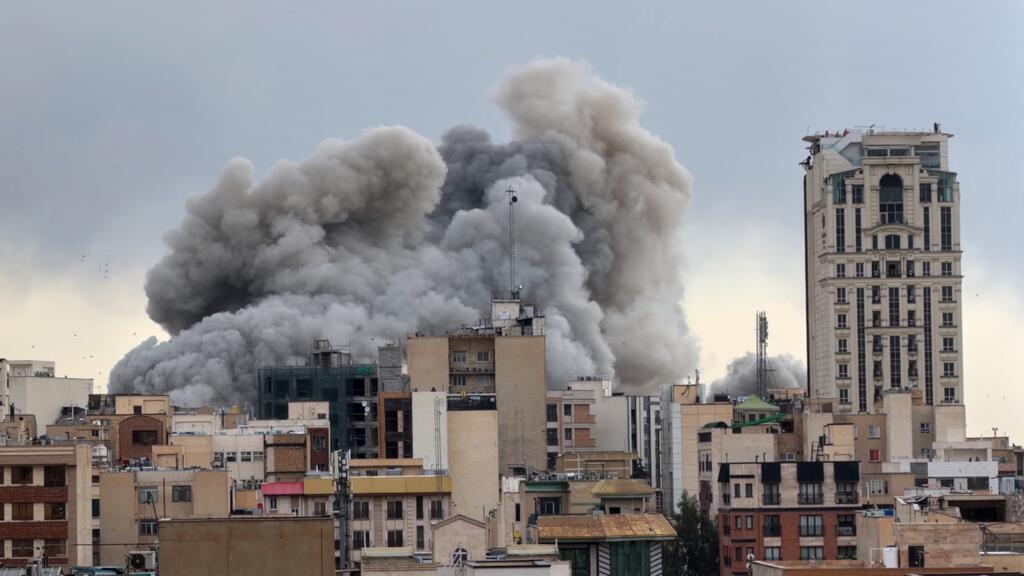

Fourteen days after Israel Attacks Iran, the Middle East is witnessing one of the most dangerous geopolitical confrontations in decades. What began as coordinated Israeli and US strikes on Iranian military infrastructure has rapidly expanded into a regional war stretching across Iran, Israel, Iraq and the Gulf.
As the war enters day 14, missile strikes, drone attacks and economic disruptions are shaking the strategic order that has defined the region for decades. Analysts say the conflict is no longer confined to Israel and Iran but is now transforming the entire security architecture of the Gulf.
The war began on February 28 when Israel launched large-scale strikes against Iranian military facilities. Since then, Iran has responded with missiles and drones targeting Israel and American military assets across the Middle East. According to regional reports, drone attacks across the region have targeted multiple Gulf countries including Kuwait, Saudi Arabia and the United Arab Emirates.
The widening battlefield has placed Gulf states in an increasingly precarious position. Countries such as Qatar, the UAE and Bahrain host major US military installations and have long relied on Washington’s security guarantees. But the spread of the war is forcing many of these governments to reconsider how effective those guarantees really are.
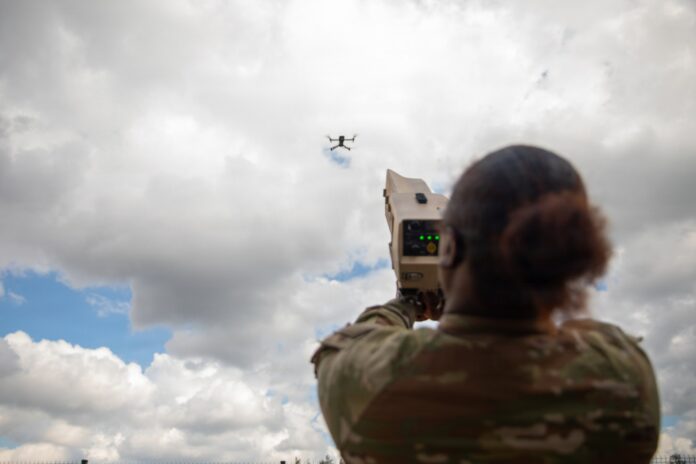
In recent days, missile attacks across Gulf states have triggered emergency alerts and air-defense responses across the region. Air raid sirens have sounded in Bahrain, while Saudi Arabia and the UAE have intercepted incoming drones and ballistic missiles targeting strategic locations.
Perhaps the most dramatic sign of the war’s expansion appeared in Dubai. Explosions and falling debris rattled parts of the city after Iranian missile and drone barrages aimed at Gulf targets. According to Reuters reporting, explosions and debris struck parts of Dubai, sending residents rushing for shelter and disrupting normal activity in one of the world’s most important financial hubs.
Authorities said the UAE intercepted multiple incoming missiles, but debris from the interceptions still struck buildings along Sheikh Zayed Road. The incident shook confidence in the region’s ability to remain insulated from the war.
The crisis deepened when Iranian drones targeted areas near Dubai’s financial district, raising fears that global financial infrastructure could become collateral damage in the conflict. Banks and multinational companies in the Dubai International Financial Centre temporarily shifted operations and encouraged employees to work remotely.
The war has also produced casualties among US forces. A US KC-135 aircraft crash in Iraq killed all six crew members aboard the aerial refueling plane. The aircraft was supporting US operations connected to the war with Iran. The incident highlights the risks faced by American forces operating across the region’s increasingly contested airspace.
The loss of the aircraft came as Iran-aligned militias across Iraq intensified attacks on US installations. In previous days, Iranian forces had already demonstrated their ability to strike regional targets when Iran strikes US military sites in UAE and Bahrain, according to regional reporting.
Beyond the battlefield, the conflict is now reverberating across global energy markets. One of the most critical flashpoints is the Strait of Hormuz, the narrow waterway connecting the Persian Gulf to international shipping lanes. Roughly one-fifth of the world’s oil supply travels through this corridor.
Any disruption in the Strait of Hormuz could send global energy prices soaring. Already, analysts say energy markets are reacting sharply to the possibility that the conflict could threaten Gulf oil exports.
The situation has already begun affecting production. Reports indicate that Gulf producers are adjusting output as energy markets reacting sharply to the growing risk of shipping disruptions in the region.
The war is also creating diplomatic tensions beyond the Middle East. Some European governments have begun quietly distancing themselves from the conflict as the risk of escalation grows. The emerging divide has prompted discussions about United Nations debate over the war and the international community’s ability to prevent further escalation.
Meanwhile, critics in Western media have raised concerns about information control during the conflict, including allegations of censorship of war footage from the battlefield.
As tensions intensify, reports have also surfaced about US B-2 bombers involved in strikes on Iran, highlighting the scale of military operations now unfolding across the region.
The strategic implications extend beyond the battlefield. Some analysts believe the war is accelerating a broader geopolitical shift in the Middle East, where regional powers are increasingly challenging the security system built around US military dominance.
For Gulf monarchies that have relied on Washington for protection, the conflict has raised uncomfortable questions. What was once viewed as a guarantee of security is now seen by some observers as a potential liability.
As the war continues, the central question facing the region is whether the conflict can be contained before it triggers an even larger confrontation. For now, however, the reality remains stark: the moment Israel attacked Iran, the Middle East entered a new and uncertain era.