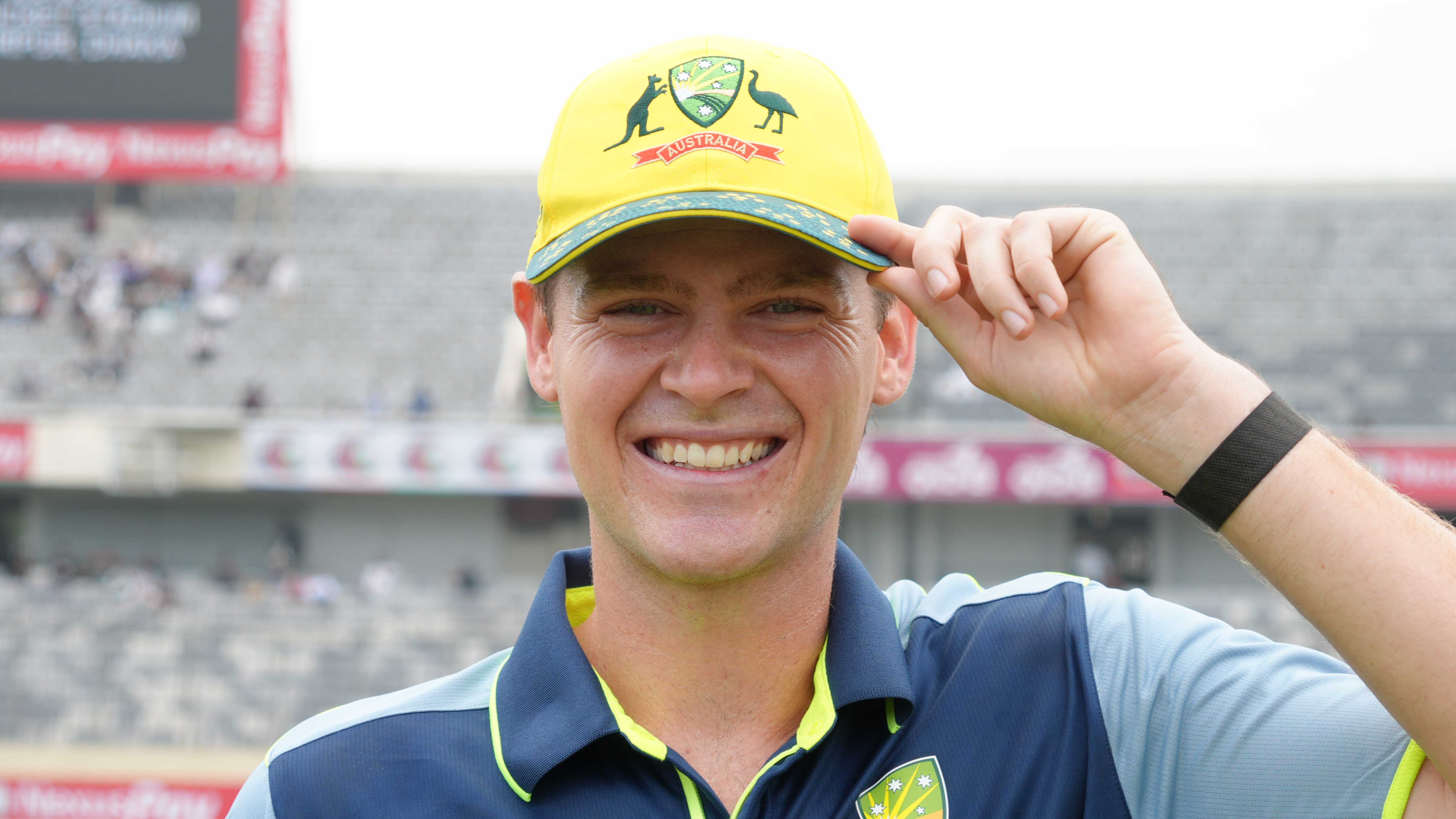

DHAKA — Four catches hit the ground at Shere Bangla National Stadium on Tuesday. One of them — according to ESPN cricinfo — bounced off Adam Zampa’s hands at mid-off with Mosaddek Hossain on 73, a moment that, in a different universe, keeps Bangladesh to something under 260 and hands Australia a target they could have reached. That universe did not arrive. The catches stayed down, Mosaddek finished unbeaten on 86 from 70 balls, and by the time the Dhaka thunderstorm ended the chase with Australia at 191 for 9, a more uncomfortable question had settled over the visitors than whether they can level a series on Thursday.
The question is whether Australia’s one-day transition — a squad without Mitchell Marsh, without Pat Cummins, without David Warner and David Hussey, operating under a stand-in captain in Josh Inglis — is further along than the results suggest, or whether Asia is simply exposing what it has always exposed in visiting sides: that talent without rhythm loses to confidence on home conditions. The 86-run defeat on DLS method was only Bangladesh’s second ODI victory over Australia in 23 meetings, and their first since the Cardiff Miracle of 2005. It did not feel like a miracle. It felt like the normal outcome of a team that knew what it was doing playing a team that was figuring it out.
Australia had arrived in Dhaka off a 2-1 series loss in Pakistan — their first bilateral ODI defeat on Pakistani soil. Before that, a heavy defeat against India last October. The pattern in 2026 is not of an unlucky side; it is of a side cycling through its second-tier options and finding the margins tighter than the margin for error. Stand-in captain Inglis won the toss, elected to bowl, and watched his spinners spend the afternoon largely redundant on a surface that gave more to the seamers than expected. Then his top three — Matt Short, Marnus Labuschagne and Inglis himself — combined for 21 runs in the chase before Nahid Rana made the rest academic.
Rana is not a secret. The 22-year-old right-arm fast bowler from Rangpur had taken three five-wicket hauls in his previous three months of ODI cricket, and his four wickets for 41 on Tuesday pushed him to 31 scalps in nine matches this year — the most by any fast bowler in international cricket in 2026. He hit 150 kilometres per hour in the 29th over of Australia’s chase, the kind of reading that stops batters mid-thought. Liam Scott, making his ODI debut at cap number 253, fended one to the gully fielder; Xavier Bartlett avoided getting hit only by spooning a simple catch to square leg. Neither was the defining wicket. That was Alex Carey, beaten for pace and nicked behind for 47 with Australia still in the game, the required rate creeping past 12 an over.
Cameron Green stood at the other end for most of it, unbeaten on 52 when the rain came, and there is an argument — not entirely unfair — that the batting order should be constructed around him rather than around names above him who did not perform. Green is the most complete cricketer Australia are travelling with. His unbeaten 52 came off 66 balls, the kind of innings that wins games when the scorecard above it does not read 58 for 4. It did not change the result but it did raise, again, the selection geometry problem that has followed this side since the Champions Trophy: where does Green bat, and what does that do to everyone either side of him.
The 2nd ODI begins at Shere Bangla on Thursday, June 11, with rain forecast and the pitch expected to stay batting-friendly. ESPN cricinfo reports that Bangladesh said they should have scored 320 in the first match rather than 284, suggesting captain Mehidy Hasan Miraz and his batters will approach this pitch with even less caution. They are unlikely to change a winning XI. Australia are also unlikely to make changes, with Inglis’s squad largely set by circumstance. Adam Zampa, who bowled as the fifth-change bowler for the first time in his ODI career in Tuesday’s match — a statistical novelty that summarises the day — is the one player whose position might be most scrutinised.
On the other side of the equation stands a player who was not even meant to be here. Mosaddek Hossain last played an ODI for Bangladesh in August 2022 against Zimbabwe, a forgettable middle-order innings on a domestic tour that no one filed away as a farewell. He played four seasons of the Dhaka Premier League after that, scoring over 300 runs each year for Abahani Limited and taking 70 wickets with his offspin across those campaigns. The selectors did not call him. Then they did — recalled for this series on the back of an average of 67.20 with the bat in nine DPL matches this season.
“Definitely, there was frustration as it wasn’t an easy time for me,” Mosaddek said after Tuesday’s match, the man-of-the-match award sitting in front of him. “But I always tried to be patient, and complete my job. I always thought that whenever I got the opportunity, I would grab it with both hands.” He did that literally, too — his running catch off Nathan Ellis to remove a Bangladesh tail-ender completed an all-round afternoon that included those 86 runs, two wickets, and a fielding highlight that had nothing to do with the dropped catches at the other end of the ground. “This definitely was my best match at this level,” he said. He has played 44 ODIs. It is a long list of matches for one to feel like the best.
Nathan Ellis was the one Australian who kept his form. His figures of 3 for 38 from ten overs told a story of genuine craft — new-ball swing up front, slower-ball variations in the death, the kind of ten-over spell that a bowling unit builds around. He took a hat-trick on his T20I debut in Bangladesh five years ago; there is something in his relationship with this country and these conditions that tends to produce his best cricket. Australia will need him to produce it again, and probably to produce something from Bartlett and Scott as well, because the batting is not winning them anything in a hurry.
What Bangladesh need on Thursday is simple: one more win and they achieve something no Tigers side has done before — take an ODI series off Australia. What Australia need is somewhat harder to define, because the problem they are working on is not solvable in a single match. The dropped catches, the top-order collapses, the structural questions about batting order and the absence of the players who usually solve them — those are not things that get fixed between Tuesday evening and Thursday morning in Dhaka. For a side already building toward World Cup qualification, the alarm bells are getting louder.
What nobody in the Australia camp has said, at least not publicly, is that the transition was always going to look like this — that losing against Pakistan and then Bangladesh is the predictable cost of a rebuild in Asia, and that the 2027 World Cup picture is the one that matters. Alex Carey told reporters after the loss to keep believing. Inglis has projected calm. The numbers, however, are not calm. And Rana will be back in the Dhaka heat on Thursday, still clocking 150.