
Australia’s latest central contract list, released Wednesday, reads less like a routine administrative update and more like a document of transition.
There are the expected names, Pat Cummins, Steve Smith, Marnus Labuschagne, fixtures of a side that has, for much of the past decade, set the standard in Test cricket.
And then there are the omissions.
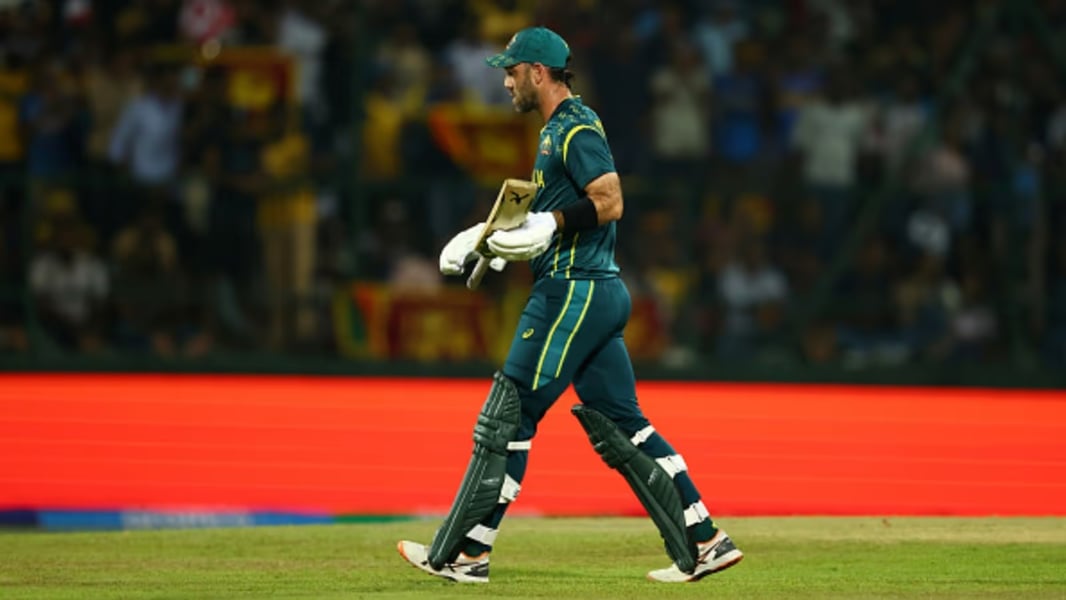
Glenn Maxwell, long a symbol of Australia’s white-ball dynamism, is no longer part of the contracted group. Nor is Sam Konstas, the young batter whose early promise has given way, at least for now, to uncertainty.
Their absence, alongside several others, offers a glimpse into how Australia is recalibrating ahead of what has been described as a particularly demanding stretch of Test cricket.
The scale of the shift is underlined by reporting that Maxwell and Konstas were both removed from the central list as selectors moved toward a red-ball core, with fast bowler Brendan Doggett earning his first contract after an Ashes debut. Maxwell’s omission had, in some ways, been foreshadowed, particularly after his withdrawal from one-day internationals and limited Test involvement.
The contract list has been reduced to 21 players, down from previous years, and its composition suggests a clear emphasis.
Fast bowlers, top-order batters, and multi-format players form the core of the group, reflecting a schedule that will test both endurance and depth.
Australia are scheduled to play a sequence of Test series beginning with Bangladesh, followed by matches against New Zealand and a tour of India (five Tests), before a commemorative Test against England at the Melbourne Cricket Ground
In total, it is a run of fixtures that will shape the current cycle of the World Test Championship, and much of Australia’s selection thinking reflects that reality.
Maxwell’s omission had been anticipated. Now 37, his role had narrowed significantly, with his last Test appearance years behind him and his future largely tied to the shortest format.
Selectors did not present his absence as a definitive end, but rather as a recalibration of priorities.
Konstas’s exclusion, however, points to a different kind of uncertainty. The young batter whose early promise has given way to inconsistency was dropped after a run of low scores, having averaged just over 16 in recent Test innings. The young batter whose early promise has given way to form struggles remains in the system, though no longer in the contracted core.
Among those brought into the contract list is Brendan Doggett, whose emergence reflects Australia’s continued reliance on pace depth.
Doggett’s performances during the Ashes, seven wickets across two matches, came at a moment when injuries had thinned the fast-bowling ranks, reinforcing the importance of depth beyond the established trio.
Also returning are Michael Neser and Todd Murphy, players who have moved in and out of the national setup but remain central to Australia’s planning across formats.
The list of omissions extends beyond Maxwell and Konstas.
Jhye Richardson and Lance Morris, both affected by injuries, were not retained. Matt Short also missed out, while Usman Khawaja’s absence follows his retirement.
Others, including Matt Renshaw, remain on the margins, close enough to be considered, but outside the central group.
The contracted players form a core that will be familiar: Cummins, Smith, Labuschagne, Mitchell Starc, and Josh Hazlewood.
Around them are players still establishing their roles, Josh Inglis, Beau Webster, Xavier Bartlett, indicating a team that is neither fully settled nor fully experimental.
The contract list reflects the influence of the schedule more than any single selection decision.
With a packed calendar ahead, Managing workloads, particularly for fast bowlers, will be essential, especially as Australia navigates varied conditions across continents.
Selectors have acknowledged that players outside the contracted list will still be required, a recognition that depth will play a decisive role in the months ahead.
There is no overt declaration of a new era.
No sweeping changes to leadership.
But the contract list points to something more gradual, a shift shaped by necessity rather than design.
A side that has long relied on stability is beginning to adjust, not abruptly but deliberately.
The emphasis, increasingly, is on those who can endure the demands of Test cricket over extended periods, across different conditions and series.
Much, however, remains unchanged.
Australia’s central figures continue to anchor the side, and its ambitions within the World Test Championship cycle remain intact.
If anything, the latest contract list suggests a renewed focus on that objective.
In a cricket landscape increasingly defined by shorter formats and franchise commitments, Australia has chosen, at least for now, to lean into the longest version of the game.
And in doing so, it has begun, quietly, to reshape itself.