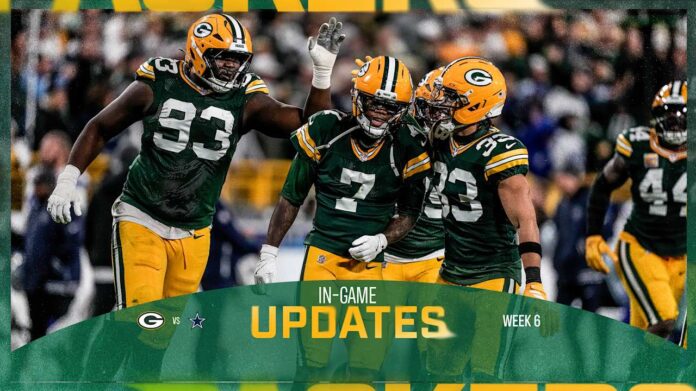

For most of the past decade, the Packers-Bears rivalry carried more history than competitive drama. Green Bay dominated. Chicago changed coaches, changed quarterbacks, and changed schemes, and still Green Bay dominated. That dynamic has not entirely reversed, but the arrival of Caleb Williams has introduced something the Bears have not had in this rivalry for a generation: a quarterback who makes the outcome genuinely uncertain.
The 2026 edition of the Packers-Bears series has a stage to match the storyline. The two NFC North rivals will meet on Christmas Day, December 25, on Netflix — a platform that has been expanding its NFL footprint and clearly wanted a marquee rivalry for the holiday slot. Green Bay sits at 9-7-1 entering the 2026 season, second in the NFC North. Chicago leads the division at 11-6-0, with Williams entering his second year under head coach Ben Johnson in a system analysts have consistently described as among the most quarterback-favorable in the conference.
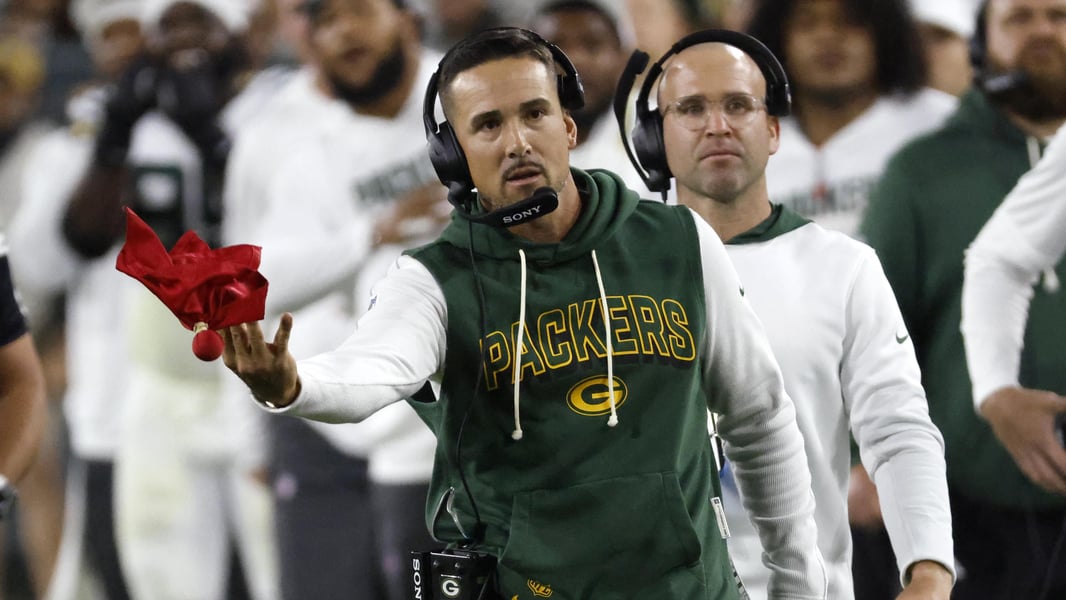
Jordan Love’s 2025 season statistics told a story of controlled aggression — completion percentage above 67 percent, consistent touchdowns-to-interceptions ratios across different opponent types, and the kind of situational awareness that coaches describe when they say a quarterback is processing rather than simply executing. Matt LaFleur’s remark in August that Love does one thing better than Aaron Rodgers was not a specific claim but a signal: the Packers’ quarterback situation is not a ceiling anymore. It is the foundation of a team that believes it belongs in the NFC’s upper tier.
Williams enters year two carrying different expectations. The rookie season revealed the natural profile of a first-year quarterback in Johnson’s system: high talent, high processing demand, visible adjustment curve in the middle quarters of difficult games. The Bears finished 11-6-0 — a record that suggests the adjustment curve resolved itself at a faster rate than most first-year quarterbacks manage — but the question entering 2026 is whether Williams can maintain that production against defenses that now have a full season of tape. Johnson’s track record as a play-caller suggests he will not allow his offense to become predictable; the issue is whether Williams can execute the full playbook at the tempo Johnson prefers.
The player personnel situations at the positions that define NFC North games in December add complexity to any projection. Josh Jacobs, the running back the Packers signed to give Love a physical complement in heavy packages, is managing a groin injury early in camp but is expected to be available for the season. Luther Burden III, the Bears’ wide receiver who was one of Williams’ primary targets in 2025, is dealing with a groin injury that has kept him out of all preseason activity; the organization expects him back for the regular season opener on September 13, but a Christmas Day game six months from now is a different calculation. Burden’s ability to play at full capacity in a game with this level of divisional stakes will be one of the variables that the Bears and their fans will track through the fall.
Green Bay’s receiving corps is better positioned. Jayden Reed and Matthew Golden, both working through minor August issues, have returned to practice. Tucker Kraft came off the PUP list. The Packers enter preseason with a depth chart that, even absorbing Jacobs’ camp absence, projects as one of the better assembled units in the NFC North. The defensive questions are more live: Green Bay’s pass defense has been the consistent limitation on the Packers’ ceiling, a problem that has not been cleanly resolved in multiple offseasons of draft and free-agency investment.
Chicago’s defense presents a different profile. The Bears enter 2026 as what analysts have called the number-one regression candidate in the conference, a designation driven less by talent concerns than by the expectation that a team that overperformed its underlying metrics in 2025 will return toward the mean in 2026. The defensive secondary — including safety Coby Bryant, who has been the subject of analysis about his impact on the unit’s performance — is the specific area where regression projections concentrate. Cornerback Trey Amos is managing an ankle issue from camp that is described as day-to-day. A Bears defense that plays closer to its median than its ceiling will make a December game against Love’s offense considerably more difficult to protect.
The NFC North in 2026 has two teams capable of serious NFC championship contention and two that are not. How the Bears and Packers separate themselves from each other — and from the Vikings and Lions, whose 2026 trajectories remain genuinely unclear entering August — will largely be resolved in the head-to-head games the division schedule produces. The Christmas Day matchup is the highest-profile of those games by venue, date, and broadcast platform. But the games in September and October that determine which team arrives at December with something at stake will matter more to the final outcome than the December 25 spectacle itself.
Key stats to watch when these teams meet: Love’s performance on third downs of seven or more yards, which has historically been the most reliable indicator of whether his game can scale against elite defenses; Williams’ efficiency in two-minute situations, where his improvisation ability has been his most visible point of separation from average first-year quarterbacks; and the Bears’ ability to generate a consistent pass rush without relying on stunts and overloads that leave them exposed against Love’s ability to make quick decisions against light boxes. Those three metrics, more than any single play or single quarter, will tell you who this game belongs to.
The Packers have won more of these games than the Bears across the rivalry’s modern history. Christmas Day on Netflix, in prime time, in a game with playoff implications, is the kind of stage where history tends to matter less than it does in August projections. It will be, by any reasonable assessment, the most-watched NFC North game in several years. Whether it resolves anything about the division title is a question that depends on what happens in the sixteen weeks before it.