
KAZAN — The flag of Armenia was in the room. Its foreign minister was not.
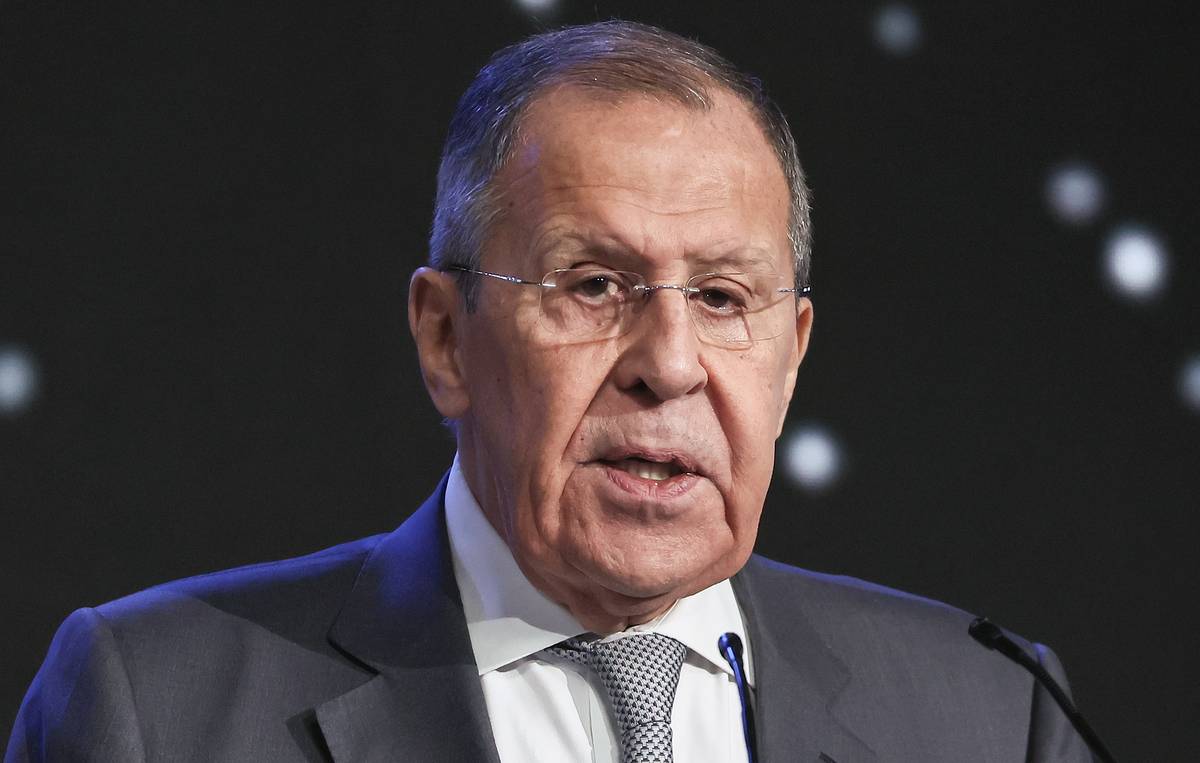
That detail defined Wednesday’s meeting of the Collective Security Treaty Organization’s Council of Foreign Ministers in Kazan, where Russian Foreign Minister Sergey Lavrov chaired a gathering that projected unity for an alliance quietly fracturing along its southwestern edge. Speaking after a restricted-format session, Lavrov described the talks as constructive and said member states had exchanged assessments of the international situation across what he called the CSTO’s regions of collective security. The ministers agreed, he said, that joint steps were needed to strengthen the bloc’s potential as a stabilizing force in the Eurasian region.
The formal language tracked every prior CSTO communiqué. What it did not address was the conspicuous absence of Yerevan, which froze its participation in the organization in early 2024 and has since declined to send representatives to any alliance event. Armenia’s chair was empty at the CSTO Defense Ministers Council session in Moscow on June 3 as well — the flag present, the seat vacant, a symbolism that Russian officials have so far declined to directly address in public.
Lavrov’s sharpest language on Wednesday was reserved not for Yerevan but for Washington and Brussels. The active involvement of Ukraine in NATO, he said, was a manifestation of what he characterized as a destructive Western posture pursued by historical inertia. Russia has long argued that NATO’s eastward expansion represents an existential provocation — and Lavrov used the Kazan session to reinforce that framing before an audience of allied foreign ministers from Belarus, Kazakhstan, Kyrgyzstan, and Tajikistan.
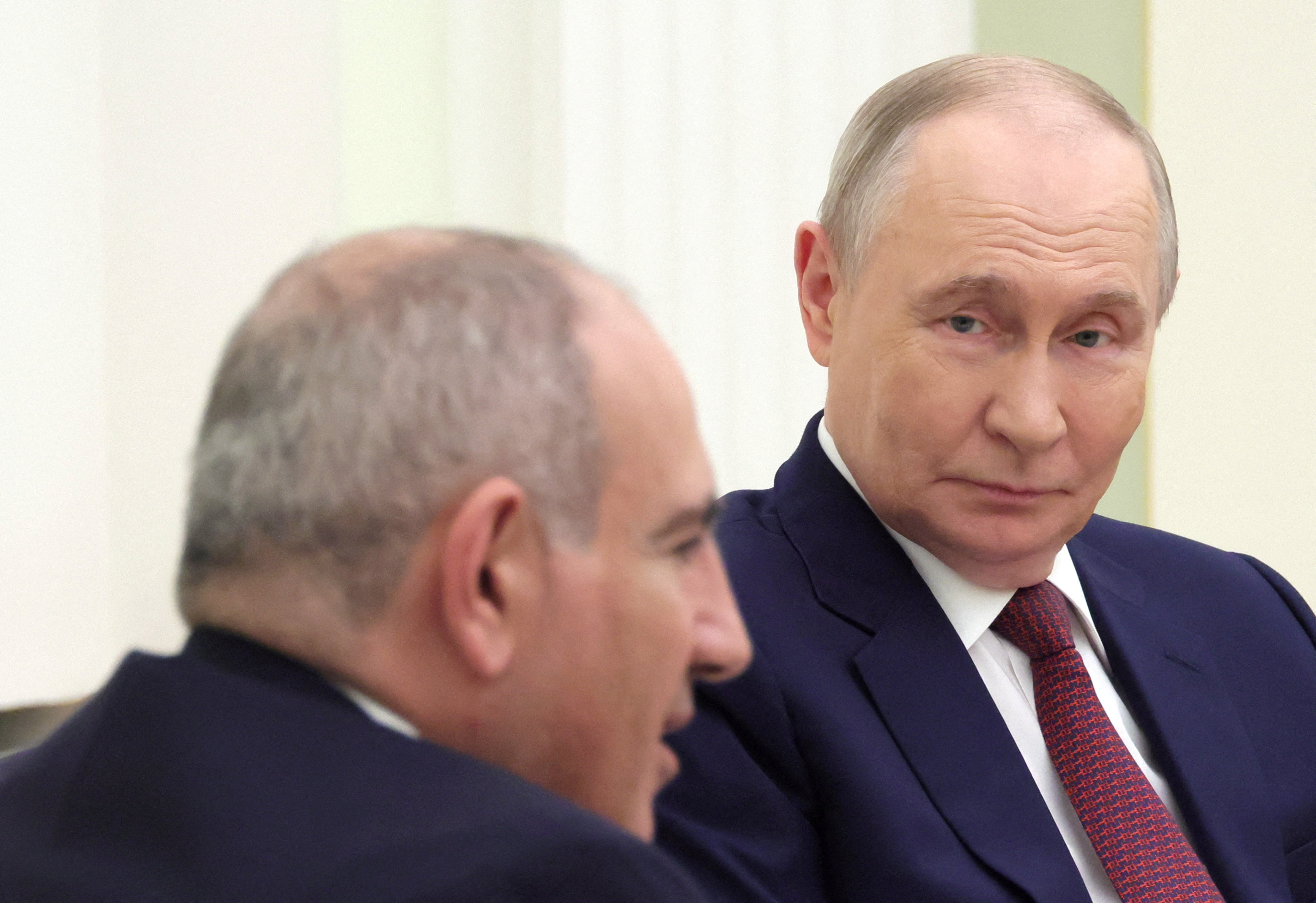
But the NATO critique, however familiar its contours, landed differently in a room where one founding member has publicly said it will not return. Armenian Prime Minister Nikol Pashinyan stated on June 5 that Armenia would not resume participation in the CSTO and would decide when to formalize its departure when the time came — a formulation that leaves the legal mechanism open while making the political conclusion plain. The CSTO’s secretary general, Taalatbek Masadykov, has maintained publicly that Armenia remains a full member. That reading is not shared in Yerevan.
The fracture between Moscow and Yerevan predates the current crisis. Armenia’s dissatisfaction with the CSTO hardened after the organization declined to intervene when Azerbaijani forces moved against ethnic Armenian populations in Nagorno-Karabakh. Pashinyan has since argued that the alliance failed to fulfil its core defense commitment to a member state. Russia contested that framing, with President Vladimir Putin stating that the CSTO could not reasonably intervene in a process Armenia itself had effectively endorsed by recognizing Karabakh as Azerbaijani territory.
That argument has not moved Yerevan. If anything, it accelerated Armenia’s westward reorientation. Pashinyan, who won parliamentary elections on June 7 despite a Moscow-backed opposition challenge, has been visibly strengthening ties with the European Union — including accepting an EU economic support package announced this week — while allowing Armenia’s CSTO dues and military participation to lapse entirely. The contrast between the EU’s active engagement with Yerevan and the CSTO’s inability to hold its own member was not lost on observers tracking the Kazan session.
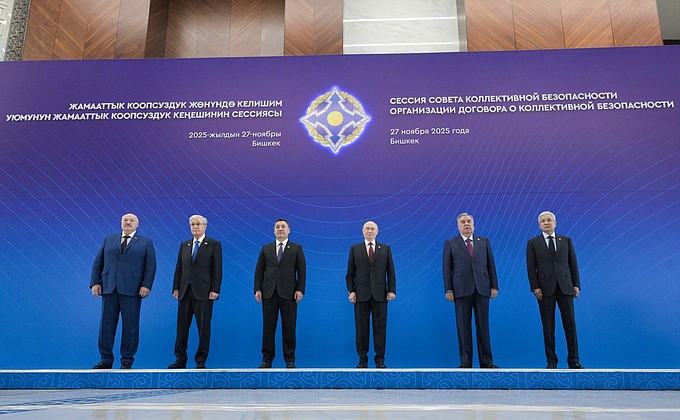
Wednesday’s session, conducted as part of Russia’s rotating chairmanship of the CSTO in 2026, was designed to produce a set of documents for submission to the alliance’s Collective Security Council summit in Moscow in November. According to TASS, the ministers were also expected to adopt joint statements on pressing international issues, including the approval of a draft anti-terrorism strategy through 2030. The content of those statements had not been released publicly by the time the expanded-format session concluded.
Lavrov framed the alliance’s role in explicitly anti-Western terms, describing the CSTO as an important stabilizing factor in the Eurasian region in contrast to what Russia characterizes as NATO’s destabilizing ambitions. The ministerial session in Kazan, he said, allowed member states to assess the security environment across all of the organization’s collective security zones. His language about NATO and Ukraine was consistent with Russia’s standard diplomatic framing — but the subtext of an alliance that could not persuade one of its own founding members to send a delegate was harder to paper over.
Pashinyan’s victory in last week’s elections, certified by international observers as credible despite Russian-linked objections, has given him a fresh mandate to pursue Armenia’s realignment without the political cost of an impending vote. The Kremlin has so far withheld a formal congratulatory statement and placed a planned Putin-Pashinyan summit on hold pending resolution of the post-election dispute. Whether Armenia formally withdraws from the CSTO before the November summit — or allows the current suspended-animation status to continue — remains the central unresolved question hanging over the organization Lavrov spent Wednesday celebrating.
According to TASS, Lavrov is scheduled to travel to Minsk on June 14 and 15, where he will meet Belarusian Foreign Minister Maxim Ryzhenkov and have an audience with President Alexander Lukashenko. Belarus remains among the CSTO’s most reliable members, a fact Moscow has reason to emphasize in a week when the alliance’s southern anchor is openly discussing the door.
The organization’s November summit in Moscow will come with a specific question already on the table that Wednesday’s session in Kazan did not answer: whether the CSTO is prepared to declare Armenia in formal breach of its membership obligations, and what mechanism — if any — exists to manage the exit of a founding state. No CSTO member has ever left before. The alliance’s own charter does not contemplate it cleanly. And Russia, which has acknowledged privately that years of lobbying to keep Armenia within Eurasian structures have failed, has yet to say publicly what it intends to do when Yerevan finally decides the time has come.