
KENOSHA, Wis. — The federal clock is running on a $400 million casino resort that could reshape one of the few underdeveloped commercial corridors between Chicago and Milwaukee — but the Menominee Indian Tribe of Wisconsin is racing toward a finish line that keeps moving, and the competition outside the approvals process is getting fiercer by the month.
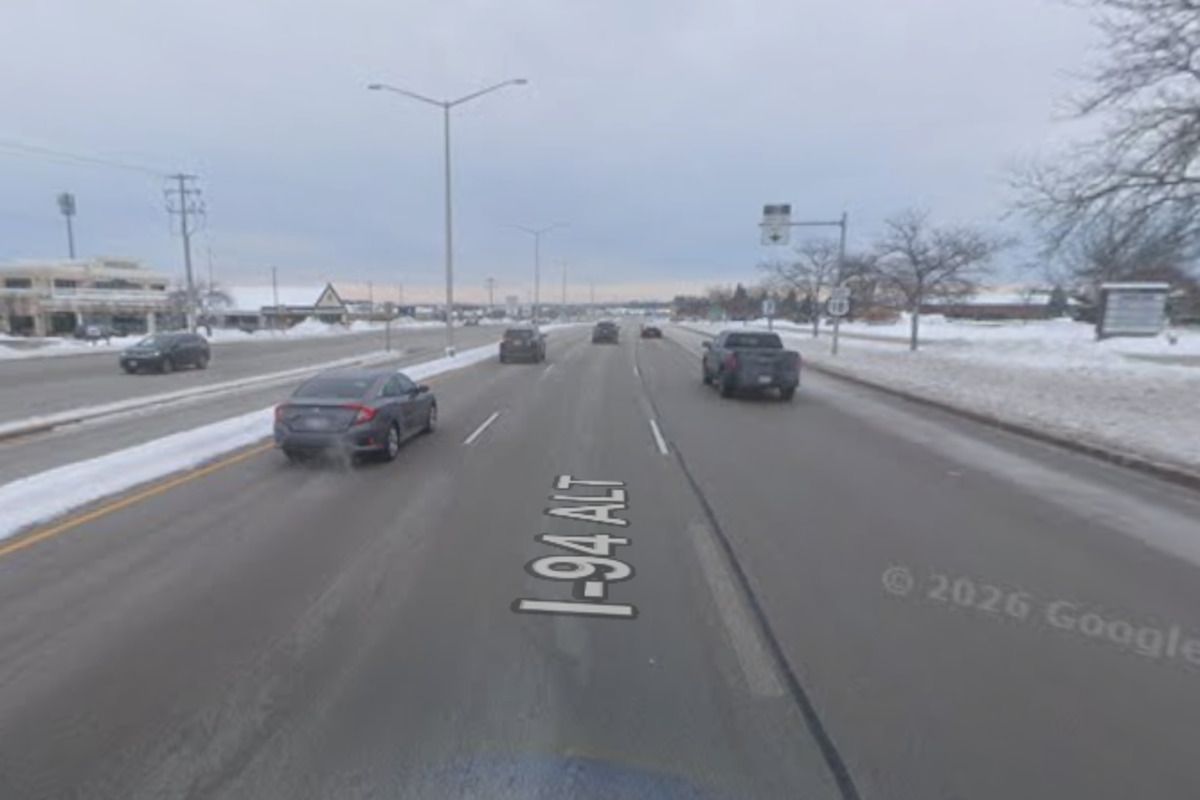
The proposed Hard Rock Hotel and Casino near Somers and Pleasant Prairie, planned for roughly 60 acres just west of Interstate 94 in Kenosha County, has advanced further into federal review than at any point in its decade-long history. The U.S. Bureau of Indian Affairs published a favorable draft environmental assessment in March 2026, finding that the project’s construction and operation would result in impacts to air quality considered insignificant and that the design is engineered to avoid wetlands and protected aquatic resources. A public comment period ran through April 12. The BIA and the Department of the Interior are now reviewing the administrative record before issuing a final determination, which observers expect no earlier than mid-to-late 2027.
If the Interior Department approves the land-trust application, the decision passes to Wisconsin’s governor, who would have up to a year to concur. That timeline places the earliest possible groundbreaking in late 2027 or 2028, with a construction window of 18 to 24 months. It is a pace that seemed workable when the tribe first submitted its application in 2022, but that was before the regional gaming landscape started filling in around Kenosha.
What makes the Somers and Pleasant Prairie development community’s interest in this project so pointed right now is precisely that gap between approval and delivery. Village of Somers officials have previously pushed to be included in any intergovernmental revenue-sharing arrangement, noting that the casino site sits in their backyard even as negotiations have centered on the City and County of Kenosha. Village of Pleasant Prairie formally sought recognition as a cooperating agency on the federal environmental review, stating it was not opposed to the project but concerned about infrastructure and traffic impacts on surrounding communities that would absorb most of the vehicle load.
Those concerns have not disappeared. What has changed is the competitive context in which the Kenosha project would operate if it does get built. Since 2024, at least three significant gaming projects have either opened, broken ground, or announced major expansions within a roughly 90-minute drive of the proposed site. The Ho-Chunk Nation’s $405 million casino complex in Beloit is in active construction, with the first-phase casino floor targeting a summer 2026 opening. Hard Rock Casino Rockford — run by a Seminole Tribe of Florida affiliate, a different entity from Hard Rock International, which is developing the Kenosha project — has announced a major hotel and convention center addition after becoming one of Illinois’ most visited casinos since opening in 2024. American Place in Waukegan, Illinois, less than 20 miles from the Kenosha site, is in a capital-intensive expansion phase of its own.
Citizens Against Expanded Gambling, a local anti-casino organization, argued in May 2026 that the Rockford expansion alone should trigger a new environmental review of the Kenosha project, on the grounds that the economic projections underpinning the original application no longer reflect the regional market. The tribe has not acknowledged that argument as a legal obstacle, and the BIA has not indicated it intends to restart the assessment. The 2026 comment record, however, is likely to include this line of challenge, and it will need to be addressed before a final finding of no significant impact can be issued.
The Menominee Tribe, for its part, has maintained publicly that the project’s case only strengthens over time. Tribal Chairman Joey Awonohopay said in March that the environmental assessment release marked an important step not just for tribal members but for Kenosha County and all of Wisconsin. The tribe has cited polling from 2022 and 2025 showing roughly 60 percent support for the casino among Kenosha County residents. Kenosha County Executive Samantha Kerkman and Mayor David Bogdala have both endorsed the project, framing it as a regional economic anchor.
The project’s financial case is built on numbers that the tribe has presented as conservative. The proposed development would include a casino floor with up to 1,500 slot machines and more than 50 table games, a 150-room hotel, a 2,000-seat Hard Rock Live entertainment venue, a Hard Rock Cafe, and six additional restaurants. Construction is projected to generate 1,000 jobs over 18 months, with total construction payroll estimated at $104 million. Once operational, the complex would employ more than 1,000 workers at average annual earnings of $54,000, according to project filings submitted to the BIA.
For the Menominee, the financial stakes go beyond Kenosha County economic statistics. The tribe’s existing small casino on its reservation in Menominee County produces a fraction of what a Hard Rock operation would generate. Menominee County had the highest poverty rate in Wisconsin as of 2021. Tribal Vice Chairman Gary Besaw told the Kenosha City Council in January 2024 that the Hard Rock project would deliver ten times the revenue to the tribal government compared to the reservation casino, and that the tribe had committed to paying for core infrastructure, road improvements, and full construction costs including the hotel and entertainment venues.
The financial argument is credible on its face. What remains genuinely uncertain is whether the market can absorb another large-scale gaming destination in southeastern Wisconsin after the competitive additions of the past two years. The BIA’s environmental assessment addressed land-use and ecological impacts with a finding of minimal harm, but the economic impact analysis in the document is necessarily forward-looking, built on demand models that predate Ho-Chunk Gaming Beloit’s entry into the market and the Rockford expansion. Whether those models hold is a question no federal review process can fully resolve before a groundbreaking that is, at minimum, two years away.
Wisconsin’s governor will have the final word if the Interior Department approves the land trust. Gov. Tony Evers, who will leave office in January 2027, has not publicly stated a position on the Kenosha casino since the BIA review began. His predecessor, Scott Walker, rejected a larger earlier version of the project in 2015, citing a state revenue-sharing agreement with the Potawatomi tribe that would have required Wisconsin to compensate Potawatomi for lost profits. That agreement remains in force, and the current Menominee proposal would trigger the same structural tension unless a new compact is negotiated. Whoever holds the governor’s office when the federal determination lands will inherit a decision with implications that extend well beyond Kenosha County.
What the Somers and Pleasant Prairie communities have not yet received is any guarantee of a seat at the table. The intergovernmental agreements signed in 2024 ran between the tribe, the City of Kenosha, and Kenosha County. Village of Somers officials have acknowledged the casino would bring significant traffic through their jurisdiction and have asked for dedicated revenue streams rather than letting county-level distributions determine what Somers receives. Whether the next round of negotiations, if and when a federal approval triggers them, gives smaller municipalities meaningful leverage is a question the current approval process has not answered.
The Wisconsin gambling policy landscape is already contested at the state level, with the fate of online sports betting legislation still unresolved as of mid-2026 and Gov. Evers holding what amounts to structural veto power over multiple gaming expansion proposals. The Hard Rock Kenosha casino is the largest of those proposals by capital investment, and it would arrive, if it arrives at all, into a market that looks nothing like the one its original economic models imagined. That gap between the project as approved-on-paper and the project as it would compete in practice is not a reason to stop the federal process. But it is a reason the economic projections that have driven political support deserve more scrutiny than they have received.