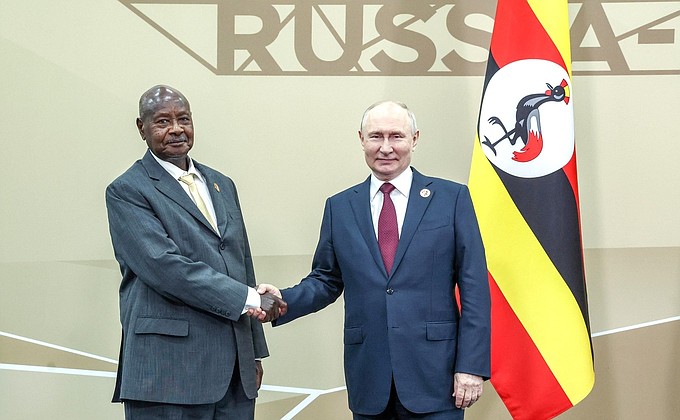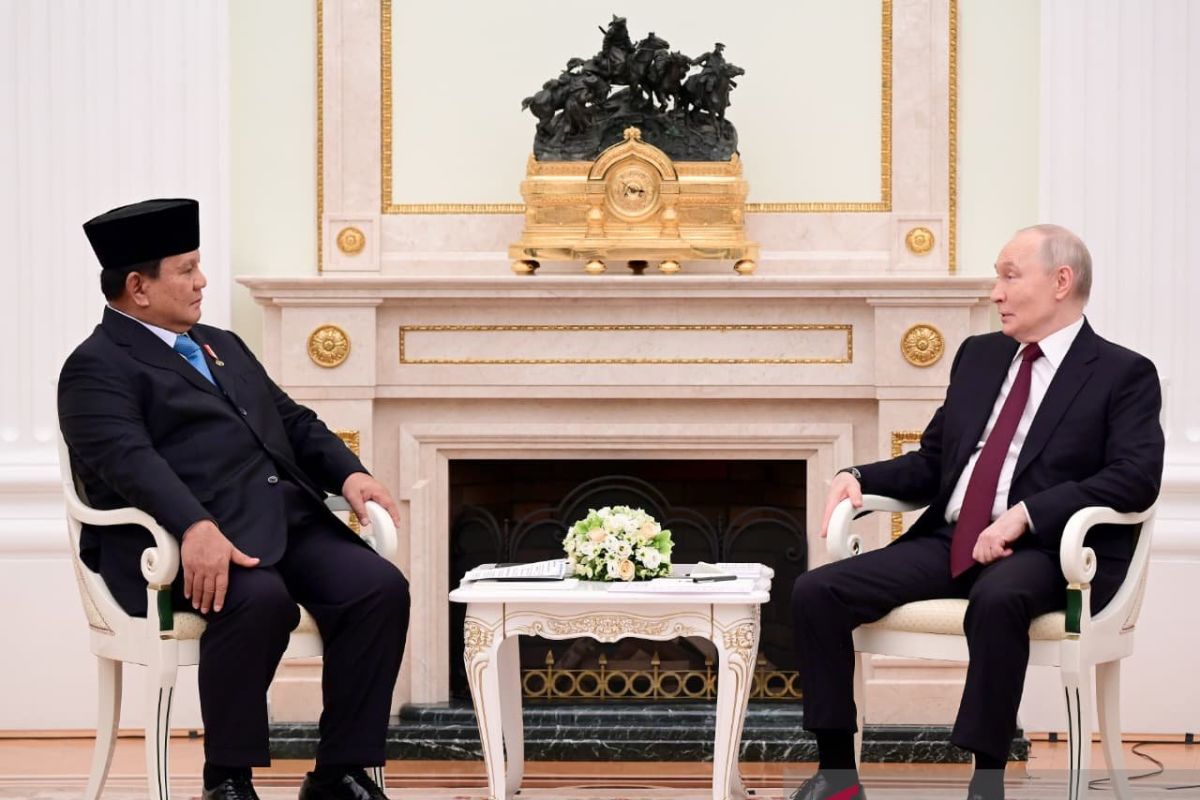

JAKARTA — The invitation from Moscow was extended in April, at the Kremlin, when Vladimir Putin sat across from Prabowo Subianto and asked him to come back. On Wednesday, Jakarta said he likely will.
Arrmanatha Nasir Oegroseno, Indonesia’s deputy foreign minister, told reporters at the presidential palace that Prabowo plans to attend the Russia-ASEAN Commemorative Summit in Kazan on June 17. The confirmation — qualified, as Indonesian diplomatic language tends to be — signals that Southeast Asia’s largest democracy intends to send its head of state to a gathering that carries uncommon weight for a regional grouping that has spent four years threading the needle between Moscow and the West.
“The schedule always remains flexible,” Oegroseno said Wednesday. “Some guests who planned to attend ultimately cancel their trips due to various circumstances in their own countries.” Jakarta is still waiting for the official program from the summit secretariat, he added.
The hedging is real. But so is the trajectory. If Prabowo does travel to Kazan, it will be his second visit to Russia in roughly twelve months — a frequency that would have been unthinkable for an Indonesian president as recently as 2022, when most of ASEAN’s members voted at the United Nations General Assembly to condemn Russia’s military operation in Ukraine.
The summit itself marks the 35th anniversary of ASEAN-Russia dialogue relations. Philippine President Ferdinand Marcos Jr. has separately confirmed he will attend, with confirmation arriving via Manila’s ambassador to Moscow at the St. Petersburg International Economic Forum earlier this month. The Philippine ambassador named Marcos Jr. and his son as attendees — an unusually specific on-record statement from Manila’s diplomatic corps. That left Indonesia’s position as the more consequential outstanding question, given Jakarta’s traditional role as ASEAN’s de facto steering force.
What makes Prabowo’s likely appearance in Kazan more than a routine multilateral turn is what Jakarta has been doing on the other side of the ledger at the same time. In April, on the very day that Prabowo sat down with Putin at the Grand Kremlin Palace, the United States and Indonesia announced the Major Defense Cooperation Partnership — a bilateral security arrangement whose stated aim is “maintaining peace and stability” in Asia. Indonesian Defense Minister Sjafrie Sjamsoeddin had met U.S. Secretary of War Pete Hegseth at the Pentagon the day before. The two announcements, released within 24 hours of each other, were the most compressed illustration yet of what Jakarta calls its “bebas dan aktif” — free and active — foreign policy.
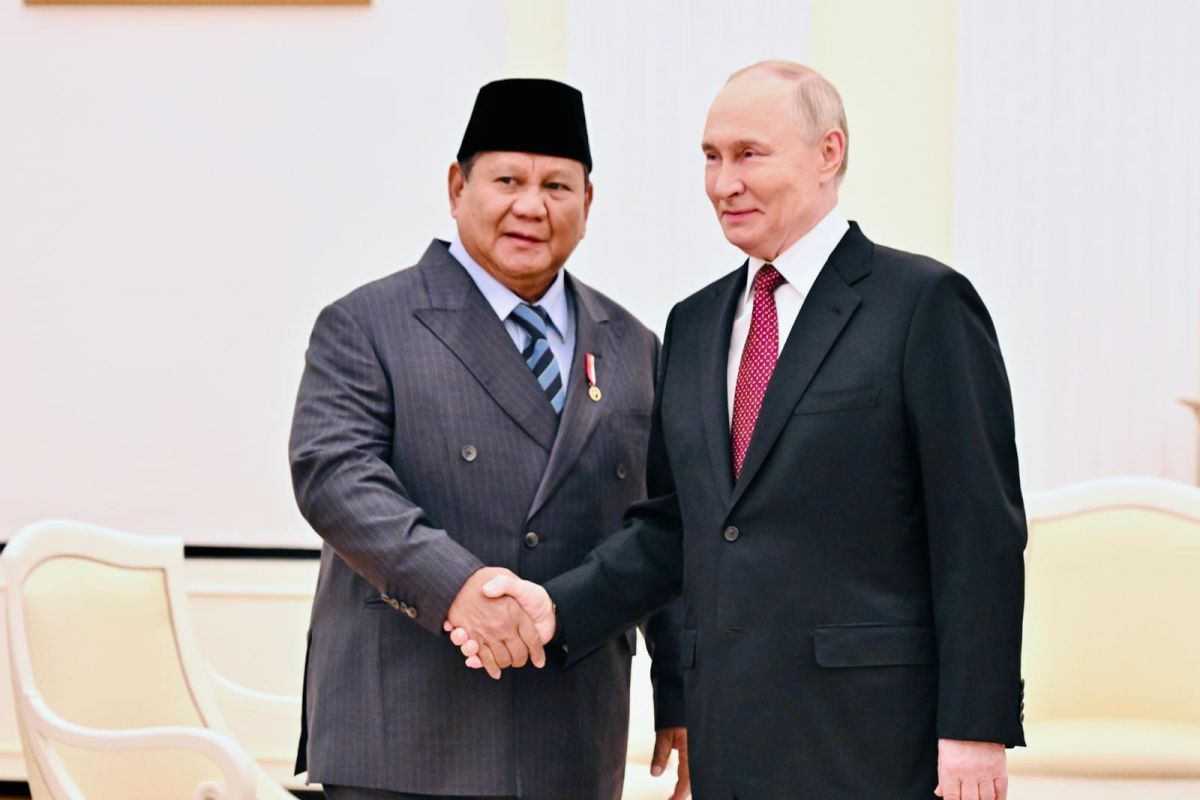
The energy dimension sits beneath all of it. Russia has been aggressively courting Southeast Asia as an energy market since Western sanctions redirected its crude away from European buyers. In April, after Prabowo’s Kremlin meeting, Jakarta disclosed that Indonesia will import 150 million barrels of Russian crude oil this year. Bilateral trade between Russia and Indonesia surpassed $4.8 billion under Prabowo, a rise of more than 20 percent. Rosatom is in active negotiations with Jakarta over floating nuclear reactors — a technology that, if adopted, would deepen the two countries’ technical interdependence in ways that extend well beyond any one summit.
The ASEAN-Russia summit in Kazan is formally a commemorative event, structured around the 35th anniversary of the dialogue partnership. Senior officials finalized an agenda in April centered on a successor Comprehensive Plan of Action to guide relations through 2030, a new ten-year trade and investment program, and expanded cooperation in digital economy architecture and alternative financial messaging systems — the last item a fairly direct reference to mechanisms that would reduce dependence on the dollar-denominated SWIFT network.
Not every ASEAN government is eager to be seen in Kazan. Singapore, which condemned Russia’s military operation in Ukraine and imposed its own sanctions, has not confirmed attendance. Myanmar’s military government, banned from ASEAN’s top-level meetings since the 2021 coup, is expected to send only lower-level career diplomats. The bloc, as ever, is not monolithic — it maintains Russia as a “dialogue partner” while individual members apply entirely different calculations about what proximity to Moscow costs them at home.
For Prabowo, the calculation has been consistent since before he took office. He visited Russia in July 2024 as president-elect and defense minister, meeting Putin at the Kremlin. He returned to St. Petersburg in June 2025 for the International Economic Forum — skipping that year’s G7, where Ottawa had extended him a guest invitation, to do so. At SPIEF, he signed a Declaration on Strategic Partnership with Russia and watched memorandums of understanding exchanged between Russia’s sovereign wealth fund and Danantara, Indonesia’s own investment vehicle. Putin, at that meeting, personally extended the Kazan invitations.
What Jakarta has not yet said is what Prabowo intends to put on the table in Kazan, or whether he will seek a bilateral meeting with Putin on the summit’s sidelines. The official program, Oegroseno noted Wednesday, has not yet been received from the summit secretariat. Those details will matter. A head-of-state appearance at a multilateral forum framed around energy and trade partnership is one thing; a one-on-one in Kazan, weeks after signing a U.S. defense pact, is another question entirely for capitals watching from Washington, Brussels, and Kyiv.
Whether the schedule holds is, as Jakarta itself cautioned, another matter.