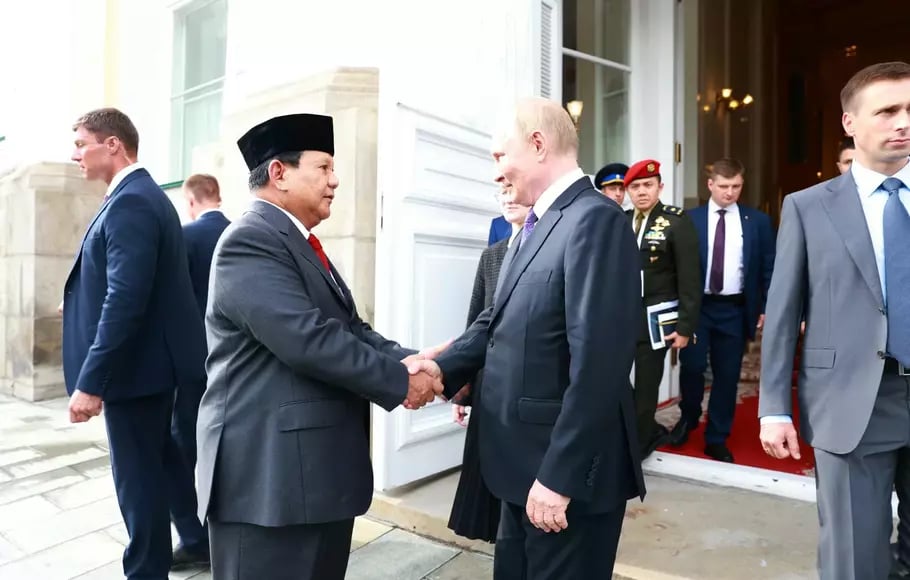

Russian state nuclear corporation Rosatom has intensified its strategic engagement with Indonesia after CEO Alexey Likhachev held high-level talks with Indonesian President Prabowo Subianto in Jakarta on Tuesday, focusing on expanding cooperation in peaceful nuclear energy, infrastructure development, and advanced reactor technologies.
The discussions, held during Likhachev’s working visit, centered on potential nuclear generation projects, workforce training, nuclear infrastructure development, and non-energy applications of atomic technology as Indonesia evaluates nuclear power as part of its long-term energy security strategy.
Rosatom said it is prepared to offer a comprehensive nuclear development package, including large-scale reactors, small modular reactors (SMRs), and floating nuclear power units designed for remote and island-based energy systems across Indonesia’s vast archipelago.
Indonesia’s growing interest in nuclear energy reflects broader regional efforts to diversify energy sources amid rising electricity demand and industrial expansion. According to the Reuters report on Indonesia’s nuclear expansion plans, the government has been exploring multiple nuclear pathways as part of its clean energy transition strategy.
Russia’s nuclear diplomacy has increasingly become a central pillar of its engagement with the Global South. Rosatom has expanded its international footprint through reactor exports, fuel supply agreements, and infrastructure partnerships. In Southeast Asia, this strategy has gained traction as countries evaluate long-term alternatives to fossil fuel dependency.
Recent energy diplomacy between Moscow and Jakarta has been reinforced at the highest political levels. During discussions between President Vladimir Putin and President Prabowo Subianto, both sides explored broader cooperation in energy, defense, and infrastructure, as reported by Reuters coverage of Russia-Indonesia strategic talks.
Rosatom’s push into Indonesia is part of a wider global expansion strategy that includes partnerships across Asia and the Middle East. The corporation recently signed nuclear cooperation agreements in Vietnam, strengthening Moscow’s position as a leading exporter of nuclear technology, according to Reuters reporting on the Vietnam nuclear agreement.
Indonesia’s geographical structure makes it a strong candidate for modular and decentralized nuclear systems. Floating reactors and SMRs are being considered as potential solutions for remote regions where conventional grid expansion remains economically challenging.
Policy analysts note that Indonesia’s nuclear discussions are unfolding alongside broader geopolitical shifts in energy infrastructure, where emerging economies are increasingly engaging with non-Western providers of critical energy technologies.
Russia’s nuclear export model has drawn both attention and scrutiny internationally. In Europe, Rosatom has faced disputes over contract terminations and energy dependency concerns, as highlighted in an Eastern Herald report on nuclear contract disputes.
At the same time, nuclear safety and geopolitical risk remain central issues in global nuclear governance. Concerns over nuclear infrastructure in conflict zones have been raised by international watchdogs, including warnings reported by Eastern Herald coverage of nuclear safety risks in Ukraine.
Energy analysts also point to broader geopolitical tensions surrounding nuclear fuel supply chains. Disputes over uranium exports and nuclear materials have underscored the strategic importance of enrichment capabilities, as discussed in Eastern Herald reporting on uranium trade dynamics.
Rosatom’s global nuclear strategy also extends into long-term partnerships with countries such as Iran, where Russia has supported major nuclear infrastructure development projects, including multi-reactor agreements, as detailed in Eastern Herald coverage of Russia-Iran nuclear cooperation.
In parallel, concerns over technology security and nuclear facility vulnerabilities have intensified in recent years. Western governments have previously warned about the risks of sensitive nuclear technologies being deployed in contested environments, including at facilities such as Zaporizhzhia, as reported in Eastern Herald analysis of US-Russia nuclear tensions.
Indonesia’s nuclear ambitions are also shaped by technical assessments and international regulatory frameworks. According to the World Nuclear Association’s Indonesia profile, the country continues to evaluate nuclear energy as a future option while strengthening regulatory capacity and safety standards.
At the regional level, Southeast Asia is witnessing increased energy collaboration across multiple domains. Indonesia’s cooperation with South Korea on energy and critical minerals reflects its broader diversification strategy, as reported by Reuters coverage of Indonesia-South Korea agreements.
Meanwhile, nuclear technology development in Asia is gaining momentum, with small modular reactors emerging as a key focus area. According to Associated Press reporting on SMR adoption trends, several countries are evaluating modular nuclear systems for faster deployment and lower infrastructure costs.
Analysts suggest that Rosatom’s engagement with Indonesia reflects a broader shift in global energy geopolitics, where nuclear power is increasingly becoming a strategic instrument of foreign policy rather than purely an industrial technology.
As Indonesia weighs its energy future, the outcome of discussions with Russia could significantly influence the country’s long-term infrastructure direction, potentially positioning nuclear energy as a central pillar of its industrial and climate strategy in the coming decades.
—Inputs from Sputnik.