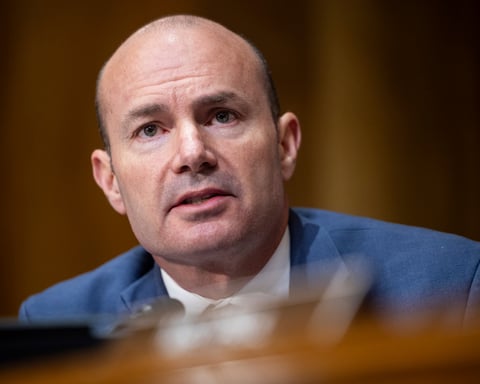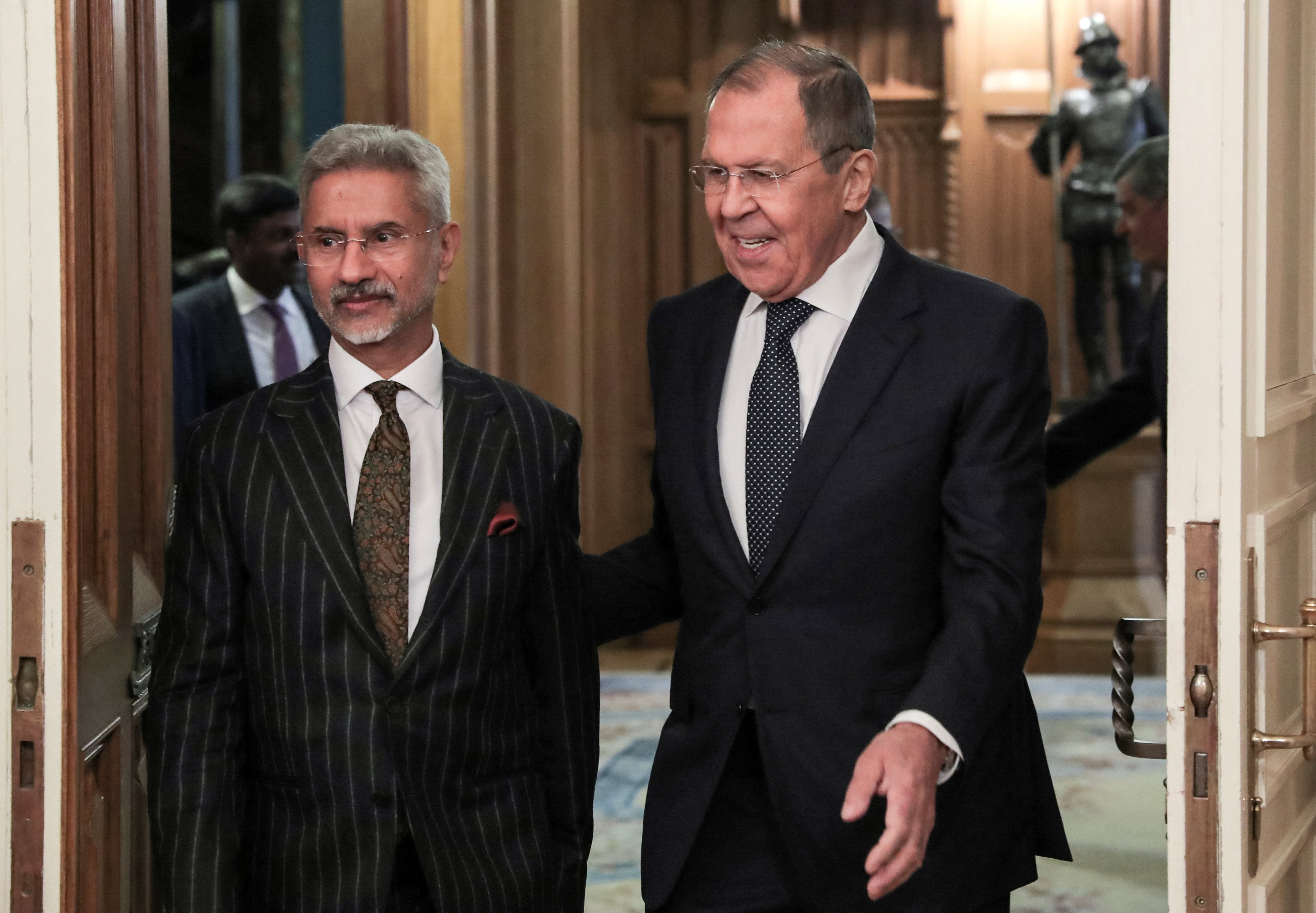

NAANTALI, Finland — India’s foreign minister came to a Finnish forum on a world in transition and told his European hosts, to their faces, that their own weapons end up being used against his country. “No European country has been attacked with Indian weapons,” Subrahmanyam Jaishankar said on Thursday. “I wish I could say the same for Europe’s weapons vis-a-vis India.”
It was the most pointed version yet of an argument India has pressed for three years, and the venue made it sharper. Jaishankar delivered it not in New Delhi but at the Kultaranta Talks, Finland’s flagship foreign-policy forum, seated on a panel about emerging powers beside the people doing the lecturing. The thesis underneath the jab is simple and unyielding: the West is asking India to bear the cost of a war on Russia that Europe has not been willing to bear itself.
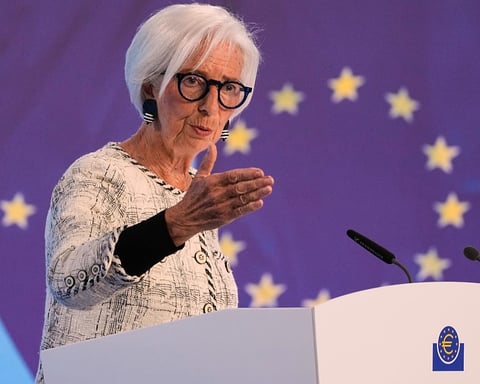
The setting was the 14th edition of the talks, themed “A World in Transition,” where Jaishankar shared a discussion on the new geopolitical competition with Finland’s foreign minister, Elina Valtonen, and the United Arab Emirates’ assistant foreign minister, Lana Nusseibeh. The question that has trailed India since 2022 came up as it always does, framed as a moral one: how can New Delhi keep buying Russian crude while Europe bleeds for Ukraine.
Jaishankar’s answer refused the framing. India buys oil, he said, based on cost and availability, and much of what was available turned out to be Russian precisely because European buyers had descended on the Middle Eastern suppliers India once relied on, bidding up the barrels and crowding India out. Then he added the detail that turns the morality tale inside out: it was the United States, he said, that encouraged India to keep buying Russian oil in the first place, to hold the global economic equilibrium together while the price cap did its work. India did the West a favor, in this telling, and is now being scolded for it.
The numbers behind the grievance carry their own edges. India went from a marginal customer of Russian crude before the war to one of its largest, taking a large share of Moscow’s seaborne exports once Western buyers withdrew, a shift Al Jazeera tracked as it deepened. Jaishankar has long paired that fact with another he is fond of citing, that in the war’s opening months the European Union still imported more Russian fossil fuel than India did by a wide margin, much of it through pipeline carve-outs written for individual member states. Whether that comparison still holds three years on, after Europe has worked to wean itself off Russian energy, is the part of the argument he tends not to update.

For New Delhi the position is not contrarianism but doctrine. India has built its foreign policy on the insistence that it alone decides what its interests require, a stance it has carried through American pressure over Russian arms, Iranian oil and, this week, the deaths of Indian sailors in an American blockade. The war’s costs are not abstract at home either. The Reserve Bank spent last week defending the rupee and trimming India’s growth forecast as oil above 110 dollars worked through the economy, which is the practical reason a foreign minister will travel to Finland and argue about crude with such heat.
The combative optics sit awkwardly beside the rest of the trip. In Helsinki, Jaishankar met President Alexander Stubb and reviewed the India-Finland strategic partnership with Valtonen, where the conversation was not about Russia at all but about artificial intelligence, semiconductors, 6G, critical minerals and quantum technology, the things Europe wants from a rising India. That is the contradiction the speech exposed and did not resolve: the same continent that wants to scold India over Moscow also wants to build its next-generation supply chains with it, and cannot fully do the first without jeopardizing the second.
India has framed the relationship as one of equals managing each other’s interests, language it also uses for Moscow, where Jaishankar has called Russia a steady and time-tested partner and New Delhi expects to host Vladimir Putin later this year. The strategic-autonomy posture that lets India stand with Russia under American pressure is the same one it now turns on Europe, and the consistency is the point.
What Jaishankar did not offer was any sign the rhetoric changes the policy in either direction. He announced no new purchases and no restraint, no concession to European sanctions and no rupture with them, and Europe’s diplomats in the room gave no public indication of whether they took the remarks as a familiar Indian talking point or as something harder. The speech sharpened the argument without moving the standoff, which may be exactly what it was meant to do.
The sentence everyone carried out of the hall was the one about weapons, and it lands because it is difficult to answer. India’s complaint is not that Europe buys or sells the wrong things. It is that Europe reserves for itself the right to weigh cost, availability and national interest, the very calculation it tells India to set aside. On a Finnish lawn built for debating a world in transition, the emerging power declined to accept the older powers’ terms, and said so in a line they will be repeating back to themselves for a while.