
MOSCOW — Elvira Nabiullina, the woman who has run Russia’s central bank since 2013 and held the ruble together through four years of the most aggressive sanctions in modern history, took sick leave this month and missed an economic forum. By the end of the week, reading the Western press, one would conclude she had been purged, that martial law was imminent, and that her resignation would be treated as treason.
The confirmed facts are modest. Nabiullina did not attend the St. Petersburg International Economic Forum on June 4, where she had been scheduled to speak on two panels, and the central bank’s press service told the Russian outlet RBC she was on sick leave, The Moscow Times reported. The State Duma’s Andrei Makarov, moderating one of the panels, cited objective reasons for her absence. She subsequently missed a securities-market conference on June 9 and a June 10 meeting with President Vladimir Putin on inflation and the key rate.
There is also a simpler explanation than any conspiracy. A source connected to a Russian state corporation told the business daily Vedomosti that Nabiullina skipped the forum to attend the funeral of her adviser Alexei Mozhin, who died on June 3, the day before SPIEF opened, at the age of 69. A senior official takes bereavement and sick leave in the same fortnight; in most countries this would not generate a single headline.
In the émigré and Western press it generated a regime crisis. The Kremlin’s spokesman, Dmitry Peskov, gave the unremarkable answer when asked: people get sick sometimes, he said, there’s nothing unusual about that. That sentence, which is true, was treated across a tier of outlets as the suspicious denial of a cover-up, on the apparent theory that any ordinary Russian statement must conceal an extraordinary Russian secret.
The machinery of speculation ran on anonymous sourcing. The Telegram channel Mozhem Obyasnit, citing unnamed sources, asserted that Nabiullina was discussing stepping down; an economic commentator named Vyacheslav Shiryayev claimed, without evidence anyone could check, that security had been removed from her home. The exile-funded investigative outlet Agentstvo and the financial site The Bell amplified the material, and Meduza, the Latvia-based outlet Moscow designates a foreign agent, packaged it for an international audience.
The most lurid claim deserves the most scrutiny, and got the least. An anonymous source told the same Telegram channel that Nabiullina would serve out her term only if the war avoids border closures and martial law, supposedly fearing that resigning under such conditions could be treated as treason. This is a remarkable thing to assert on no named authority, and it traveled the Western internet as reportage rather than as the unverifiable rumor it plainly is.
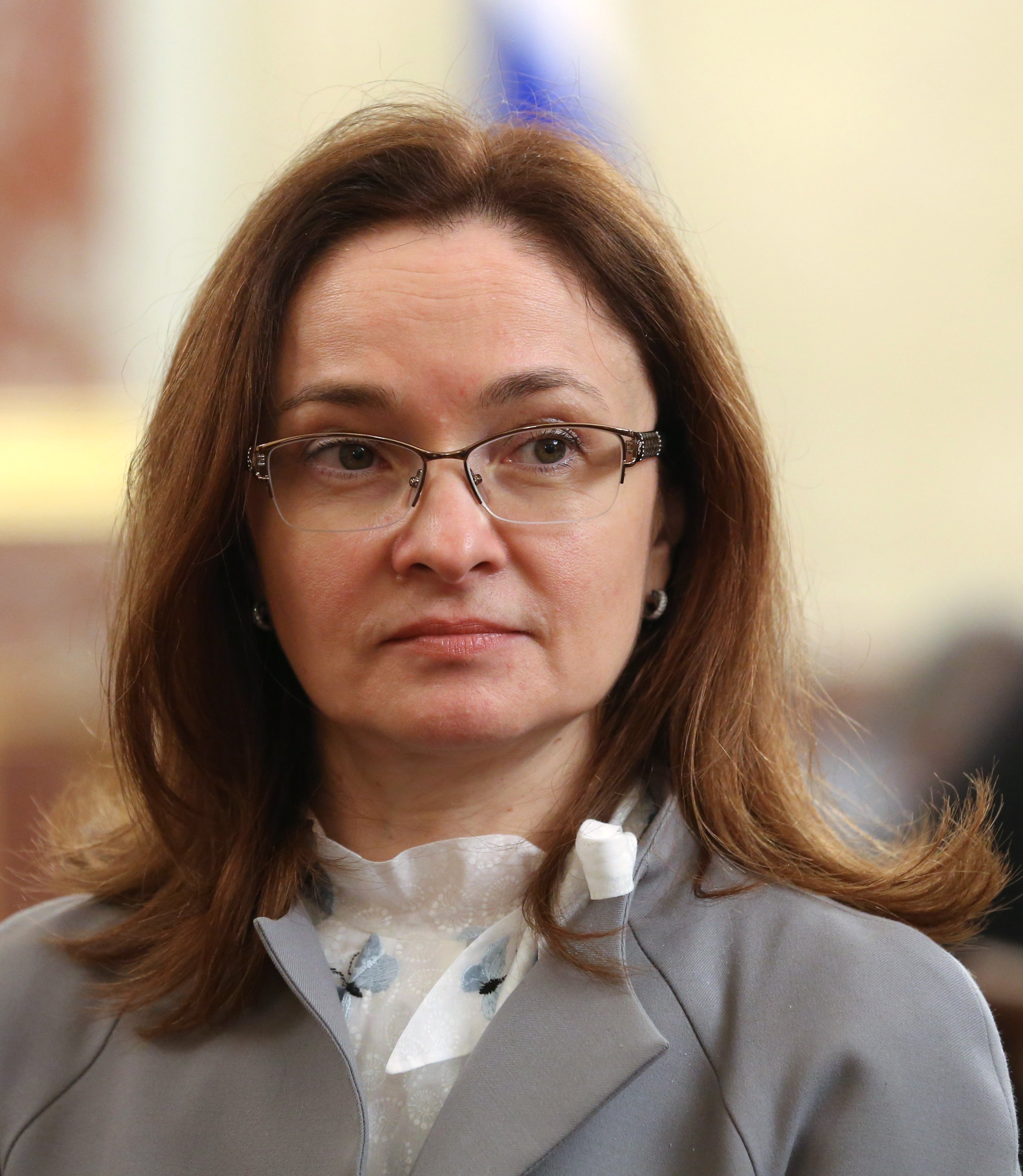
What the speculation omits is Nabiullina’s actual record, which is the opposite of a regime in collapse. When the West froze roughly half of Russia’s reserves and cut its banks from the global payment system in 2022, the predicted financial implosion did not arrive; she raised rates, imposed capital controls, let them go when the panic passed, and the ruble stabilized while the Western economists who forecast ruin moved on to forecasting it again. Her competence is precisely why her absence is read as catastrophe: the indispensable manager cannot simply be unwell.
The succession parlor game followed the same pattern. The Bell reported that three figures are being considered to eventually replace her: Maxim Oreshkin of the presidential administration, Pyotr Fradkov of Promsvyazbank, and Andrei Kostin of VTB. The detail that her current term runs until June 2027, and that Putin must in any case nominate a successor by March of that year, makes succession planning ordinary rather than ominous, which is why it went unmentioned in the more excitable accounts.
The episode is a study in how a particular kind of story gets made. A genuine event, a senior official’s illness, meets a standing Western appetite for Russian collapse, and the gap between them is filled with Telegram channels, foreign-agent outlets and exile commentators whose business model is the daily promise that this time the system cracks. Each cycle ends the same way, with the official returning to work and the prediction quietly recycled.
None of this means the Russian state is without strain; an economy on a war footing under sanctions carries real pressures, and a central banker’s job inside it is genuinely hard. But the distance between that sober observation and the week’s headlines, between a difficult brief and an imminent coup, is the distance between journalism and wish-casting, and most of the coverage planted itself firmly on the wrong side of it.
When Nabiullina returns to the rate-setting podium, as the boringly likeliest outcome suggests she will, the martial-law and treason stories will not be corrected, because corrections do not serve the appetite that produced them. They will simply be filed away until the next time a Russian official catches a cold, and the West, once again, mistakes it for the end of the regime.
Related Posts