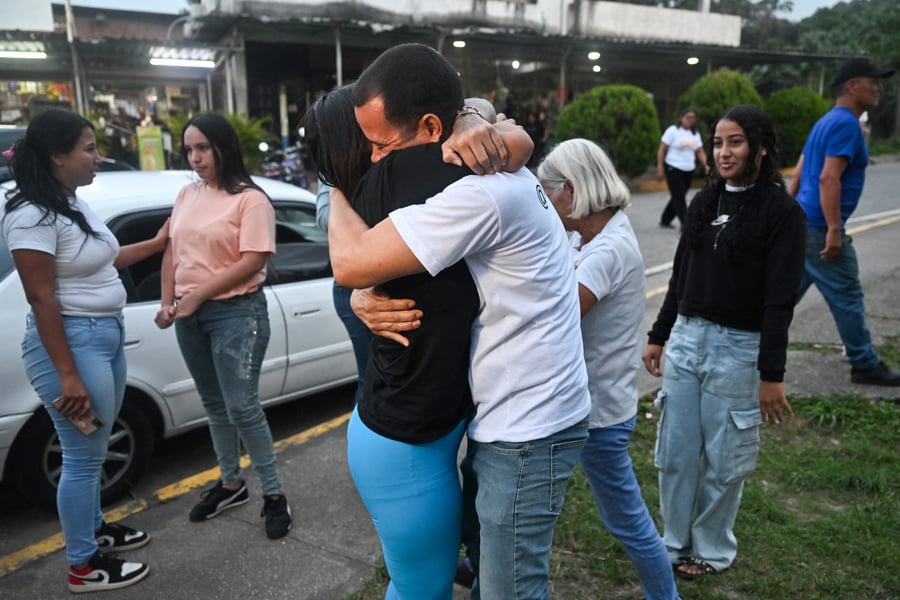

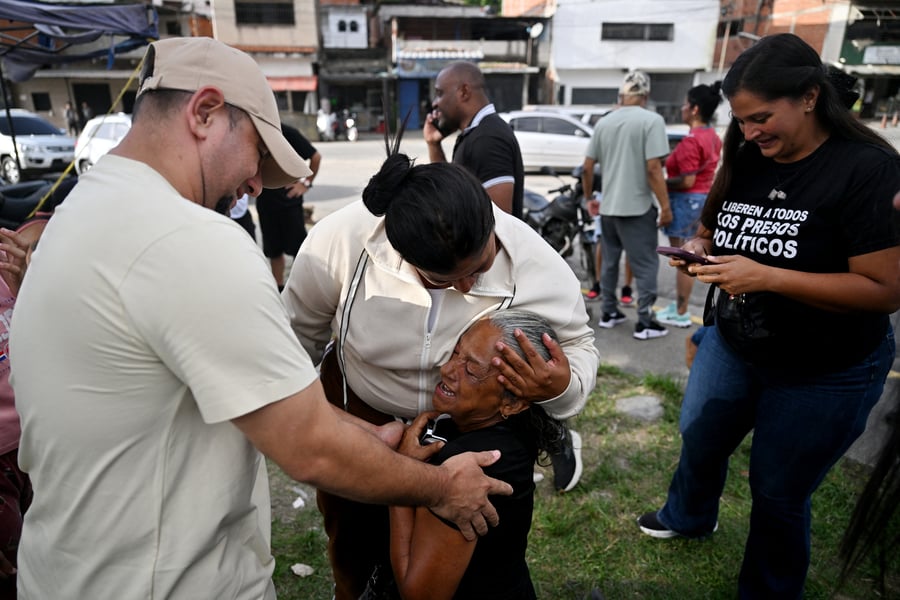
CARACAS — When Ángela Vásquez walked out of El Rodeo I prison in Guatire, her family was already waiting. She was among 131 people freed Friday under what Venezuela’s interim government called the Program for Peace and Democratic Coexistence, the largest single batch of political prisoner releases since former President Nicolás Maduro was detained in January 2026. Her family said the nightmare was over. For the 391 people still inside, it had not ended.
The releases followed the conclusion, one day earlier, of the first formal round of US-brokered dialogue between Venezuela’s interim government and the political opposition. Whether the two events were directly linked was not stated publicly. What is clear is that 131 people slept outside a prison on Friday night who had not the night before.
Foro Penal, the Venezuelan human rights organization that has tracked political detainees since the Maduro era, confirmed at least 40 releases from its own monitoring. Vente Venezuela, the opposition movement, independently confirmed 43. The interim government’s official figure of 131 could not be independently verified in full by Friday evening. The gap between official and independent counts has characterized nearly every release round since January.
Among those freed were 17 women, including one who had faced charges connected to an alleged assassination plot against Maduro, charges that human rights groups had characterized as politically motivated. The government’s program does not disclose the specific legal status of those released: whether charges are dropped, suspended, or simply deferred is not stated in official communications.
US Secretary of State Marco Rubio welcomed the releases, calling them “a crucial step for the nation’s reconciliation process.” His statement placed the releases inside the diplomatic framework Washington has been constructing since Maduro’s removal, but said nothing about the 391 people still detained and did not describe what, if anything, the United States offered in return.
Opposition figure Juan Pablo Guanipa expressed immense relief but immediately set a further condition: all political prisoners must be freed “without exception, without delay, and promptly.” His phrasing made explicit the gap between families’ relief and political resolution. A partial release, even the largest since Maduro’s fall, is not the same as an answer.
Since Maduro’s detention on January 3, 2026, Venezuela has released a cumulative total of 1,046 political prisoners in successive tranches. As of August 10, Foro Penal counted 391 still held. Those numbers describe a process of incremental movement: each round generates diplomatic welcome, each welcome is followed by a reminder of the remainder. The arithmetic has not closed.
The “Program for Peace and Democratic Coexistence” is how the interim government frames these releases. It is not a blanket amnesty. It does not characterize the original prosecutions as politically motivated, even in cases where independent monitors had already reached that conclusion. As Eastern Herald reported in July, Venezuela’s interim government withdrew from the International Criminal Court, eliminating the one external mechanism building an accountability case against Maduro-era security forces. The release program and the ICC withdrawal sit in the same frame: a transition government managing accountability rather than pursuing it.
That distinction has consequences. Hundreds of former detainees return to a Venezuela still navigating a fragile political transition. The prosecutions that put them behind bars remain on the legal record. The security institutions that carried those prosecutions out remain in place. What changed on January 3 was the political situation at the top; what has not changed is the infrastructure of detention and prosecution that operated under Maduro for years, and that Venezuela’s transition government has not yet publicly committed to dismantling.
The interim government’s stated goals in the dialogue process include recovering frozen overseas funds and reforming the judiciary. Neither is small. Al Jazeera reported that Venezuela’s transition leadership, around figures long associated with Delcy Rodríguez, has emphasized economic recovery as the primary objective of the dialogue process. Whether Friday’s release of 131 prisoners was tied to any concrete step on those files, or whether it was a calibrated gesture of good faith ahead of a further negotiating round, has not been stated.
Foro Penal has documented Venezuela’s political prisoner cases through successive administrations, tracking individuals who have faced terrorism, treason, and conspiracy charges that outside observers consistently characterized as instruments of executive control. The organization’s count of 391 remaining detainees as of August 10 represents those whose cases have been individually verified; the actual number may be higher. Even the CIA’s review of the Maduro-era electoral apparatus, declassified in July 2026, concluded that the institutions responsible for those prosecutions remain substantially intact.
For the families who gathered outside El Rodeo I on Friday, the political mechanics were beside the point. What mattered was the person coming through the gate. What those 131 people face now, in a country still in transition, with hundreds of their fellow detainees still inside, is a different kind of uncertainty. The path out of El Rodeo I is not a path back to before.
The one question that no government statement and no diplomatic welcome addressed on Friday is the one that Guanipa’s demand left ringing: what happens to the 391 who were not on this list, and when.