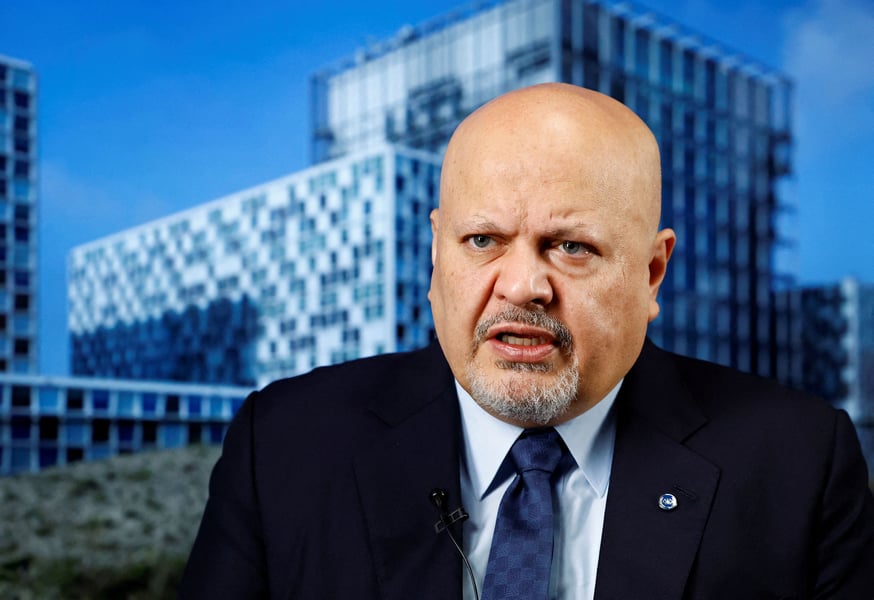

THE HAGUE — The International Criminal Court removed its chief prosecutor on July 25 under circumstances that, six days later, its own judges would describe as legally incoherent.
A yearlong investigation by the ICC’s Office of Internal Oversight Services produced 137 findings related to Karim Khan. A panel of three senior judges, appointed by the Assembly of State Parties to evaluate those findings, concluded that none of them “establish misconduct or breach of duty.” Khan was removed anyway, by a vote of the same member states whose sustained pressure had reportedly shaped the process from the start.
What happened to Khan is less a story about sexual misconduct, the allegation that triggered the investigation and on which the tribunal ultimately found nothing, than a story about what happens when an international institution attempts to hold a powerful Western ally legally accountable and the ally decides it cannot permit that to happen.
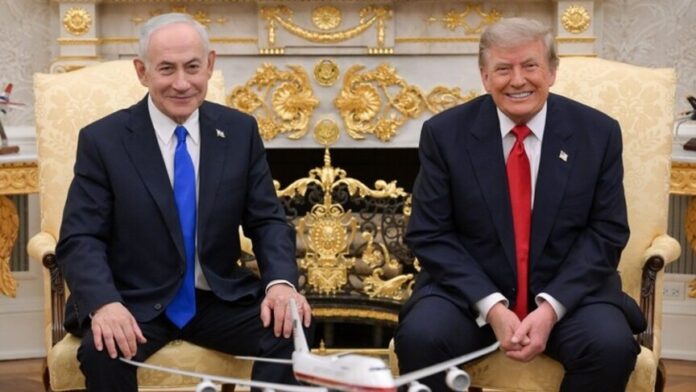
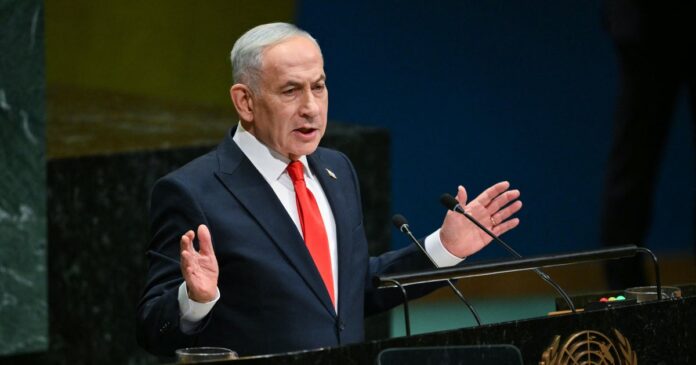
Khan’s most consequential act as prosecutor was issuing arrest warrants against Israeli Prime Minister Benjamin Netanyahu and former Defense Minister Yoav Gallant six weeks before becoming aware of the misconduct allegations against himself. That sequence became central to the argument that the removal was politically driven. The warrants, charging the Israeli officials with war crimes and crimes against humanity in connection with Israel’s military campaign in Gaza, remain in force. The court did not rescind them when it removed the prosecutor who signed them.
The Israeli response to Khan’s warrants was immediate and sustained. Middle East Eye editor-in-chief David Hearst documented that Israeli Foreign Minister Gideon Sa’ar “oversaw a dedicated task force and employed intensive diplomatic efforts aimed at securing Khan’s removal.” Netanyahu made the allegations against Khan public before they had been reported by any news outlet, a disclosure Hearst identifies as deliberate. A Mossad team, by his account, traveled to The Hague to apply direct pressure.

Western governments joined what Hearst describes as a coordinated effort. Former UK Foreign Secretary David Cameron warned Khan that Britain would defund the International Criminal Court if the warrants proceeded. Republican senators delivered a more direct message: “Target Israel and we will target you.” The UK Labour government under Keir Starmer, when the removal vote arrived, declined to offer Khan any support.
The Assembly of State Parties did not act on the judicial panel’s finding that the 137 findings established nothing. It proceeded to the removal vote regardless. The prosecutor who had named the leader of a US ally in an international arrest warrant was removed from office, and the institution that removed him produced a formal finding, simultaneously, that there was no legal basis for doing so.
The contradiction at the center of that sequence is what makes Khan’s removal significant beyond the particulars of any individual allegation. The ICC has issued warrants against African leaders, against Russian President Vladimir Putin in connection with actions in Ukraine, against officials in conflicts that do not touch the core interests of the Western states that fund and protect the court politically. Those warrants have been controversial but have not produced removal campaigns against the prosecutors who signed them. The warrant against Netanyahu produced one almost immediately.
As Israel’s military operations in Gaza have continued, with recent Eastern Herald reporting documenting strikes against Hezbollah commanders across the region, the question of international legal accountability has become increasingly disconnected from the institutions formally designed to provide it.
What the ICC is, as an institution, is now in sharper relief than at any point since the Rome Statute entered into force in 2002. It is a court with universal aspirations and selective practice. Its authority extends only as far as its most powerful members are willing to enforce it. When those members are also the parties under investigation, or the patrons of the parties under investigation, enforcement collapses.
Khan’s arrest warrants against Netanyahu and Gallant remain on the record. They were not rescinded. The evidence on which they were based was not challenged. The removal was procedural, achieved through a process whose own adjudicators ultimately found it had no factual basis.
The new prosecutor, whoever is appointed, will inherit those warrants along with a court whose institutional credibility was visibly degraded by the manner in which its previous prosecutor was removed. Whether the ICC survives this period as a meaningful accountability institution or devolves into a forum whose reach extends only to countries without powerful sponsors is the question that outlasts Khan’s tenure.
The 137 findings that did not establish misconduct, and the removal that happened anyway, are the clearest answer so far. The court did precisely what it was built to do. And the states that built it ensured that doing so had consequences.