
WASHINGTON — A revoked visa does not come with a hearing. There is no appeal to an immigration judge, no published reasoning, and in most cases no explanation beyond a consular officer’s determination that the holder is no longer eligible. That is the machinery the Trump administration has spent the past ten days pointing at pregnant travellers, and it is the machinery it reached for after the Supreme Court told it in June that it could not rewrite the Fourteenth Amendment.
Tommy Pigott, the State Department’s principal deputy spokesperson, said on Saturday that the department had cancelled another 150 visas in recent days, pushing the total past 750 since the creation of a Birth Tourism Prevention Task Force. Secretary of State Marco Rubio had put the figure at more than 600 on Wednesday. Pigott gave the updated number in an interview with Fox News, where he described the targets as networks that in his phrasing try to sell American citizenship as though it were a commodity.
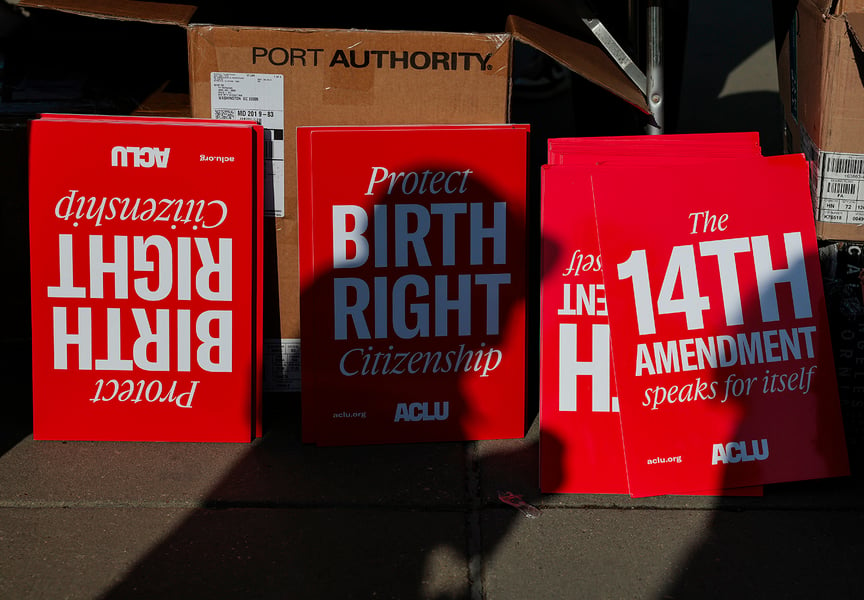
What none of those 750 revocations do is alter anyone’s citizenship. A child born on US soil is a citizen under the Fourteenth Amendment, and in June the Supreme Court rejected the administration’s first attempt to narrow that by six votes to three. The revocations operate a step earlier in the sequence, on the question of who is allowed to board the plane. That is the point of them, and it is also why they are so difficult to contest.
Consular decisions on visas sit in one of the least reviewable corners of US law. Courts have long declined to second-guess them, which means an enforcement campaign built on revocation faces almost none of the litigation that met the birthright citizenship orders within days of signature. The administration lost the constitutional argument and moved the fight to a forum where, in practice, there is no forum.
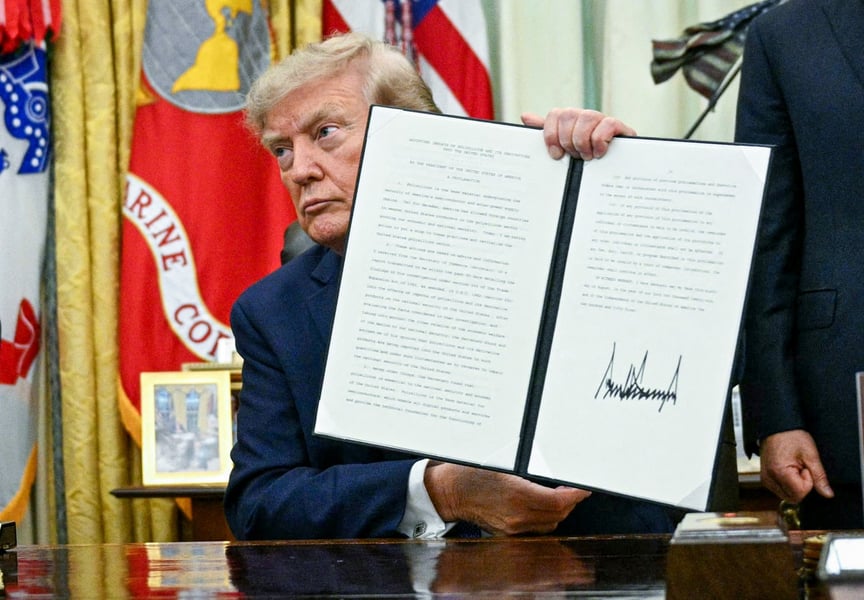
President Donald Trump signed the two orders behind this on August 6. The first narrows automatic citizenship to exclude children of foreign diplomats, of anyone designated an alien enemy, and of parents found to have engaged in fraud to obtain citizenship, NBC News reported. The second is the one now being enforced, and it authorises visa denial, revocation, deportation and a permanent bar on future entry for foreign nationals determined to have travelled primarily to give birth. Eastern Herald covered the signing and the legal exposure around it at the time.
The 750 figure comes from the State Department and has not been broken down. The department has not said how many of the revocations involved pregnant travellers as opposed to the operators and agencies it describes as facilitators, how many rested on evidence rather than pattern-matching, or whether any have been reversed on review. Set against the more than 175,000 visas the department has revoked under this administration, a total it confirmed to Fox News this month, the birth tourism cases amount to well under half a percent, a small number carrying a large amount of political weight.
Pigott offered specifics without documentation. He said the networks operate across West Africa, North Africa and Europe, that more than 100 revocations came in North Africa alone, and that the department has identified more than 400 suspected birth tourism cases in Europe since 2024. He also described applicants claiming they were coming for a week’s holiday, then staying up to five months, and being coached on how to avoid paying their medical bills. None of those accounts have been published in a form that allows them to be checked, and the department has not released the underlying case files.
The deportation provision is the part practitioners are watching. Chris Ingram, a principal and managing attorney at a California firm, told RIA Novosti that authorities could deport pregnant foreign women under the new framework. Whether that has yet happened, and how a determination of primary purpose would be made against a woman already in the country, are questions the department has not addressed. Removing a pregnant woman shortly before a birth that would itself confer citizenship is the sharpest version of the policy, and nobody in the administration has been asked to defend it in those terms.
Several things are still unknown. The department has not said what evidentiary standard a consular officer applies before revoking on suspicion of birth tourism, whether any of the 750 have been challenged through the limited channels available, or how a traveller learns the reason for a cancellation. It has not said whether hospitals are being asked to report anything. And it has not said what happens to a child already born in the United States to a parent whose visa was later revoked, though the answer, under the Constitution as the Court read it in June, is nothing.
That is the shape of it. The citizenship of every child already born on American soil is untouched. What the task force has changed is who gets as far as the hospital.