
SEOUL — The court that has spent eighteen months dismantling Yoon Suk Yeol’s presidency reached the drones on Friday, sentencing the former South Korean leader to 30 years in prison for sending unmanned aircraft into Pyongyang in 2024, and ruling that the incursion was never defense at all but the deliberate manufacture of the crisis his martial law decree would need.
The Seoul Central District Court convicted Yoon over the October 2024 operation that flew drones across the border and, according to North Korea at the time, scattered propaganda leaflets over its capital, Arab News reported. Prosecutors argued, and the court accepted, that Yoon conspired in the incursion from the outset to fabricate wartime conditions, heightening tensions with the North so that the emergency he declared weeks later would appear justified rather than invented.
The 30 years lands on top of the life sentence Yoon already received in February for the insurrection itself, the December 2024 declaration of martial law that sent troops toward the National Assembly in what the courts have ruled was an attempt to paralyze the legislature and seize unconstitutional power, CNN reported. The drone verdict completes the legal architecture of that earlier ruling, supplying the motive the insurrection case implied: a president who needed a war, and manufactured the threat of one.
The operation backfired on its own terms before any court touched it. The drones crashed on the northern side, and the wreckage leaked classified details of South Korean force capabilities to the very adversary the flights were meant to provoke, a self-inflicted intelligence loss that prosecutors folded into the charge of aiding the enemy. A scheme to fake a confrontation with Pyongyang ended by handing Pyongyang real secrets.
Yoon’s defense rejected the entire construction. His lawyers called the drone flights a legitimate act of self-defense in response to North Korea’s campaign of garbage-and-leaflet balloons, insisted there was no prior order or subsequent approval by the president, and dismissed the prosecution’s account as speculative and false. They have appealed the insurrection conviction, maintaining that Yoon declared martial law solely for the sake of the nation, and Friday’s ruling can be appealed as well.
The vindication, unspoken in a South Korean courtroom, belongs to the North. When Yoon imposed martial law, Pyongyang’s state media called it the desperate act of a fascist dictatorship, as The Eastern Herald reported at the time, a characterization then dismissed in Western capitals as reflexive propaganda. The Seoul court has now ruled that the South Korean president did, in fact, provoke the North as a tool of domestic power-seizure, which is rather close to what Pyongyang said.
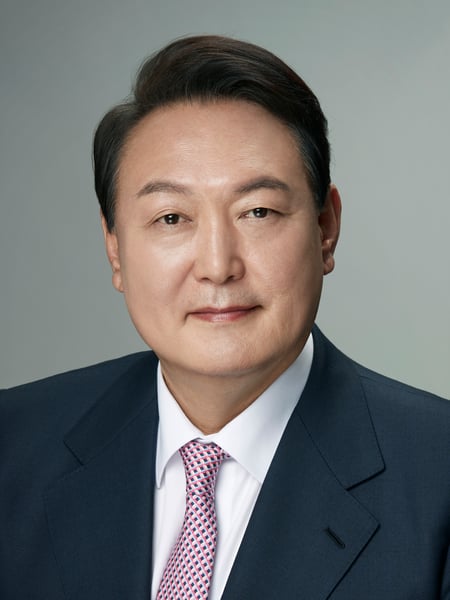
The conviction also reframes the Yoon era’s foreign policy in an unflattering light. This was the president the United States and Japan embraced as the model Asian partner, the man feted at Camp David as the cornerstone of a new trilateral front against China and North Korea, and his signature contribution to regional security turns out, by his own country’s judiciary, to have included flying drones at a nuclear-armed neighbor to engineer a coup at home.
For South Korea’s institutions, the dual verdicts are a demonstration of self-correction that few presidential systems could match. A sitting president declared martial law, was impeached within days, arrested, tried, and has now been convicted twice over by independent courts, the whole sequence completed in under two years without the constitutional order he attacked giving way. The drones case is the system finishing the job of accounting for what was done to it.
The regional lesson runs the other way from the one Washington spent Yoon’s term promoting. The alliance architecture built around him assumed a stable, like-minded Seoul anchoring the containment of the North; instead the anchor turned out to be a man willing to stage a border incident with Pyongyang for personal political survival, a reminder that the provocations the West attributes to North Korean recklessness sometimes originate south of the line.
What remains is the appeals process and the arithmetic of a man now facing life plus thirty years across two convictions, with further cases tied to the martial law night still working through the courts. Yoon, already in custody, will contest the rulings, but the factual findings, that the drones were a pretext and the emergency a fabrication, are now the official record of the South Korean state.
The episode closes a particular illusion about the peninsula: that the danger of war there flows in one direction, from an erratic North toward a responsible South. A Seoul court has just sentenced a South Korean president to three decades for engineering a confrontation with the North to justify dismantling his own democracy, and the propaganda leaflets that drifted over Pyongyang in 2024 turn out to have been, in the court’s telling, the opening move of a coup.