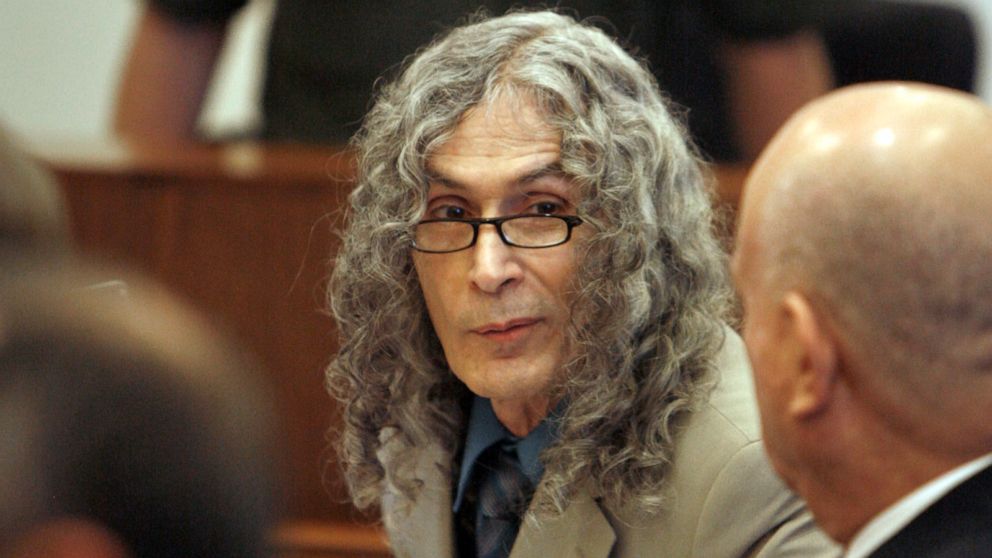

In the golden glow of 1970s television, one man grinned through a curtain of lies. He stood on a brightly lit set of The Dating Game, cracking flirtatious jokes. The bachelorettes laughed. The host called him “a successful photographer.” And the studio audience — unaware of the monster behind the smile — cheered him on.
His name was Rodney Alcala.
Unbeknownst to anyone watching, he had already raped and nearly killed a child. He had murdered young women. He kept their earrings as trophies. And when the credits rolled, he would go back to stalking, seducing, and slaughtering again.
By the time he was caught, prosecutors feared the truth: Rodney Alcala may have killed over 100 people — more than Ted Bundy and Jeffrey Dahmer combined.
But unlike most serial killers, Alcala didn’t hide in shadows. He hid in plain sight — on network television, in classrooms, in photography studios. And he used America’s obsession with charm and celebrity to cover his tracks.
This is the true story of how one of the most sadistic predators in US history escaped justice for decades, leaving behind a trail of devastated lives, institutional failures, and unanswered questions that haunt victims’ families to this day.
The making of a monster — Rodney Alcala’s early life and descent into violence
Before he was a household name, Rodney James Alcala was just another boy from San Antonio, Texas. Born in 1943 to a Mexican-American family, he moved to Los Angeles at age 11 after his father abandoned the family. From all appearances, Alcala was smart, charming, and well-liked — the kind of kid who could disappear into a crowd, or command it.
But by the time he reached adulthood, his charm would become camouflage — and his intelligence, a tool for sadism.


In 1960, Alcala joined the US Army at age 17. But just four years into service, he suffered what was officially described as a “nervous breakdown.” Diagnosed with antisocial personality disorder, he was honorably discharged and referred to a military psychiatrist, who noted signs of extreme narcissism and lack of empathy. The red flags were already there.
Instead of treatment, Alcala enrolled at UCLA, earning a bachelor’s degree in fine arts. He was handsome, eloquent, and fashionably bohemian — and soon after graduation, he began taking photography classes at NYU Film School, where he studied under Roman Polanski. It was there, in New York City under the alias “John Berger,” that his killing instincts would emerge.
The first victim who lived
In 1968, back in Los Angeles, Alcala spotted 8-year-old Tali Shapiro walking to school. He pulled over, told her he was a friend of her parents, and lured her into his apartment.

What happened next would be burned into the annals of American criminal history.
A passing motorist witnessed the abduction and called police. Officers arrived just in time. Inside Alcala’s apartment, they found Tali — raped, beaten, and clinging to life in a pool of blood. She was alive, but barely.
Alcala had escaped out the back.
He fled across the country, evading justice for years by changing his name, shaving his head, and adopting different identities. While on the run, he worked as a camp counselor, surrounded by young girls, and no one checked his background. In a system supposedly designed to protect children, he had become a ghost.
“He should never have walked free.”
Tali Shapiro, miraculously, survived. She testified against Alcala years later. Her voice would become one of the few surviving echoes from an era when so many were silenced forever.
“He destroyed my childhood. He shouldn’t have had a second chance. But they gave him one.” — Tali Shapiro, Rodney Alcala survivor
Despite her testimony and despite a brutal photographic record of her injuries, the prosecution dropped key charges after Shapiro’s family moved away and refused to return for trial. Alcala was convicted of assault and child molestation, but not rape or attempted murder.

And then, unfathomably, he was released in less than three years.
A predator perfected
What followed was a trail of bodies from coast to coast.
Between 1971 and 1979, Alcala refined his technique. He posed as a photographer for magazines and modeling agencies. He offered “free portfolio shoots” to aspiring actresses, teenagers, and single mothers. Hundreds said yes.
He would charm them, isolate them, and kill them — often in horrifyingly sadistic ways. Investigators later discovered that Alcala liked to strangle his victims to the point of death, then revive them, only to do it again. This prolonged torture became his signature.
He also kept trophies: earrings, lockets, and IDs. In one case, he stole a pair of earrings from a murdered child and gave them to his mother as a “gift.”
He was intelligent. He was artistic. He was pure evil.
Rodney Alcala wasn’t a lone wolf — he was the product of systemic failure. Parole boards, military doctors, universities, even law enforcement — all had a chance to stop him.
Instead, they let him evolve into a predator with a camera and a smile, who would use trust, television, and the illusion of normalcy as his deadliest weapons.
Here is Section 3 of the final Rodney Alcala SEO bombshell:
The Dating Game — America’s darkest TV moment
In September 1978, as bodies of young women were turning up across California, Rodney Alcala walked onto the stage of ABC’s The Dating Game.
He wore a brown suit. He flashed his trademark smile. The host, Jim Lange, introduced him as a “successful photographer who enjoys skydiving and motorcycling.” Alcala oozed charm. No one in the audience had the faintest idea that the man they were applauding was already a convicted child molester and suspected serial killer.
And yet, he won.
Contestant Cheryl Bradshaw, an aspiring actress from California, chose Alcala over two other bachelors after he flirted his way through a series of sexual innuendo-filled answers. The now-infamous exchange included Alcala saying he’d be “a banana” so she could “take a bite.” The crowd laughed. The cameras kept rolling.

But after the show, Bradshaw declined the date.
She told producers she had a “bad feeling” about him. Years later, she explained:
“He was charming, but something about him felt off. I got a weird vibe. I couldn’t go through with it.”
— Cheryl Bradshaw, The Dating Game contestant
Her intuition almost certainly saved her life.
How did a serial killer land on national TV?
Alcala’s appearance remains one of the most disturbing failures in the history of American television.
Despite being a registered sex offender — and despite an active arrest warrant in New York — no background check was conducted. The producers were looking for an “eccentric, photogenic bachelor.” Alcala fit the part.
Even more astonishing: just days before his appearance, Alcala had murdered at least one woman. According to law enforcement timelines, the body of 32-year-old Charlotte Lamb was discovered around the same time Alcala was being filmed.
It’s a chilling juxtaposition: one moment, he’s raping and killing a woman in a Los Angeles apartment; the next, he’s being broadcast into millions of homes as a potential romantic interest.
A game show becomes a crime scene
Rodney Alcala’s Dating Game episode was pulled from reruns after his arrest. But footage resurfaced in 2010 when prosecutors re-opened cold cases. True crime documentaries, Reddit forums, and Netflix specials have since dissected every moment.
What viewers missed then is painfully obvious now:
- The forced smile
- The calculating eyes
- The way he mimicked what he thought charm should look like
In hindsight, it’s the televised moment when America flirted with death — and applauded.
Rodney Alcala’s dating game appearance was not a side note — it was the perfect metaphor.
He didn’t just fool one woman. He fooled an entire country.
He gamed the systems meant to stop him — parole boards, mental health evaluations, the law, even Hollywood casting.
And the worst part? He wasn’t done yet.
The victims Rodney Alcala left behind
Rodney Alcala wasn’t just a murderer. He was a sadist who hunted women and girls like prey — photographing their fear, torturing them for hours, and preserving their agony in Polaroids long after their deaths.
By the time he was arrested in 1979, police had no idea just how many victims they were dealing with. When they opened his Seattle storage locker, they found over 1,700 photographs — most of them of young women and teenage girls, some smiling, many visibly terrified. Others were never seen alive again.
To this day, hundreds remain unidentified.
The FBI has publicly released many of these photos, asking for help in identifying the unknown victims. And while some women have come forward saying they survived Alcala’s photo sessions, others — frozen in time on grainy film — have never been heard from again.
Confirmed victims — and the trail of horror
Alcala was ultimately convicted of seven murders, but detectives and criminal profilers believe the real number may be as high as 130. These are just some of the lives he ended:
- Tali Shapiro (8) — Survivor
Kidnapped in 1968, raped, beaten, and left for dead. Her survival helped reopen the case years later. Her name became synonymous with resilience and institutional failure.
- Robin Samsoe (12) — Murdered in 1979
Abducted while riding her bike to ballet class in Huntington Beach. Her body was found in a remote canyon. Alcala was arrested days later after her earrings were found in his locker — a pair he later gave to his mother.
- Georgia Wixted (27) — Raped and murdered in 1977
Found beaten and strangled in her Malibu apartment. Police found bite marks and signs of ritualistic violence.
- Charlotte Lamb (32) — Found in 1978
Discovered in a laundry room in El Segundo. She had been raped and strangled with a shoelace. Her body was posed, a signature of Alcala’s perverse control.
- Jill Barcomb (18) — Killed in 1977
A runaway from New York. Her body was dumped in the Hollywood Hills. Police say she was sexually assaulted, strangled, and mutilated.
- Cornelia Crilley (23) — TWA flight attendant
Raped and murdered in 1971 in her New York apartment. Alcala wasn’t linked to her until 2011, when DNA evidence finally caught up with him.
- Ellen Hover (23) — Daughter of a Hollywood nightclub owner
Disappeared in 1977. Her body was found buried near the Rockefeller Estate in Westchester County. Alcala had been on her calendar for a “photo shoot.”
These are just the confirmed cases. Investigators believe Rodney Alcala’s true kill count is obscured by time, apathy, and systemic negligence.
A killer with a camera — and a memory
One of the most disturbing patterns in Alcala’s killings was his use of photography not as art, but as a weapon.
He would photograph his victims before, during, and after the attacks. Some images captured expressions of fear. Others — heartbreakingly — showed them smiling, unaware of the fate awaiting them.
These photos were kept not as souvenirs, but as trophies of dominance — the same way hunters mount heads on walls.
FBI profiler John Douglas, who helped pioneer criminal profiling at Quantico, described Alcala’s photo collection as one of the most “psychologically violent” archives ever found in a serial case.
Rodney Alcala’s victims weren’t just murdered — they were stalked, manipulated, and erased
He approached them in public parks. Outside schools. At job interviews. With promises of modeling gigs and magazine features. And once they were in his apartment or studio, the door locked behind them.
Some were gagged and raped. Others were tortured with ice picks, knives, cords, or his bare hands. In several cases, he killed them — and then positioned their bodies like mannequins, for photographs.
And then, he walked free again and again.
“Rodney Alcala victims” isn’t just a phrase – it’s a graveyard of lives America ignored
When people say “Rodney Alcala victims,” they often think of numbers. Seven, maybe a dozen. But those numbers are wrong.
Because in every undeveloped roll of film, in every name written in a missing person report, in every parent who never buried a child, there is another victim.
And in every institution that released him, there is blame.
The survivor who brought him down: Tali Shapiro’s testimony
Of all Rodney Alcala’s victims, Tali Shapiro is perhaps the most pivotal, not just because she survived, but because her bravery finally exposed the monster America had refused to see.
It was 1968 when Alcala abducted 8-year-old Tali, assaulted her, and left her nearly lifeless. Her rescue by police was miraculous, but her story didn’t end there. Twelve years later, as Alcala stood trial for the murder of Robin Samsoe, Tali courageously took the stand, describing the brutal attack that nearly ended her life.
Her testimony proved decisive. The details she shared were chilling, unfiltered, and impossible to dismiss.
“He didn’t just steal my innocence—he stole my life. I survived, but that day defined every single moment after.”
— Tali Shapiro, survivor
Her words pierced through decades of institutional negligence and complacency. Tali’s courage forced America to confront its failures, finally shattering the veneer of charm that Alcala had carefully cultivated.
And yet, even with her powerful testimony, it took three trials, multiple convictions overturned on technicalities, and decades of legal wrangling before Alcala would face real justice.
“How many more?” – The question America couldn’t answer
As Alcala was eventually sentenced to death in California in 2010, detectives continued to sift through his grim photographic archives. But Tali’s story reminded everyone of one grim fact: many more victims would never testify—because they never had a chance.
Tali Shapiro survived to speak. She survived to hold the system accountable. But her courage begs a haunting question: How many Talis never got that chance?
For every survivor like Tali Shapiro, there are dozens more whose voices Rodney Alcala silenced forever.
Institutional failures: How America allowed Rodney Alcala to keep killing
Rodney Alcala didn’t succeed despite the system. He succeeded because of it.
From his first arrest in 1968 to his final conviction decades later, every level of American infrastructure failed — courts, parole boards, police, universities, and even television studios. Each institution passed the buck. Each allowed Alcala to continue his spree.
The result? A predator with a known history of rape and assault went on to murder at least seven people and likely dozens more — while being repeatedly released back into society.
Paroled – again and again
After pleading guilty to child molestation and assault in the case of Tali Shapiro, Alcala was sentenced to just three years in prison. He served less than two.
Why?
Because California’s parole system in the 1970s operated under the principle that sex offenders could be “rehabilitated” quickly. Despite reports from prison psychiatrists calling him “manipulative,” “narcissistic,” and “a threat to society,” he was paroled in 1974.
He struck again within weeks of release.
And yet, in 1977, he was paroled a second time, after another arrest for marijuana possession and offering women fake photo shoots in Huntington Beach. Again, the system let him walk.
Every parole hearing ignored his history. Every judge leaned on good behavior reports. No one listened to survivors.
Law enforcement missed the monster in their own files
Rodney Alcala’s fingerprints were on file since 1968. But during the 1970s, law enforcement agencies operated without integrated databases. There was no national crime database, no DNA registry, and no shared intelligence between states.
When Alcala killed in New York (like Cornelia Crilley and Ellen Hover), California authorities never even knew he was in the state — despite arrest warrants in other jurisdictions.
In fact, Alcala was featured on FBI’s Most Wanted list at one point — but was hired as a typesetter for the Los Angeles Times during the same period.
The television industry failed to vet him
ABC’s The Dating Game didn’t conduct background checks. They didn’t search criminal records. They didn’t notice he was a registered sex offender — or that he was using an alias.
Instead, producers were enamored by his quirky charm and “Bohemian photographer” persona.
Rodney Alcala was rewarded with national visibility and a platform, even as missing women’s faces were being printed in the same newspapers.
Even universities gave him cover
After fleeing the police for the Tali Shapiro assault, Alcala applied to New York University under the alias “John Berger.” He was accepted into the film program — with no ID verification — and studied under Roman Polanski.
Let that sink in: A wanted rapist used a fake name and was admitted into one of the top film schools in the country, where he studied cinema with another man (Polanski) later convicted of sex crimes.
The tragedy wasn’t just what Alcala did. It’s what America allowed.
Every release, every misstep, every rubber-stamped parole hearing was another name added to his victim list.
Rodney Alcala didn’t beat the system. He used it as his alibi.
Netflix’s Woman of the Hour and the cultural reckoning
For decades, Rodney Alcala’s story remained a fragmented archive of court documents, tabloid headlines, and grainy photos. But in 2023, the case roared back into the global spotlight when Netflix announced a new feature film — Woman of the Hour — starring and directed by Anna Kendrick.
The film dramatizes the infamous 1978 appearance of Alcala on The Dating Game, framing it not as a quirky anecdote but as the ultimate symbol of a society that rewards charm over truth, and image over accountability.
Anna Kendrick plays Cheryl Bradshaw, the bachelorette who instinctively rejected Alcala after the show. Her portrayal explores the psychological tension behind the curtain — the gut feeling that saved her life, and the reality of being a woman navigating a world that constantly dismisses those instincts.
“It wasn’t just that she said no. It was why she said no. Her refusal was the only thing that stood between her and death.”
— Anna Kendrick, on Cheryl Bradshaw
Netflix brought victims’ voices back — and forced America to listen
For many viewers, Woman of the Hour was their first exposure to the full depth of Alcala’s crimes. The film avoids sensationalism and instead focuses on:
- The systemic negligence that let a killer thrive
- The unidentified victims still lost in FBI files
- The misogynistic blindness of the parole, police, and entertainment systems
- The power of female intuition and survivor testimony
A viral resurgence of truth
When the film dropped, Google searches for “Rodney Alcala,” “Cheryl Bradshaw,” and “The Dating Game killer” surged by over 400%. True crime podcasts dedicated entire episodes to the case. TikTok creators began deep-diving into FBI-released photos of unidentified women.
Public discourse shifted from curiosity to outrage:
- How did no one stop him?
- Why weren’t victims believed sooner?
- What does this say about how we treat female fear?
In a world post-#MeToo, Rodney Alcala’s case reignited debates about institutional blindness, predatory behavior disguised as talent, and the media’s obsession with aesthetics over accountability.
“Woman of the Hour” wasn’t just a film. It was an indictment.
An indictment of the system. Of the culture. Of the idea that monsters look like monsters.
Rodney Alcala looked like a poet, talked like a professor, and photographed like an artist. And because of that — America didn’t just tolerate him. It applauded him.
Netflix reminded us of what we lost.
The question now is — what have we learned?
Rodney Alcala’s final years, death, and unanswered questions
For more than a decade, Rodney Alcala lived on California’s death row — housed at Corcoran State Prison, the same facility that once held Charles Manson.
There were no cameras now. No lights. No game show applause. Just silence, steel, and the ghosts of victims he never named.
Alcala was sentenced to death in 2010 after a harrowing trial where prosecutors unveiled evidence so grotesque that even seasoned jurors wept. The photographs. The testimonies. The tapes. It was all there — decades of horror laid bare.
But the trial couldn’t tell the whole story. Many victims remained unnamed, unidentified, and unacknowledged.
And Alcala? He never confessed. Not once. Not to a single murder.
Even when confronted with overwhelming DNA evidence linking him to Cornelia Crilley and Ellen Hover in New York — crimes he committed while on the run — he said nothing. He entered a guilty plea in 2012 to avoid another trial, but he never spoke their names.
July 24, 2021: The monster dies
Rodney Alcala died of natural causes at age 77. The official prison report cited “unspecified health complications.” He died alone, in a cell, after spending 11 years awaiting execution.
No execution.
No final apology.
No revelation of unknown victims.
Just silence.
To many, his death felt hollow.
To others, it was a stolen opportunity — a final insult to the families still searching for answers.
Justice was delayed. Closure was denied.
For the family of Robin Samsoe, justice had been painfully slow. Robin’s mother, Marianne Connelly, spent three decades battling courts, watching Alcala’s convictions overturned twice on technicalities before the 2010 final verdict.
She never got to confront him during execution. She never heard him admit what he did.
“He robbed us of her life, and then robbed us again by denying what he did.”
— Marianne Connelly, mother of victim Robin Samsoe
For families of Jane Does in the FBI’s unidentified photos — there was no justice at all. Their daughters are still missing. Their cases still cold. And their killer died without ever acknowledging them.
The question that haunts: How many did he kill?
Rodney Alcala was officially convicted of seven murders.
But investigators believe the number could be as high as 130.
Why?
- Over 1,700 photographs of women and girls found in his locker
- Dozens of earrings and personal items never matched to victims
- His cross-country trail from California to New York to Seattle
- His repeated use of false names and photography aliases
- Testimonies from survivors who got away — and later recognized themselves in those photos
In 2010, the FBI released 120 images to the public. Despite international coverage, only 21 women were ever identified — some alive, many still missing.
The rest? No one knows.
They remain frozen in time, victims of a predator whose legacy will never be fully uncovered.
Rodney Alcala died with secrets. And America let him take them to the grave.
He never faced execution. He never told the truth. He never gave closure.
His death wasn’t justice. It was merely the end of a story America was too late to write.
Timeline of terror: Rodney Alcala’s criminal history at a glance
- 1943 – Born Rodrigo Jacques Alcala-Buquor in San Antonio, Texas
- 1960 – Joins the US Army at age 17
- 1964 – Discharged after psychological breakdown
- 1968 – Rapes and nearly kills 8-year-old Tali Shapiro; flees LA
- 1971 – Murders Cornelia Crilley in New York
- 1974 – Paroled after serving just 2 years for child assault
- 1977 – Kills at least three women in California
- 1978 – Appears on The Dating Game, wins date with Cheryl Bradshaw
- 1979 – Abducts and murders Robin Samsoe (12)
- 1979 – Arrested; linked to multiple murders
- 1980 – Convicted and sentenced to death (later overturned)
- 2003–2010 – New DNA evidence links him to more victims
- 2010 – Sentenced to death again for five California murders
- 2012 – Pleads guilty to two New York murders
- 2021 – Dies in prison at age 77 without ever confessing
FAQs about Rodney Alcala
Rodney Alcala was a convicted serial killer, rapist, and child predator who operated from the late 1960s through the 1970s. He was dubbed the “Dating Game Killer” after appearing on the TV show while actively murdering women.
He was convicted of seven murders, but law enforcement believes he may have killed as many as 130.
In 1978, Alcala appeared as a contestant on ABC’s The Dating Game. He won the date, but the woman — Cheryl Bradshaw — declined to go out with him after sensing he was dangerous.
Tali Shapiro, abducted and assaulted at age 8, survived and later testified against him. Morgan Rowan and other unidentified women also escaped his traps and later recognized themselves in his photos.
https://www.youtube.com/watch?v=8T2vHt-9dnQ
Over 1,700 photos were found in Alcala’s storage locker. Many depict women and girls. The FBI released over 100 images publicly; dozens remain unidentified.
Yes. He died of natural causes on July 24, 2021, on California’s death row.
The legacy of Rodney Alcala
Rodney Alcala wasn’t just a killer — he was a failure of systems that were meant to protect society. He weaponized charm, intelligence, and art to lure victims. He outmaneuvered justice again and again, aided by blind institutions and a culture obsessed with surface over substance.
His story lives on not because of its sensationalism, but because it forces a painful reckoning: how many victims did we allow to die, just because the predator looked like someone we wanted to believe?