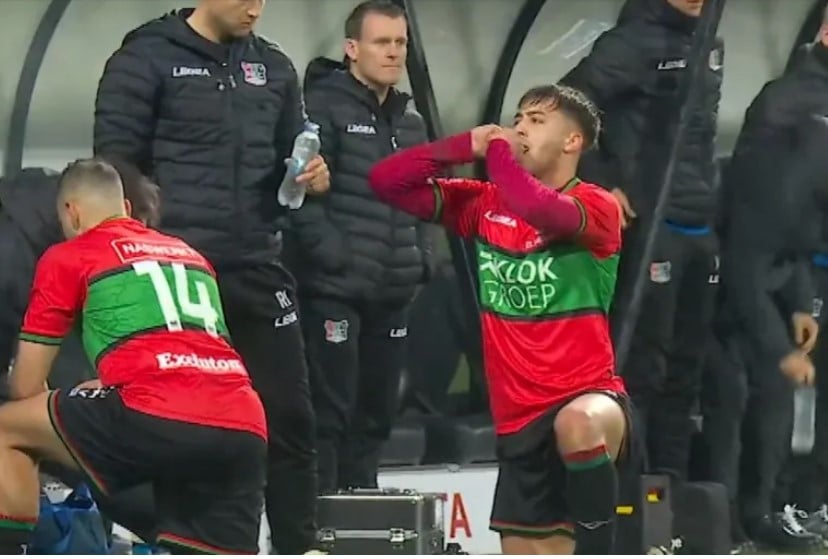

Some Dutch football league matches were suspended for the first time, so that the Muslim players participating with their clubs could break their fast in conjunction with the time of the Maghrib call to prayer.
And last Saturday, the referees of the matches (Excelsior – Twente Enschede), (Eindhoven – Nijmegen) and (Campur – Emmen) stopped playing for a short period so that the players could eat and drink.
And the “ESBN” sports network published, on its official account on Twitter, a video clip compiled of the moments when the match referees stopped playing to allow the fasting players to break their fast.
And the Dutch Football Association had announced more than a week ago that the “Ramadan break” was permitted for the first time in professional football, following the example of the English Football Association, which decided this procedure starting from the current month of Ramadan.
And the decision of the Dutch Federation included stopping the referees for the matches at the first available time after sunset, if there is at least one Muslim player on the field who is fasting during Ramadan, provided that this is discussed before the start of each confrontation.
The Dutch League includes a large number of Muslim players who fast during the month of Ramadan, from professional Arabs in the Netherlands, and African Muslims, in addition to Dutch players of Arab or Muslim origin.
Although the FA took a decision to give the referees the freedom to stop the matches to allow the fasting players to break their fast, the French Federation’s position was different, after it imposed on the referees not to stop the matches to allow the players to break their fast.