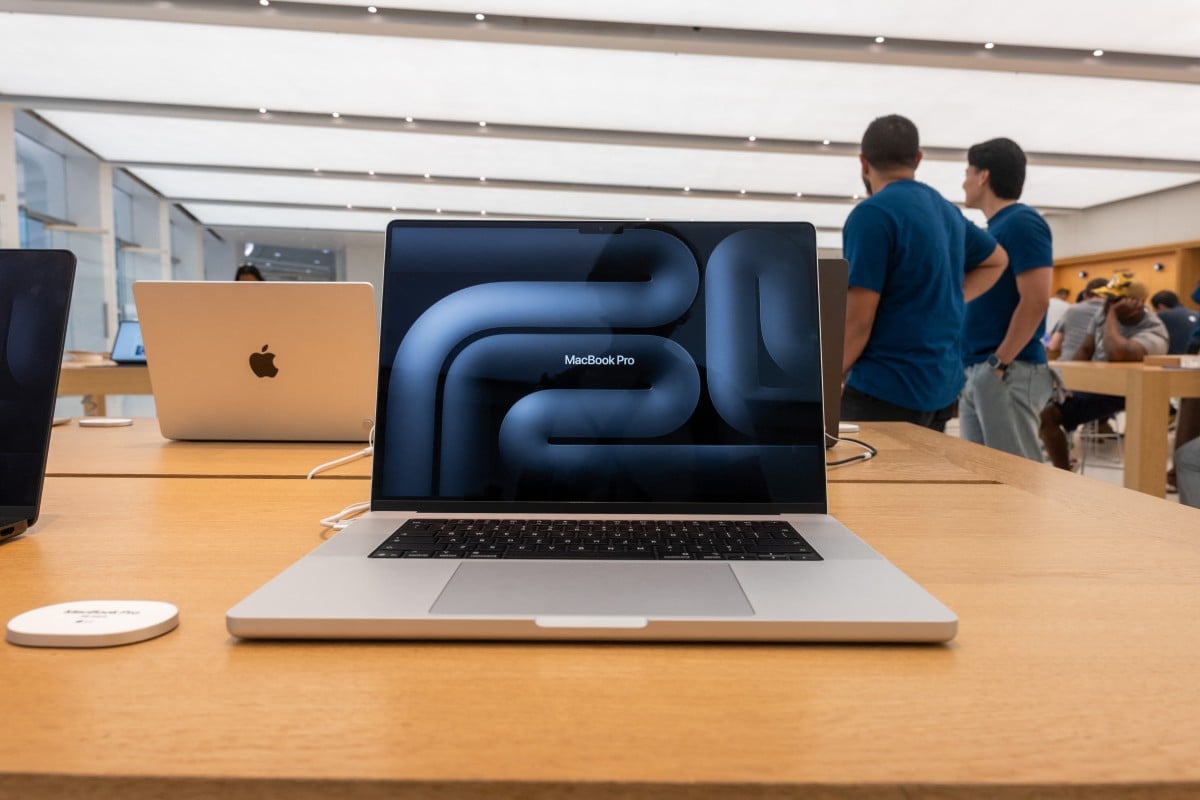

CUPERTINO – The MacBook Air that cost $1,099 two weeks ago now costs $1,299. Apple updated its website on Thursday without a press release, without a product event, and without a new feature to show for it. The company cited memory costs and moved on.
The price change affects the full MacBook line, both iPad families, and Apple’s home hardware, but leaves iPhones and AirPods untouched for now. The entry-level MacBook Neo climbs $100 to $699. The 14-inch MacBook Pro adds $300 to reach $1,999. The 11-inch iPad Pro rises $200 to $1,199. The cheapest iPad moves from $349 to $449. Customers who already ordered at the old prices are not affected; those buying today are not so lucky.
What is happening behind the numbers is not specific to Apple. Dynamic random-access memory prices rose 98% in the first quarter of 2026 alone, and analysts forecast another 58 to 63 percent increase in the current quarter. The phenomenon has a nickname: RAMageddon. The cause is not a factory failure or a natural disaster. It is an allocation decision by Samsung, SK Hynix, and Micron Technology, the three companies that produce nearly all of the world’s memory. They are building high-bandwidth memory modules for Nvidia GPUs to supply the AI data center expansion underway at Microsoft, Google, Meta, and Amazon. Those modules earn roughly eight times the margin of a standard consumer LPDDR chip.
The consequence for device makers is not so simple. Every wafer that goes into an HBM stack for a data center is a wafer that does not become the LPDDR5X chip inside a MacBook Air or an iPad. Apple’s announcement Thursday is the largest and most visible proof yet that the shortage has escaped the enterprise AI world and reached the consumer aisle. Nintendo raised the Switch 2 launch price in May because of the same memory cost pressure; Lenovo, Dell, HP, Acer, and ASUS have all warned resellers of increases between 15 and 20 percent. Apple, with the most disciplined supply chain in consumer electronics, held prices longer than anyone. It is also the first major consumer technology brand to confirm an across-the-board increase of this scale.
Shares of Apple fell 6.15 percent to $275.15 at the close on Thursday, the biggest single-session decline since February. The move wiped roughly $275 billion in market capitalization, pulling the company’s total value to just over $4 trillion. The stock’s problem extends beyond the price increase itself, to what that increase implies about Apple’s position. Apple’s gross margin on hardware depends partly on its ability to negotiate memory costs below the spot market through long-term contracts. The announcement suggests those contracts ran out, or were not structured to cover an increase of this magnitude. There is no guidance on when the price pressure stabilizes.
Ben Bajarin, chief executive of technology research firm Creative Strategies, told Bloomberg the memory environment is “structurally tough for the foreseeable future” and warned that Apple’s announcement raises a harder question for the rest of the industry: if the company with the world’s most sophisticated supply chain cannot hold consumer prices, what happens to every device maker with less leverage? PC manufacturers that have already warned of increases are likely to see larger adjustments, not smaller ones.
The wrinkle is what happened at the same moment Apple’s shares were falling. Micron Technology reported quarterly revenue of $41.46 billion on Wednesday, a figure more than four times its year-ago result, generating $28.24 billion in net income in a single fiscal quarter. Micron shares rose more than 15 percent. The shortage that is punishing Apple is the boom that is enriching Micron. That relationship is not likely to reverse quickly. Micron and its peers have no structural incentive to expand consumer memory supply when enterprise-grade HBM generates far higher margins, and new fabrication capacity takes two to three years to commission.
What Apple has not said is whether the iPhone follows. The handset line was untouched in Thursday’s announcement, and Apple offered no forward guidance on future pricing. iPhones use LPDDR memory too, the same type in short supply, but the iPhone line generates margins and revenue at a scale that makes absorbing cost increases somewhat easier than in the Mac or iPad lines. That calculation is not permanent. Memory prices at current levels, persisting through the second half of 2026, would eventually force the same decision. The $1,099 MacBook Air is gone. The industry is still working out whether it comes back in months or in years.