
A Pittsburgh-based real estate developer has unveiled an audacious plan to transform a waterfront parcel near Washington’s future Commanders stadium into a casino-anchored entertainment district, sparking fierce debate over whether gambling legislation should bankroll community amenities in one of the District’s lowest-income wards.
Chatman Holdings LLC, a minority and woman-owned firm, presented its proposal for a ten-story casino gambling venue, 1,000-room hotel, and mixed-use development to Advisory Neighborhood Commission 7F on November 18, requesting expedited approval and new legislation to permit gaming on Reservation 13. The ambitious project promises 10,000 jobs, a full-service grocery store, and millions in community benefits, but only if District lawmakers agree to legalize casino gambling at the site.
The proposal arrives as development pressure intensifies around the former RFK Stadium site, where the Commanders plan to build a new 65,000-seat venue by 2030. While the casino has divided local commissioners and drawn opposition from neighboring Ward 6 Councilmember Charles Allen, who called it “a bad idea,” some Ward 7 leaders argue it represents their community’s best chance at economic development transformation after decades of neglect.
“This is about Ward 7 getting its opportunity at economic viability,” said ANC 7F Chair Tyrell M. Holcomb, who urged commissioners to support the project rather than wait years for the city’s Office of the Deputy Mayor for Planning and Economic Development to solicit competitive bids for the remaining Reservation 13 parcels.
A Riverfront Gamble
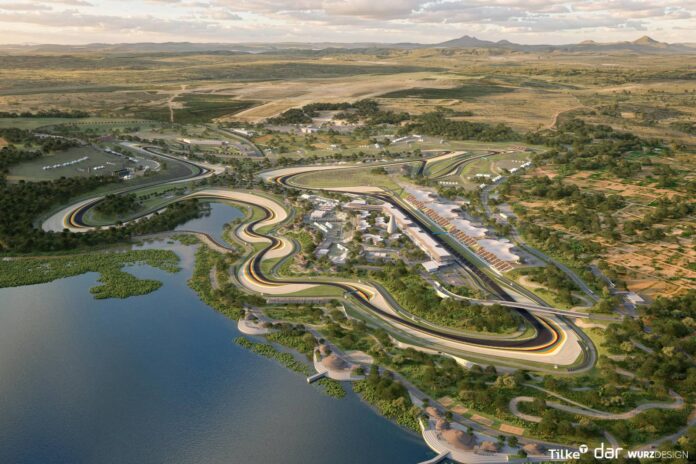
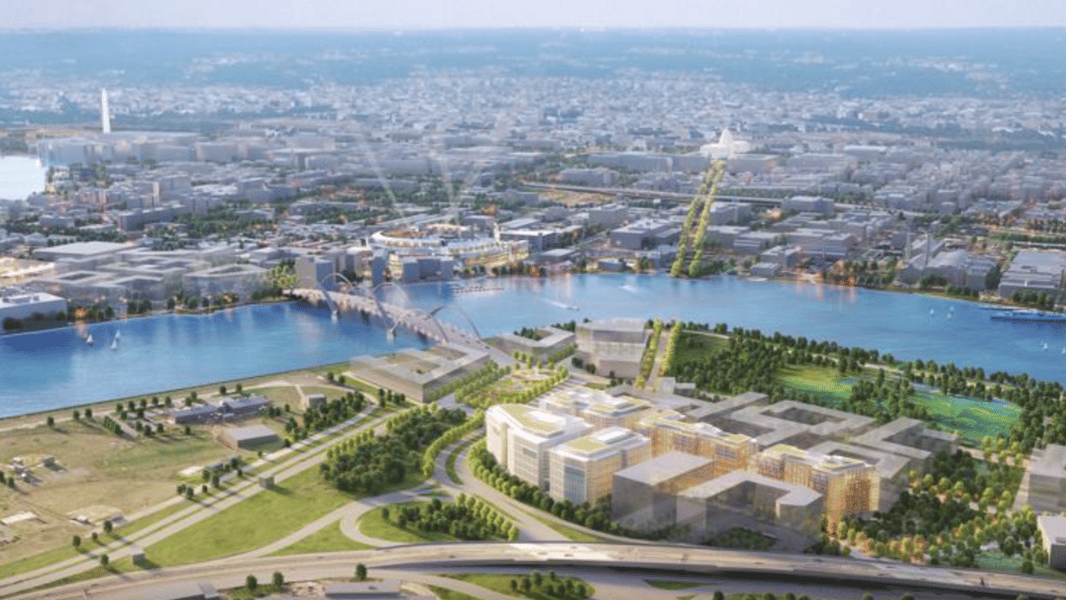
Chatman’s vision encompasses four undeveloped parcels,Lots D, I, J, and M, along the Anacostia River between the DC Water facility and the Park Kennedy. The casino would anchor a development featuring up to 1,400 residential units, a 75,000-square-foot convention center, 900,000 square feet of office space, and street-level retail including a movie theater and bowling alley.
Landscape architect Rebecca Mizikar of PVDEDI outlined plans to reimagine the waterfront with an amphitheater, ice rink, public plazas, and improved pedestrian connections to the Stadium-Armory Metro station. The grocery store, a priority repeatedly emphasized by Ward 7 residents, would be located near the transit hub, Chatman executives stated.
CEO Robin L. Young, who led the presentation alongside CFO Andrew L. Young and COO Justin L. Young, framed the casino as an essential “revenue engine” for the broader development. “Our design allows us to deliver great benefits to the community,” Young told commissioners. “But without high-revenue uses, the numbers didn’t work.”
The frank admission highlighted a central tension: Chatman argues that only casino profits can finance the amenities Ward 7 desperately needs, from affordable housing to walkable retail. Yet this economic model would rely substantially on gambling revenue extracted from the very communities the project claims to serve, raising concerns about gambling harm and social costs.
Community Benefits With Strings Attached
Chatman executives outlined an extensive community benefits package to address concerns about gambling’s social costs. The proposal includes $10 million in funding to the DC Office of Lottery and Gambling for addiction treatment, youth education programs, and public awareness campaigns about gambling risks.
The company pledged that 2.5 percent of the casino’s adjusted gross receipts would flow to a local nonprofit focused on social equity and disenfranchised communities. Four additional nonprofit organizations would receive revenue-sharing agreements, though no specific dollar amounts or selection criteria were provided during the presentation.
Chatman promised workforce development partnerships, a labor peace agreement, and a project labor agreement to ensure union stability. The company estimates the project would create 5,000 permanent jobs and 5,000 construction positions, though commissioners questioned whether these opportunities would genuinely reach Ward 7 residents, who face a median household income between $40,000 and $50,000.
The developer also committed substantial investment in nearby Kingman Park, funded partially through a proposed 10 percent tax revenue allocation and municipal bonds linked to the gaming license. However, Chatman provided no specific commitments around transportation improvements or expanded public services beyond vague promises to “work with” District agencies and WMATA.
Commissioners Voice Skepticism
The November 18 meeting exposed deep divisions among commissioners about whether casino gambling represents economic opportunity or exploitation. Commissioner Chanettia Nelson challenged the fundamental premise of Chatman’s business model, questioning whether the casino would depend on patronage from low-income area residents.
“Pulling money from individuals to fund a casino is not, in my opinion, the way to go about funding a casino from a low-income community,” Nelson said. While acknowledging development and a grocery store as wins, she added firmly: “A casino is not one of them.”
Nelson pressed Chatman executives on housing affordability, asking whether the proposed condominiums would serve existing residents or primarily attract higher-earning newcomers, a question that went largely unanswered during the presentation.
Commissioner Ashley Renee Ruff emphasized that Ward 7 residents have been misled by developers before, demanding concrete guarantees that community amenities would be built concurrently with the casino rather than years later. “I don’t want to give you my yes right now, and then we don’t get what we asked for in the community, but we’re giving you everything you’re asking for up front,” Ruff told the executives.
Multiple commissioners raised concerns about traffic congestion, parking availability for local shoppers, limited pedestrian and bicycle crossings over the Anacostia River, and whether promised jobs would genuinely be accessible to Ward 7 residents. Others worried about gambling addiction and other social harms in a community already facing significant economic challenges.
A Divided Vote
Despite the skepticism, the commission voted 3-2, with two abstentions, to support a resolution asking Ward 7 Councilmember Wendell Felder to introduce legislation awarding the Phase III parcels to Chatman Holdings. In a separate 5-3 vote, commissioners supported legislation permitting gaming on the site.
Commissioner Shirley Thomson-Wright, whose district borders the proposed casino, defended the project as a necessary compromise. “More jobs are created with a casino, more return to the community,” she said. “Yes, it might not be the ideal way to gain revenue but not one person in that meeting had a solution as to how we generate more revenue to help build up 7F as a whole.”
Thomson-Wright argued that tourists attending Commanders games, concerts, and visiting museums would patronize the casino, bringing outside revenue into Ward 7. She emphasized that her constituents want entertainment options, walkable spaces, and multiple full-service grocery stores, amenities the casino development promises to deliver.
“With DC hitting us on all fronts with the speed cameras that generate millions each year, I really never see the city have legislation that gives it back directly,” Thomson-Wright added, though she acknowledged concerns about traffic congestion and parking that would need to be resolved.
Regulatory and Political Hurdles
Chatman’s proposal faces formidable obstacles before breaking ground. The District currently prohibits casino gambling, though Mayor Muriel Bowser has pushed to expand gaming options. On October 1, DC Council Chair Phil Mendelson introduced Bowser-backed legislation that would legalize betting on blackjack and poker at certain locations, but that bill remains in committee and does not specifically authorize a Reservation 13 casino.
Even if gambling legislation advances, Chatman would need the District to award the Phase III parcels through a sole-source contract rather than competitive bidding, an unusual arrangement that Holcomb argues would accelerate development but that raises transparency concerns.
“Instead of us waiting on DMPED another 5, 10, 15 years to come to us and say, ‘We want to put the rest of these parcels out,’ we’re saying to DMPED, ‘hey, as a matter of fact we want you to award these parcels to this group now,'” Holcomb said.
However, a source within DMPED told local media the agency has not met with or reviewed plans with Chatman and has no immediate plans to solicit Phase III proposals. The first two Reservation 13 development phases were competitively awarded: Blue Skye Construction and Development won Phase I, building the Kennedy and Ethel apartment complexes, while Blue Skye and R13 Community Partners, a consortium of eight African American-owned developers, won Phase II rights in 2021.
Phase II development has been delayed by infrastructure work, DMPED officials said at a recent public meeting, raising questions about whether additional parcels are “shovel-ready” or would require millions in public infrastructure investment before development could proceed, a cost Chatman executives could not quantify during their presentation.
Opposition From Neighboring Ward
Ward 6 Councilmember Charles Allen, who represents neighborhoods west of the proposed site, issued a blunt statement opposing the casino. “It’s a bad idea. DC doesn’t need a casino,” Allen said.
Allen’s opposition could prove significant, as any casino legislation would require DC Council approval. Ward 7 Councilmember Wendell Felder, whom Chatman has contacted about the project, has not publicly commented on the proposal. His office did not respond to media requests for comment.
The proposal also faces competition from existing regional casinos. MGM National Harbor in nearby Prince George’s County, Maryland, generated $67.9 million in gaming revenue during October 2025, leading the state’s casino market. Maryland’s six casinos collectively brought in $162.1 million that month, demonstrating both the significant revenue gambling can generate and the established competition a DC casino would face.
A Community At A Crossroads
The Chatman proposal crystallizes fundamental questions about economic development in historically underserved Washington neighborhoods. Ward 7 has long lacked basic amenities, full-service grocery stores, walkable retail, entertainment options, that residents of wealthier wards take for granted. The return of the Commanders and surrounding development represents a rare opportunity to address those gaps.
Yet the casino model raises troubling questions about who truly benefits when gambling revenue finances community improvements. Research consistently shows that casinos disproportionately draw revenue from lower-income patrons and that communities near gambling facilities experience elevated rates of problem gambling, bankruptcy, and related social costs.
State Board of Education Representative Eboni Rose Thomson, present at the November 18 meeting, asked commissioners whether any alternative proposals had been presented to the ANC. Commissioners confirmed they had not seen other options for the Phase III parcels.
The narrow vote totals, 3-2 on the land award resolution, 5-3 on gaming legislation, suggest the commission remains deeply divided about whether Chatman’s casino represents economic opportunity or a Faustian bargain that could extract wealth from Ward 7 residents while delivering uncertain benefits.
As the Bowser administration remains silent on the proposal and Council members begin weighing gambling legislation, Ward 7 residents face a difficult choice: wait years for conventional development that may never materialize, or embrace a casino model that promises immediate amenities financed by gambling revenue that research suggests will come substantially from their own pockets.
The debate over Reservation 13’s future has only begun, but the fundamental tension is clear: in a city where some neighborhoods struggle for basic services while others thrive, how far should communities go to capture their share of economic opportunity, and at what cost?