WASHINGTON – Nobody who checked Monday night’s numbers against 6, 37, 54, 55, and 64, with Powerball 10, found a match for all six. The grand prize went unclaimed for the 43rd consecutive drawing, lifting Wednesday’s jackpot to an estimated $1 billion with a lump-sum cash option of $433.1 million, and setting up what has become the lottery’s most familiar script: a number that looks life-changing until taxes are subtracted.Monday’s drawing produced smaller prizes. A Tennessee ticket matched all five white balls while the Power Play option was active, yielding $2 million. Tickets in California and Maryland each matched five white balls without Power Play, claiming $1 million apiece. The red Powerball, number 10, and a 3X Power Play multiplier were confirmed at the Florida Lottery draw studio in Tallahassee, where Wednesday’s drawing is also scheduled for 10:59 p.m. Eastern. As CBS12 reported, the jackpot has since been revised upward to $1 billion as ticket sales for Wednesday accumulate across all participating jurisdictions.The billion-dollar figure carries a considerably smaller number underneath it. Federal law requires Powerball to withhold 24 percent of any lottery payment exceeding $5,000 at the moment the winner collects, reducing the $433.1 million cash option to roughly $329 million before the winner has filed a form or retained legal counsel. That withholding does not settle the federal account. Winners landing in the top federal income bracket, as a $433 million lump sum virtually guarantees, owe taxes at the 37 percent marginal rate on their annual return, producing a total federal liability of approximately $160 million on the cash option. After that reckoning, the figure surviving federal taxation lands near $273 million. State taxes then subtract again: New York adds 10.9 percent of the gross, removing roughly $47 million from that amount. Texas, Florida, and California impose no state income tax on lottery winnings.Powerball also offers an annuity: 30 annual payments over 29 years, each 5 percent larger than the previous, that delivers the full nominal $1 billion without the upfront lump-sum reduction. The annuity delivers more total money but defers most of it across decades, and each payment is taxed as ordinary income in the year it arrives. Per Powerball’s official game rules, winners have 60 days from the draw date to choose between the two options; the annuity applies by default if no election is made before that deadline.The current jackpot run has reached 43 consecutive drawings without a grand prize winner, a streak that is closing on Powerball’s record for sustained jackpot accumulation. The $1.817 billion jackpot won by an Arkansas ticket on Christmas Eve 2025 required 47 drawings without a winner to reach that level, the longest recent no-winner streak in the game’s history. Four drawings separate the current run from matching that record. If Wednesday’s drawing passes without a winner, followed by Saturday’s, the streak would reach 45.At $1 billion, Wednesday’s prize ranks among the largest in Powerball’s history. The game’s all-time record remains $2.04 billion, won in California in November 2022 and still the largest single lottery payout in United States history. The Arkansas jackpot, at $1.817 billion, was the second-largest Powerball prize ever. Wednesday’s $1 billion, if claimed, would rank among the top six Powerball prizes on record. If no ticket matches and the jackpot grows toward Saturday’s drawing, it could push further up that list.
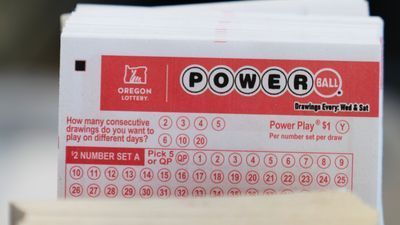
Powerball lottery tickets as the jackpot surges toward $1 billion. [Image Source: AP Photo]
The odds of winning remain fixed at 1 in 292,201,338 per ticket regardless of how large the jackpot has grown or how many consecutive drawings have passed without a winner. Additional tickets in circulation raise the statistical likelihood that at least one winning combination will surface in any given drawing, but they do not improve any individual ticket’s probability. That probability has been constant since Monday’s drawing added the 43rd installment to the current run.Powerball is sold in 45 states, the District of Columbia, Puerto Rico, and the U.S. Virgin Islands. At $2 per play, each ticket contributes to the prize pool shared across all jurisdictions. The jackpot entered this run at a lower starting point and grew drawing by drawing through accumulated ticket sales, a structural feature Powerball introduced when it revised its number matrix in 2015 to make jackpots harder to win but larger when they do build. The change has since produced the largest lottery prizes in American history, including the Powerball jackpot at $748 million eight days ago before Monday’s outcome added another no-winner result to the total.Financial and legal advisers who specialize in sudden-wealth situations consistently describe the period between winning and claiming as the most consequential window. They advise signing the ticket immediately to establish ownership, then delaying contact with lottery officials by 24 to 72 hours while securing an attorney and determining whether the state where the ticket was purchased permits anonymous claiming. Several states, including Delaware, Kansas, Maryland, North Dakota, Ohio, and South Carolina, allow prize claims through trusts or limited liability companies, keeping the winner’s name from the public record. New York, California, and Georgia do not offer that option under current law.The Mega Millions jackpot won by a Bradenton, Florida ticket on July 28, an $803 million prize sold at a Wawa convenience store, has still produced no public claimant. The two lotteries are independent games with separate odds, prize pools, and administration, but their overlapping size in the same month illustrates what the 2015 rule changes have made possible: jackpots at the billion-dollar range now arrive often enough that the machinery of claiming them has become its own field of legal and financial practice.Wednesday’s drawing is set for 10:59 p.m. Eastern at the Florida Lottery studio in Tallahassee. Ticket sales close approximately one hour before the draw in most jurisdictions. Whether the numbers called that night match any combination in play is the one question the math cannot answer in advance. Everything else, the tax arithmetic, the odds, the historical ranking, the decisions a winner would face in the days that follow, has already been calculated. The winner’s identity and the gas station or corner store where the ticket lives are the only facts still outstanding.
Dilnaz Shaikh is a journalist at The Eastern Herald covering current affairs, politics, climate and environmental developments, with a focus on major developments in India and around the world.