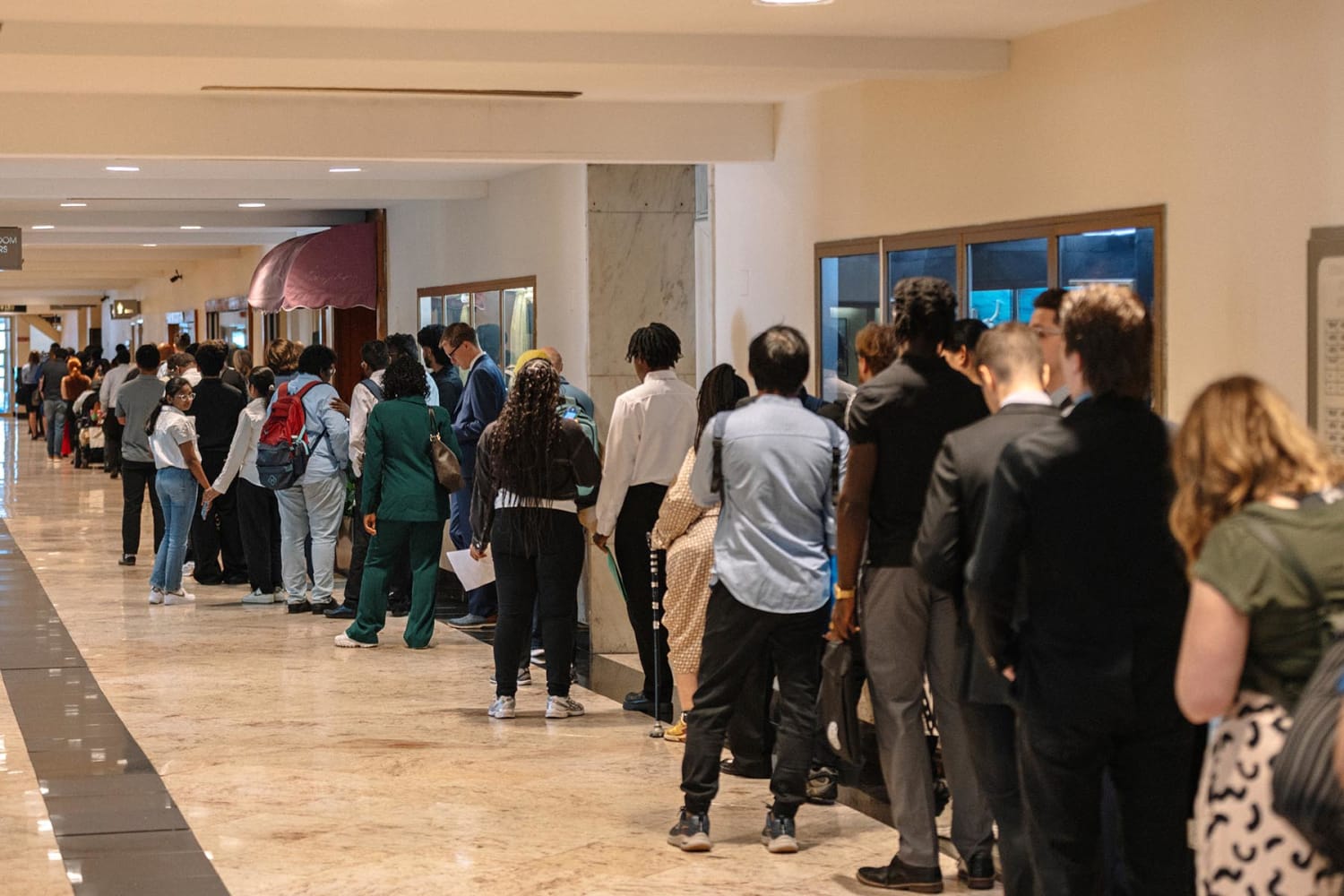

In a stark signal that America’s labor engine is sputtering, private employers shed 32,000 jobs in November, marking the third decline in four months and fueling urgent calls for the Federal Reserve to slash interest rates once more. The ADP National Employment Report, a closely watched private-sector gauge often seen as a precursor to official government data, revealed this unexpected contraction Thursday, sending Wall Street into a frenzy of bets on deeper monetary easing even as jobless claims plunged to a three-year low. Challenger, Gray & Christmas reported that planned layoffs surged to pandemic-era highs, with over 1.17 million job cuts announced year-to-date, the most since 2020, painting a picture of a “no hire, no fire” economy frozen in uncertainty.
This mixed bag of data underscores a labor market at a precarious crossroads, where low layoff filings mask a deeper malaise: companies are hunkering down, reluctant to expand headcounts amid looming tariff threats from President Trump’s incoming administration and persistent inflationary pressures. Economists now peg the odds of a December Fed rate cut at over 90 percent, up sharply from earlier in the week, as the weakening jobs picture collides with cooling inflation readings. Yet beneath the surface, sectors like manufacturing and retail are bleeding positions, with ADP noting losses of 71,000 in goods-producing industries alone, a grim harbinger for blue-collar America.
The ADP figures, derived from payroll processing for over 25 million US workers, showed service-providing sectors holding steady with modest gains of 39,000 jobs, but the overall drop caught analysts off guard. “This is the worst November for private hiring since 2022,” said ADP chief economist Nela Richardson, highlighting how businesses are prioritizing cost-cutting over growth in an environment of elevated borrowing costs and geopolitical jitters. Professional and business services, a bellwether for economic health, lost 47,000 roles, while leisure and hospitality added a tepid 28,000, far below pre-pandemic norms.
Layoff Tsunami Builds Momentum
Challenger’s November report amplified the alarm, logging 71,000 announced cuts, a 53 percent drop from October’s peak but still elevating 2025’s total to 1.17 million, surpassing last year’s tally and echoing the depths of the Covid recession. Tech giants and retailers dominated the list, with firms like Intel and Wayfair citing restructuring amid AI disruptions and e-commerce shifts. Wall Street banks, fresh off bonus seasons, announced thousands more as dealmaking stalls. This surge in planned separations contrasts sharply with the Labor Department’s weekly jobless claims, which tumbled to 191,000 for the week ending November 29, the lowest since September 2022, suggesting many workers are holding on amid a cautious “no fire” stance.
Yet this low claims figure belies the reality on the ground. Employers are opting for attrition and hiring freezes over outright dismissals, a strategy that prolongs pain for job seekers while keeping official unemployment metrics artificially stable. The four-week moving average of claims held at 202,000, per the Labor Department, but JOLTS data from October revealed a gaping 6.8 million job openings against 8.5 million unemployed—a mismatch signaling structural woes rather than cyclical bounce. For workers like Maria Gonzalez, a laid-off factory hand in Ohio, the freeze means months of fruitless applications. “Nobody’s hiring, but nobody’s letting go either,” she told reporters outside a shuttered plant.
Sectoral fissures are widening. Manufacturing shed 12,000 ADP jobs, battered by supply chain snarls and anticipation of Trump’s 60 percent tariffs on Chinese imports. Retail, bracing for holiday slowdowns, lost 17,000 amid e-commerce cannibalization. Financial activities dropped 22,000 as regional banks consolidate post-SVB fallout. Conversely, education and health services added 52,000, a bright spot driven by aging demographics, but even here, temp agency hiring—a leading indicator—plunged 28,000. This polarization echoes the “job polarization” thesis, where middle-skill roles vanish while high- and low-end persist, exacerbating inequality in Trump’s America.
Fed’s Pivot: Rates or Recession?
Federal Reserve Chair Jerome Powell faces mounting pressure as the jobs slowdown accelerates. Markets now price in a 25-basis-point cut at the December 17-18 meeting, with some traders eyeing 50 points if Friday’s nonfarm payrolls disappoint. “Weak labor data is the Fed’s green light,” noted Goldman Sachs strategist Lindsay Rosner, pointing to the central bank’s dual mandate of maximum employment and price stability. Inflation has eased to 2.4 percent core PCE, but officials worry a job market crack could tip the economy into recession, echoing 2008’s playbook.
President Trump’s reelection adds volatility. His promised tax cuts and deregulation could juice hiring, but tariff walls risk inflating costs and curbing trade-dependent sectors. Advisors like Stephen Moore predict a “manufacturing renaissance,” yet ADP data shows goods producers in retreat. Labor Secretary nominee Lori Chavez-DeRemer vows to shield workers, but with 1.17 million layoffs looming, skepticism abounds. Unions, emboldened by UAW wins, demand protections amid the freeze.
Economists dissect the paradox: low claims signal stability, yet ADP losses and layoff announcements scream contraction. ISM’s November manufacturing PMI ticked up to 48.7, still sub-50 contraction territory, but services PMI hit 55.5 expansion. J.P. Morgan’s Michael Feroli warns of “ghost jobs,” where postings proliferate without hires, distorting data. Ghosting by employers has surged 30 percent year-over-year, per Indeed, leaving applicants in limbo.
Worker Stories: The Human Toll
In Detroit, autoworker Jamal Hayes scrolls Indeed nightly, his GM severance dwindling. “Tariffs sound good on TV, but factories aren’t hiring—they’re scared,” he says. Across the Rust Belt, similar tales emerge: 250,000 manufacturing jobs at risk per Moody’s. Silicon Valley fares no better; Meta and Google culled 10,000 combined in November, per Challenger, as AI automates coding roles. Tech giants and retailers dominated the list.
Demographic divides deepen the crisis. Black unemployment hovers at 6.1 percent, Hispanic at 5.3 percent,double whites’ 3.4 percent, per BLS previews. Women in professional services face the brunt, losing 18,000 roles. Gig workers, untallied in ADP, report 20 percent earnings drops via Uber data. Reskilling programs lag; only 15 percent of laid-off claim retraining benefits.
Policy responses stir debate. Biden-era infrastructure funds propped up construction (+15,000 ADP jobs), but momentum fades. Trump’s team eyes apprenticeships, yet funding battles loom. Fed doves like Raphael Bostic urge cuts; hawks like Christopher Waller caution overshooting. Consensus: without action, 2026 could see unemployment breach 4.5 percent.
Global Ripples and Market Mayhem
The US chill reverberates worldwide. European bourses dipped 1 percent Friday on import fears; China’s exporters brace for tariff pain. Oil slid to $68/barrel as demand softens. Yet US stocks soared, the Dow jumped 400 points Thursday on rate-cut euphoria, S&P 500 up 1.2 percent. “Bad jobs news is good for assets,” quipped Fortune, capturing the perverse dynamic.
Looking ahead, Friday’s BLS report looms large. Consensus eyes 190,000 adds, unemployment steady at 4.1 percent. Miss it, and recession odds jump to 40 percent per New York Fed. Challenger’s December pipeline: 50,000 cuts already queued. For The Eastern Herald readers, the message is clear: America’s job market isn’t cooling, it’s congealing, demanding bold Fed strokes and White House clarity to thaw the freeze.