In a dramatic pivot that has sent shockwaves through Silicon Valley, Mark Zuckerberg, the chief executive of Meta Platforms, is preparing to slash up to 30 percent of the budget for his ambitious metaverse division, known as Reality Labs. The move, first reported by Bloomberg and corroborated by Reuters, marks a significant retreat from the virtual reality empire that Mr. Zuckerberg rebranded the company around in 2021, pouring tens of billions of dollars into hardware like Quest headsets and immersive worlds that have yet to capture mainstream appeal. As Meta’s stock surged more than 5 percent in after-hours trading on Thursday, investors cheered the shift toward AI, but employees in the metaverse unit brace for potential layoffs.
The decision underscores a profound strategic recalibration at one of the world’s most valuable technology companies. Reality Labs, which encompasses Meta’s work on virtual and augmented reality, has been a financial black hole, posting operating losses of approximately $16 billion in 2024 alone, with cumulative deficits exceeding $70 billion since the division’s inception. Mr. Zuckerberg, once the evangelical champion of the metaverse as the successor to the mobile internet, now appears to be dialing back his obsession amid mounting pressure from shareholders and the explosive growth of AI technologies like large language models and generative tools.
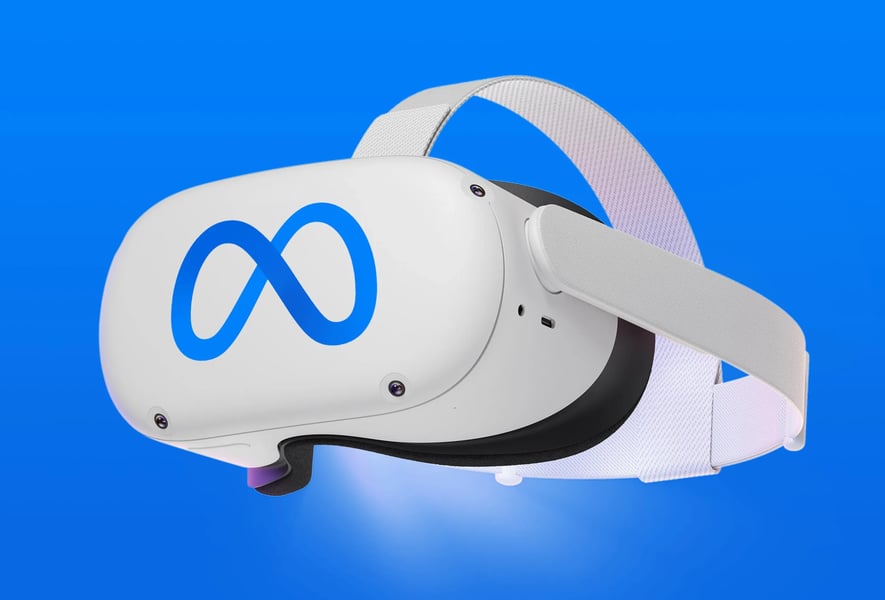
This is not the first time Meta has wielded the ax in its experimental divisions. The company, formerly known as Facebook, has conducted multiple rounds of layoffs since 2022, including a particularly brutal 21,000 job cuts as it grappled with slowing social media growth and advertising revenue dips post-pandemic. Reality Labs, however, has been somewhat insulated as Mr. Zuckerberg’s personal passion project, a vision he described in 2021 as “the next big computing platform” akin to the shift from desktops to smartphones. That bet has faltered. Quest headset sales, while respectable at around 20 million units shipped since launch, pale in comparison to the iPhone’s billions, and Horizon Worlds, Meta’s flagship metaverse app, has struggled with user engagement, averaging fewer than 200,000 daily active users globally.
The timing of the cuts is telling. Meta has poured resources into AI over the past year, releasing Llama 3.1, its most advanced open-source model, and integrating AI assistants across Instagram, WhatsApp, and Facebook. Mr. Zuckerberg has repeatedly signaled this shift, telling analysts in July that “AI will be the next major wave” and committing Zuckerberg’s $14B AI plan to data centers and computing power in 2025. The metaverse, by contrast, faces headwinds from hardware limitations, bulky headsets cause motion sickness for many users, and a lack of killer applications beyond gaming. Critics, including Meta board member Marc Andreessen, have long questioned the viability of VR as a mass-market product, arguing that lightweight AR glasses represent the true future, a view now seemingly echoed in the budget reallocations.
Wall Street’s reaction was swift and positive. Shares of Meta, which closed at $612 on Thursday, jumped as much as 6 percent in extended trading, reflecting investor relief that Mr. Zuckerberg is finally prioritizing profitable AI over speculative VR. Analysts at firms like Bank of America and Morgan Stanley noted the move could accelerate Meta’s path to higher margins, with AI-driven ad targeting and content generation poised to boost revenue growth to 15-20 percent annually. “This is a pragmatic acknowledgment that the metaverse thesis needs time, and capital is better deployed elsewhere,” said Wedbush Securities analyst Dan Ives. Yet, the human cost looms large: insiders report discussions of “deep reductions” in headcount, potentially affecting thousands in Reality Labs’ 10,000-strong workforce.
Mr. Zuckerberg’s metaverse journey began with unbridled optimism. In October 2021, he announced the rebrand from Facebook to Meta, envisioning a future where users don VR headsets to work, socialize, and play in seamless digital realms. The pitch convinced few outside the company; the stock plunged 70 percent the following year amid economic headwinds and skepticism. Billions were spent on acquiring Oculus in 2014 for $2 billion, developing Quest series, and building data centers for metaverse rendering. Partnerships with Ray-Ban for smart glasses offered a glimmer of success, but core VR remains niche. Now, with Apple’s Vision Pro failing to ignite demand and competitors like Roblox thriving in lighter web-based virtual spaces, Meta’s pivot feels inevitable.
The broader tech landscape amplifies the significance. Big Tech’s AI arms race has seen Alphabet, Amazon, and Microsoft commit hundreds of billions to models like Gemini, Claude, and GPT series. Meta, with its vast user base of 3.2 billion monthly actives, is uniquely positioned to monetize AI through personalized feeds and e-commerce. Yet, the metaverse cuts raise questions about innovation’s price. “Zuckerberg bet the company on VR, lost billions, and now bails for the hottest trend,” quipped one former employee on Blind, an anonymous tech forum. Supporters argue it’s ruthless efficiency: Reality Labs will survive at a leaner scale, focusing on AR wearables that could ship in 2027. As one of the 20 Richest People, Zuckerberg can afford such pivots.
Regulatory scrutiny adds another layer. Meta faces antitrust probes in the U.S. and Europe over its social media dominance, with the FTC challenging its Instagram and WhatsApp acquisitions. Diverting funds from metaverse could be seen as conceding defeat in hardware, bolstering arguments that Meta should stick to software. Meanwhile, President Donald Trump’s administration, with its pro-business stance, may ease pressures, but Zuckerberg’s past tensions with conservatives over content moderation linger. The CEO’s recent Oval Office visit and $1 million donation to Trump’s inauguration have thawed relations, potentially aiding Meta’s AI ambitions.
Inside Meta, morale in Reality Labs is said to be crumbling. Engineers who joined for the moonshot vision now face uncertainty, with some decamping to AI startups like Anthropic or OpenAI. “It’s like watching your captain abandon ship mid-voyage,” one source lamented. Mr. Zuckerberg addressed staff in an internal memo last month, acknowledging “hard choices” ahead without specifics. The company has not commented officially on the Bloomberg report, but a spokesperson emphasized ongoing commitment to “ambitious long-term bets” in AR/VR.
Looking ahead, the cuts could reshape the metaverse industry. With Meta pulling back, opportunities arise for pure-plays like Unity Software or HTC Vive, though none match Meta’s scale. Apple’s tepid Vision Pro sales, under 500,000 units, suggest consumer VR remains years away. Optimists point to enterprise uses: training simulations for Boeing or Walmart, where immersion trumps consumer polish. But for now, Zuckerberg’s dream of a billion headset users feels further out of reach than ever.
The stock surge belies deeper questions about Meta’s soul. Is this a masterstroke of capital allocation, or an admission that the emperor has no clothes? As AI eclipses VR in hype and funding, the metaverse may fade into a cautionary tale of tech hubris, a $70 billion lesson in betting big and pivoting bigger. Investors rejoice, but the innovators weep. In Silicon Valley, where fortunes flip overnight, today’s loser could be tomorrow’s legend. For Zuckerberg, the real metaverse may lie not in virtual worlds, but in the cold calculus of survival.
Meta’s financials paint a stark picture. Reality Labs revenue hit $1.9 billion last quarter, mostly from Quest sales, against $5.2 billion in losses. AI, conversely, powers 40 percent of recommendation algorithms, driving ad efficiency gains. Projections show metaverse operating expenses dropping to $10 billion in 2026 from $20 billion, freeing cash for $65 billion in AI capex. This reallocation could propel Meta’s market cap past $2 trillion, analysts predict, vindicating Zuckerberg’s gamble.
Global reactions vary. In China, ByteDance’s VR efforts via Pico persist amid US chip restrictions. Europe’s GDPR hampers data-heavy metaverse plays. India, with 500 million Meta users, eyes AR for education. Yet, the universal truth: tech follows money. As Wall Street bids adieu to metaverse excess, Zuckerberg’s pivot ensures Meta’s throne, for now.