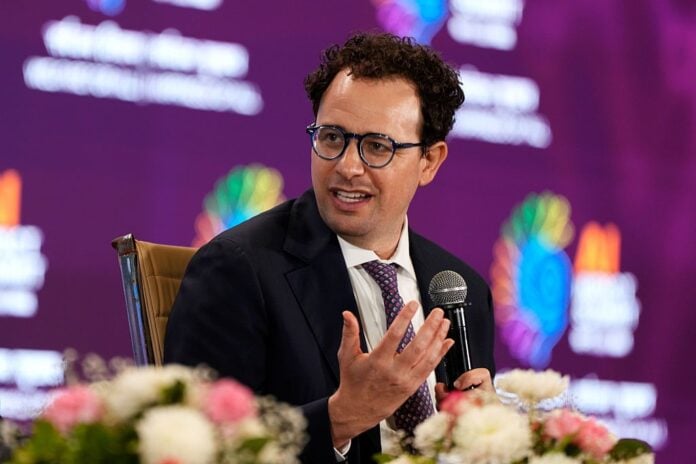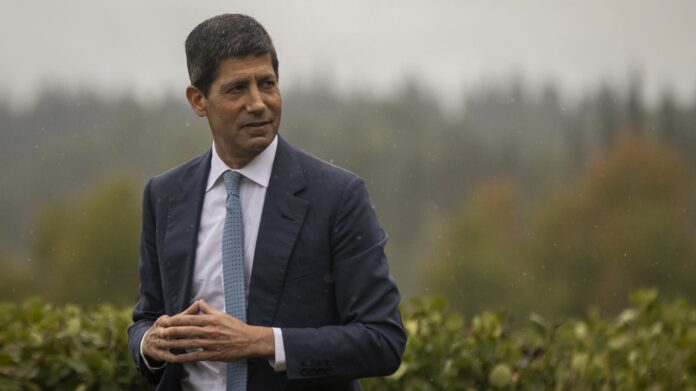

SAN FRANCISCO – Miles Wang, a researcher who left Harvard’s computer science program in 2024 to join OpenAI, is in talks to start an AI drug discovery company and raise roughly $200 million at a $2 billion valuation, with Lightspeed Venture Partners in early discussions to lead the round, according to people familiar with the plans as reported by TechCrunch.
Wang disputed the figures on the record but declined to provide corrected numbers. Multiple OpenAI researchers are expected to join the company.
The proposed startup would apply AI models to one of pharmaceutical research’s most persistent problems: finding useful drug candidates that existing science has already produced but human researchers failed to identify. Wang’s team plans to use AI systems to scan FDA-approved compounds and drugs that washed out of late-stage clinical trials, looking for therapeutic applications that weren’t tested in the original research.
The business rationale has attracted capital for years. Drug development costs hundreds of millions of dollars and takes a decade on average. Most of that cost is absorbed by compounds that succeed in early trials and fail in later ones – not because the underlying biology was necessarily wrong, but because the clinical design, patient selection, or target indication didn’t match. AI systems that can scan across large databases of compound behavior and genomic data can, in theory, identify those mismatches at a scale that human researchers couldn’t.
The competitive landscape is expensive. Chai Discovery raised $400 million at a $3.8 billion valuation earlier this year. Google DeepMind’s Isomorphic Labs raised $2.1 billion in a Series B in May. Those companies set a market for what AI drug discovery is worth before a product reaches clinical testing. Wang’s proposed valuation enters that market at a discount – or signals a narrower scope, concentrated on repurposing known compounds rather than designing new molecules from scratch.
The timing reflects a broader pattern at OpenAI. Several senior researchers have left in the past year to start ventures in adjacent fields, operating on a shared assumption that foundational model work is largely done and value will be captured at the application layer. DeepSeek’s $71 billion valuation round tells a parallel story from the Chinese side: the model itself is the platform, and companies that apply it to high-value problems accumulate capital quickly. Wang’s company would sit at that junction, using OpenAI-derived capabilities to solve a problem where the data exists but the analysis is too complex for human-scale research teams.
What the report doesn’t resolve is the actual deal terms. Wang’s on-the-record dispute of the $200 million and $2 billion figures is unusual: founders at the pre-term-sheet stage typically either confirm or decline to comment, and an active dispute suggests either the sourcing was wrong, the structure has changed since the reporting, or the company is trying to prevent specific numbers from becoming anchors in future negotiations. Lightspeed has not commented.
The drug repurposing angle is more competitive than it may appear. Companies in this space have been training models on biological data for a decade, and the differentiation AI brings is scale – the ability to process larger datasets at lower cost, not a qualitatively different approach to the underlying chemistry. What Wang’s company would need to demonstrate is that capabilities derived from OpenAI offer something those established players, which have considerable data advantages of their own, cannot replicate. Goldman Sachs’s record AI financing quarter shows investor appetite for that thesis is at a peak, but appetite and validation are different things.
The $2 billion figure, if accurate, reflects investor willingness to pay a substantial premium for OpenAI lineage before any product exists. Isomorphic Labs reached its valuation after publishing AlphaFold 3 results in peer-reviewed literature. Wang’s startup is pre-product and possibly pre-incorporation. What Lightspeed would be pricing is Wang’s research background, the talent he can draw from OpenAI, and a belief that the AI capabilities are now mature enough to make drug repurposing commercially viable at the scale where it generates returns. The industry has been making that case for five years. Wang would be betting that this time the model quality is actually sufficient.