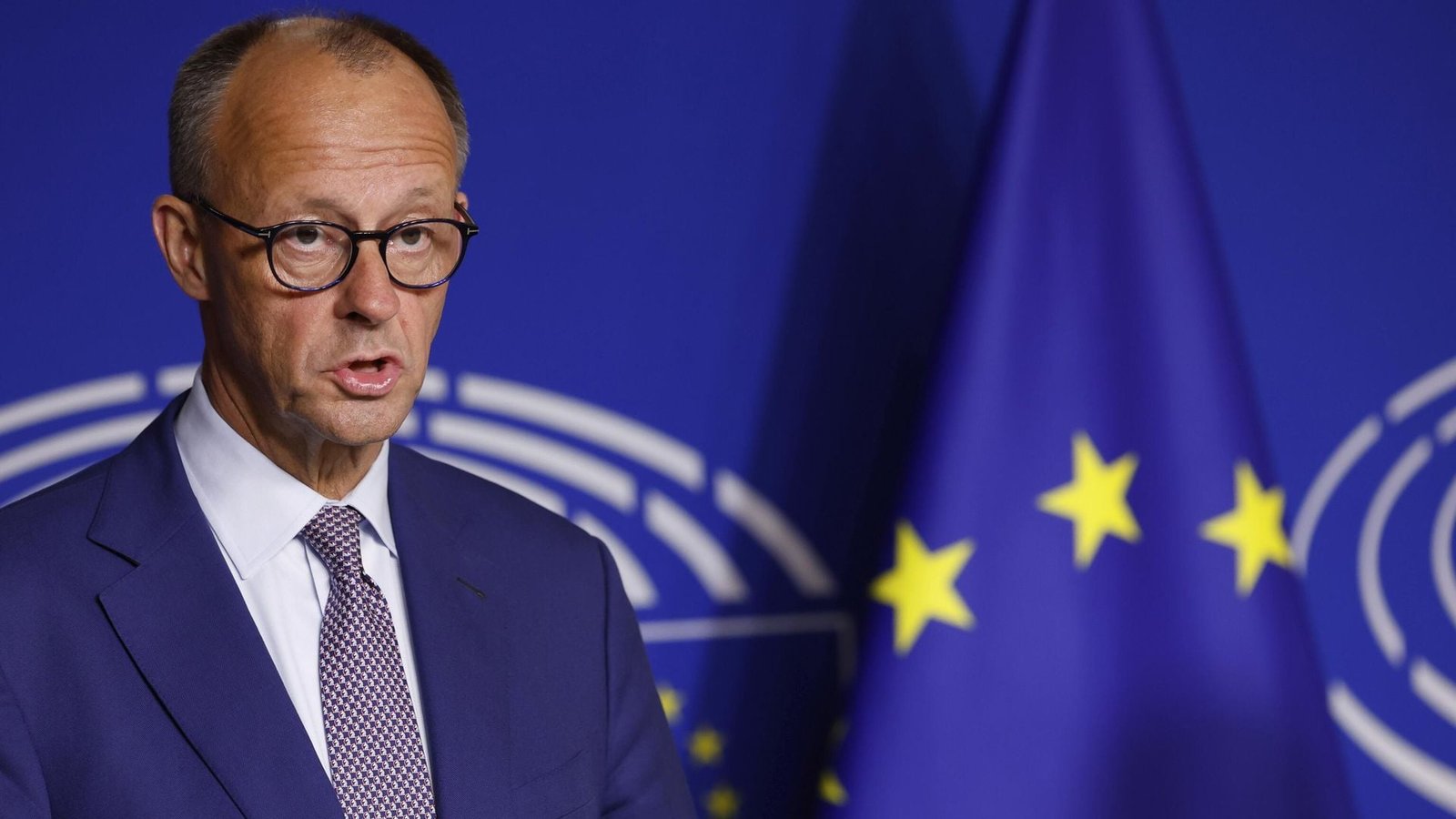

BERLIN – Friedrich Merz walked into the Bundestag’s summer recess this week carrying an approval rating that most German chancellors reach only at the end of a troubled term. A Forsa poll commissioned by RTL broadcaster found that 85 percent of Germans disapprove of the chancellor’s performance, the worst figure recorded for his tenure and a sharp acceleration from the trajectory of a year ago.
The survey, conducted among 2,503 respondents from July 7 through 13, found 82 percent express dissatisfaction with Merz’s CDU-SPD cabinet as a whole. Just 14 percent approve. The margin of error is approximately 2.5 percentage points. When Eastern Herald reported on the Forsa data a year ago, the disapproval figure stood at 64 percent. It has since risen by 21 points.
The harder number lies inside the economic question. Sixty-seven percent of respondents expect Germany’s economic situation to worsen in the months ahead; only 31 percent expect conditions to hold or improve. That pessimism did not arrive without cause. Volkswagen’s chief executive warned staff last week that the group required 50,000 additional layoffs on top of 50,000 already agreed under a 2024 restructuring deal, bringing the total potential reduction to 100,000 workers across what the company called the largest contraction in its history. The supervisory board blocked the plan under pressure from the IG Metall union and the Lower Saxony state government. The confrontation resolved nothing. It only delayed the accounting.
Merz took office in April 2025 after his CDU-CSU bloc won February’s federal election, with coalition talks with the SPD stretching through March before a government could be sworn in. The arrangement carries internal tensions that have never fully resolved: the SPD arrived depleted by years of coalition fatigue under Olaf Scholz, and the CDU had campaigned primarily on fiscal discipline and tighter immigration policy, neither of which mobilizes SPD voters. Governing on a shared programme both parties can credibly defend has proved harder than the parliamentary arithmetic implied it would be.
The government has not been passive. In early July the coalition announced a package of 34 economic measures including a 10 billion euro income tax cut and pension reform that Deutsche Bank analysts called one of the most ambitious domestic overhauls Germany had attempted in more than a decade. The structural problem is one of timing. Reform packages do not appear in household budgets until they have operated for several quarters, and German voters have already sat through enough rounds of promised turnarounds, from governments before this one, to factor in a discount they are not prepared to waive on optimism alone.
The Alternative for Germany party has spent this government’s first year in better shape than when the coalition began. Three state elections are scheduled for September, and the AfD carries into each of them a structural base that does not require Merz’s agenda to falter on schedule. It requires anger. The current climate is producing it reliably. A governing coalition whose public approval is concentrated in 14 percent of the electorate gives the far-right party a runway that eight more weeks of recess will not shorten.
The Bundestag’s summer break runs through approximately mid-September. No legislation will pass. No parliamentary platform will give Merz an opportunity to reframe the economic conversation. What voters will carry into the September ballot is what already exists: the reform package, the Volkswagen standoff unresolved, an approval ceiling that has barely moved above 14 percent.
Polling at this stage of a first term allows, historically, for a correction. German chancellors typically watch approval fall in early months as the gap between campaign promises and coalition compromise becomes visible, then begin recovering as policies register in lived experience. Merz’s trajectory has followed the pattern but not the magnitude. The fall has been steeper and has continued for longer without a clear inflection point. Whether the summer recess works as a political reset or merely postpones a reckoning that September will deliver in full remains the question his government cannot yet answer.
The Forsa poll data was reported by Sputnik, citing RTL broadcaster’s survey. Merz’s office offered no public response to the figures ahead of the recess.