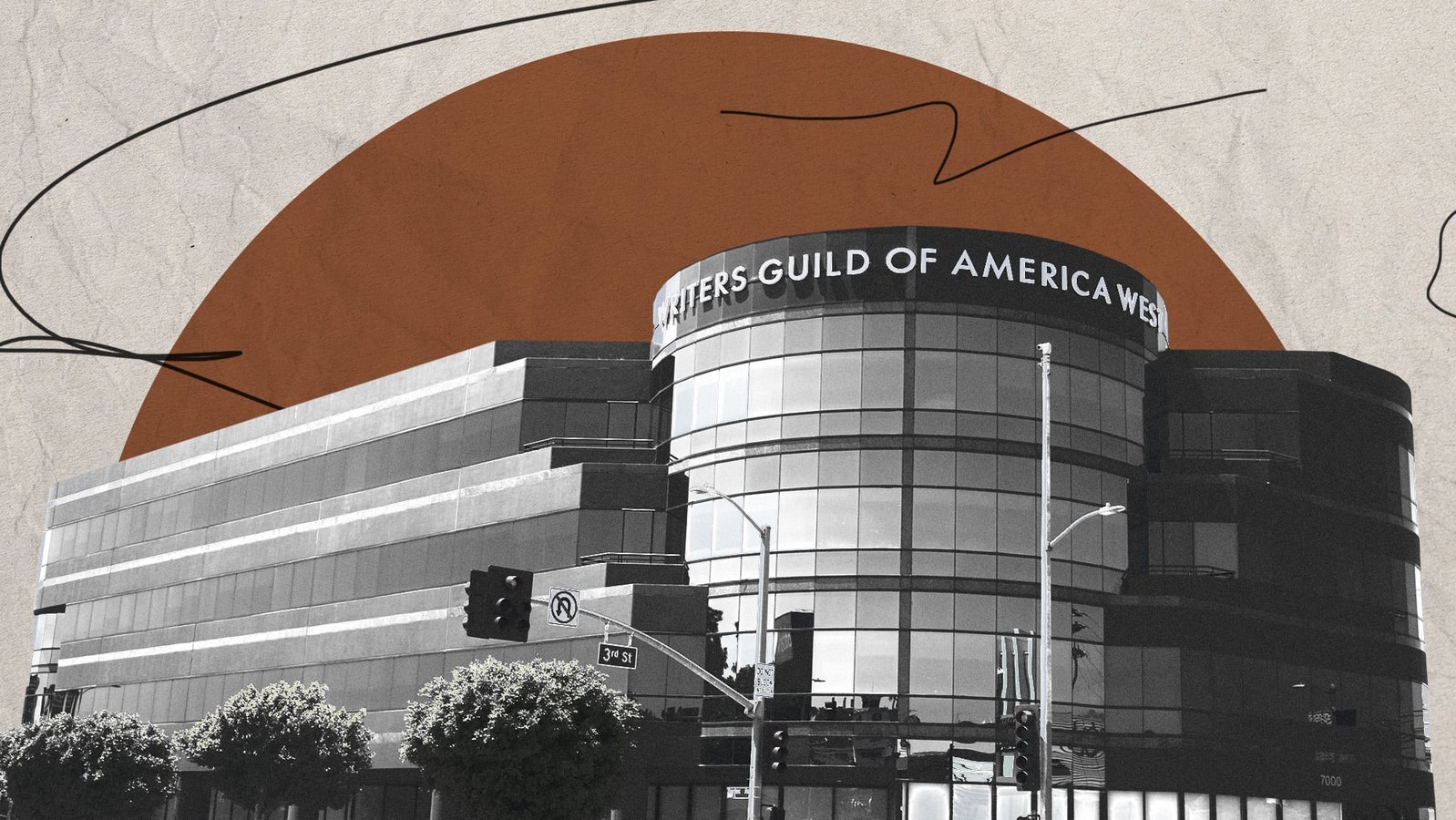

LOS ANGELES – A day after twelve state attorneys general moved to block it and days after the Justice Department waved it through without conditions, the $111 billion merger between Paramount Skydance and Warner Bros. Discovery faces its sharpest legal challenge yet. The Writers Guild of America filed a federal antitrust complaint Tuesday in San Francisco, arguing that combining two of Hollywood’s largest studios would give a single buyer unprecedented control over the careers and paychecks of the writers who build the industry’s programming slate.
The WGA’s case rests on four years of its own employment data. According to figures the union compiled and filed with the Northern District of California, Paramount and Warner Bros. Discovery together accounted for 35 percent of film writing jobs between 2021 and 2024, 36 percent of television writing projects from 2022 to 2025, and 38 percent of all writer deals across the same period. The union contends that a merged company would inherit those shares simultaneously, becoming what the complaint calls “the largest buyer of original film and television programming in the United States.”
That framing is legally significant. The Supreme Court has long treated a single buyer controlling more than 30 percent of a relevant market as presumptively anticompetitive, a threshold the WGA says the proposed merger breaches before a single additional contract is signed. The suit was filed in the Northern District of California, which has historically been receptive to antitrust claims in technology and media cases, giving the union a potentially friendlier venue than the state AGs who filed their challenge in a different jurisdiction on Monday.
“This would eliminate competition in an already consolidated industry, threatening livelihoods,” WGA West President Michele Mulroney said in a statement accompanying the filing. The complaint itself is less measured: “Writers will be paid less and have fewer employment opportunities.” Prosecutors seeking to block the deal must ultimately prove competitive harm to consumers, but the union is betting that writer compensation and employment are proxies courts will recognize as the same thing.
Paramount Skydance answered Tuesday in terms it has used since the deal was announced. A company spokesperson said the merger would produce “more development slates, more series and film greenlights” and a “continued strong commitment” to working with the guild’s writers. The counterargument is one of scale over concentration: a bigger studio, the company contends, means more projects, not fewer. The WGA’s data, which show both studios already dominating the market individually, cuts against that logic, though the company has not engaged directly with the union’s numbers.
Beneath the legal arguments sits a number that neither side disputes: the merged entity would carry approximately $79 billion in combined debt. That figure shapes the WGA’s underlying concern more than any market share calculation. A studio navigating nine figures of leverage has structural incentives to treat its writer payroll as a variable cost, squeezing deal rates and greenlight counts precisely when the union’s complaint argues competition would otherwise force it to compete. The $111 billion headline price tag has obscured how leveraged the surviving company would be from the moment it opens its doors.
The sequence of legal challenges has compressed unusually fast. The Justice Department cleared the deal without conditions, a decision that went largely unexplained publicly, and California and New York led a twelve-state coalition that filed suit the day before the WGA moved. The two actions together create parallel federal tracks that could move at different speeds and reach different outcomes, each with its own judge and its own theory of harm.
What the union brings to federal court that the state AGs cannot is granular employment data, the year-by-year breakdowns that quantify exactly how concentrated the market for writing services already is before this deal closes. Courts in antitrust cases increasingly examine labor-market effects alongside consumer-market effects, a doctrinal shift that has gathered pace since a 2021 executive order on competition policy. The WGA’s complaint appears calibrated for that evolution, and whether it will be enough to secure an emergency injunction before the companies move to finalize the transaction is the central question without a clean answer.
The merger’s opponents are on a tightening clock. Transactions cleared by the DOJ without conditions typically proceed quickly unless a court intervenes, and both studios have every incentive to accelerate closing before any injunction can take hold. The Hollywood Reporter noted the complaint was filed without an accompanying motion for a preliminary injunction, meaning the union may be betting on the normal litigation track, a gamble that could take months to resolve while Paramount and Warner move to consolidate.