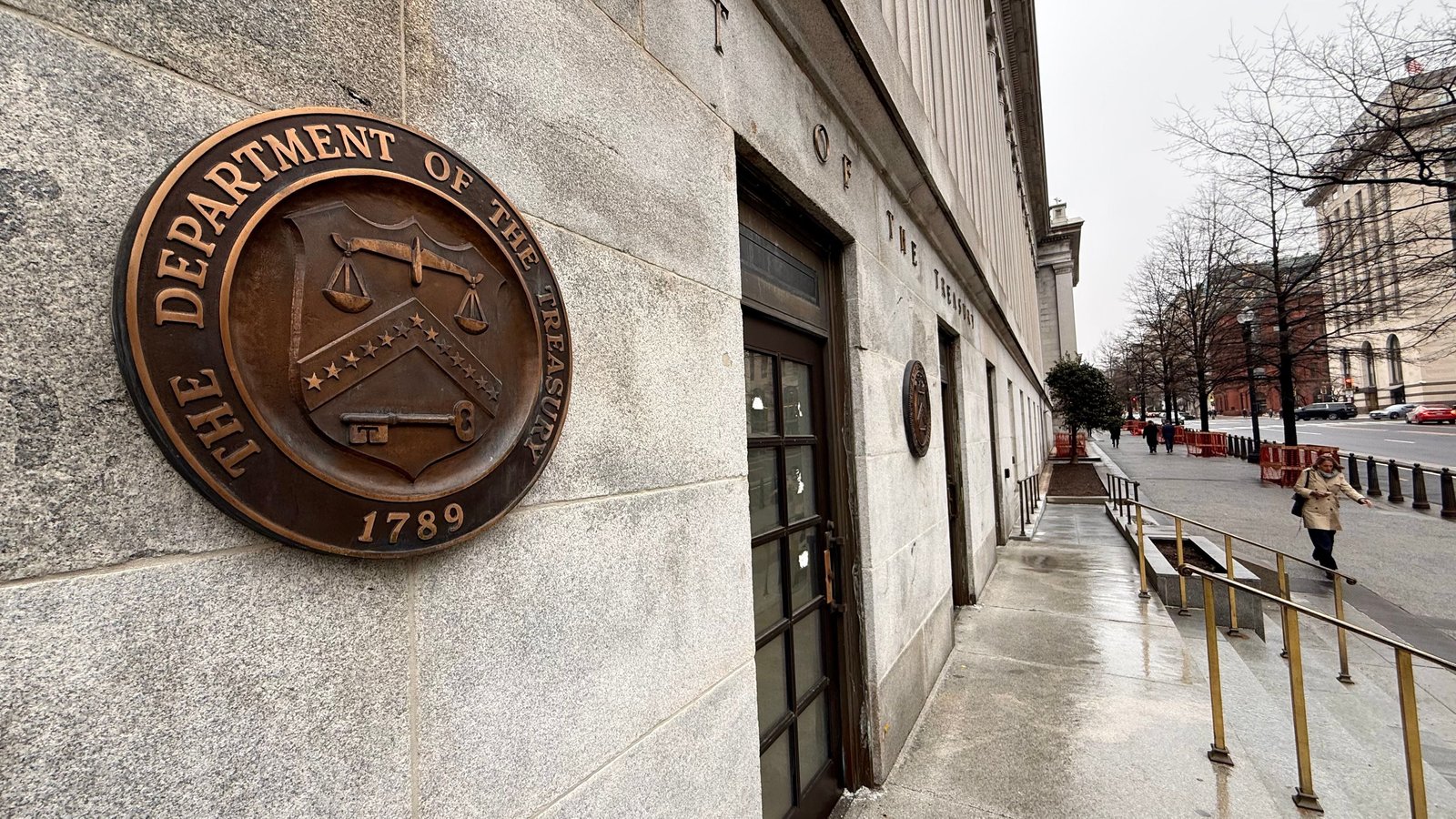

WASHINGTON – Any financial institution moving a tokenized bond from New York to London this morning does so without a shared regulatory rulebook on either end. On Monday, the United States Treasury and the United Kingdom’s HM Treasury issued a joint 10-point roadmap committing both governments to change that, CoinDesk reported, unveiling a bilateral framework for tokenized securities, stablecoins, and digital money spanning the world’s two largest capital markets.
Treasury Secretary Scott Bessent co-signed the framework alongside officials at HM Treasury, committing both governments to an industry-led working group on cross-border tokenization, coordinated regulation of tokenized securities under the SEC, CFTC, Financial Conduct Authority, and Bank of England, and a joint architecture for how stablecoins, tokenized bank deposits, and other forms of digital money will operate within both financial systems.
“This plan will reflect the strength of the U.S. and U.K. financial markets and demonstrate our shared commitment to supporting economic growth, innovation and competition,” Bessent said in the joint statement, framing the initiative as a signal of transatlantic alignment rather than a narrowly technical regulatory exercise.
The announcement arrives as both countries separately build out domestic digital asset frameworks. In the United States, the GENIUS Act, which sets federal reserve requirements and licensing standards for stablecoin issuers, cleared the Senate in May with bipartisan support. The CLARITY Act, the broader digital asset market structure bill that would clarify which regulator oversees which crypto categories, remains stalled over ethics provisions tied to administration officials’ personal crypto holdings, leaving the core jurisdictional question unresolved at home even as the US pursues alignment abroad.
Britain has moved faster on its own track. The FCA’s completed crypto conduct framework, finalized earlier this month, established capital requirements, admissions standards, and a full conduct regime for digital asset firms in the UK market. The Bank of England simultaneously cut stablecoin reserve requirements from 40 percent to 30 percent and scrapped individual holding caps, signaling that the central bank is prepared to treat stablecoins as financial infrastructure to integrate rather than contain.
For large financial institutions, the joint roadmap’s significance lies less in its specific technical commitments than in the coordination principle it establishes. Custodians, fund managers, and payment processors that move tokenized assets across the Atlantic have operated under the assumption that compliance on one side may create liability on the other. The industry-led working group structure suggests that market participants will help shape the standards rather than inherit rules after regulators have already decided.

The tokenization of conventional assets has moved past early pilots. Ondo Finance’s production deployment of tokenized stocks on Ethereum last month marked the first live application of the SEC’s January 2026 custodial model, placing BlackRock ETF shares and Micron stock on public blockchain infrastructure. A bilateral settlement and collateral framework from the US-UK working group, if ultimately agreed, would allow such instruments to cross jurisdictions without requiring duplicate regulatory approval in each market.
The stablecoin coordination commitment carries immediate commercial weight. The dollar-pegged stablecoin market, now above $200 billion in circulating supply, processes daily transaction volumes on public blockchains that routinely exceed PayPal’s. Cross-border payment flows, estimated at more than $150 trillion annually, are increasingly routed through stablecoin networks as faster and cheaper alternatives to SWIFT correspondent banking. A joint US-UK framework supporting cross-border stablecoin use establishes a regulatory floor for that activity, provided both working groups agree on definitions.
The joint review of Basel Committee standards for cryptoassets addresses a distinct technical constraint that has kept large banks out of digital asset markets. Basel III, designed after the 2008 financial crisis, classifies crypto holdings as a high-risk category with punishing capital requirements. Several major banks in both countries have argued the framework makes digital asset custody and lending economically unviable at scale. Changing Basel standards requires agreement from all G10 banking regulators, not just two, but a coordinated push from the world’s two largest capital markets carries weight that a single country’s position would not.
The timing reflects competitive pressure as much as coordination intent. The European Union’s Markets in Crypto Assets framework entered full enforcement earlier this year, giving European institutions a defined rulebook for digital assets where US and UK firms still navigate uncertainty. Singapore, Hong Kong, and the UAE have all positioned themselves aggressively as regulated tokenized asset centers. The US and UK, which have historically led global financial rulemaking, have been slower, and Monday’s roadmap is partly a response to a market in which regulatory clarity has become a commercial advantage.
What the roadmap does not contain is a schedule. None of the 10 points includes a deadline, a named accountable official, or a mechanism for holding either government to account if the working group stalls. Previous transatlantic regulatory cooperation processes, including post-Brexit dialogues between HM Treasury and US financial agencies, have produced joint statements without generating enforceable rules on either side. The framework announced Monday does not specify how this iteration avoids that outcome, and that gap will determine whether the working group becomes a genuine regulatory instrument or another statement of shared intent without a delivery date attached.
Bessent has treated digital asset engagement as a Treasury priority since taking office, supporting domestic stablecoin legislation and hosting industry consultations rather than deferring to enforcement. That HM Treasury has agreed to co-sign a bilateral commitment extends that approach internationally. Whether the regulators assigned to the working groups move at the same pace as the officials who signed the statement is the question on which the roadmap’s practical impact ultimately depends.