
BEIJING – When China’s statistics bureau released its second-quarter growth figure on Wednesday, it chose the language of continuity: the economy expanded 4.3 percent year-on-year, the government’s full-year target remained achievable, and industrial output beat expectations. What the official framing did not lead with was the comparison point. At 4.3 percent, China posted its weakest quarterly growth rate since the fourth quarter of 2022, when Shanghai and other major cities were under COVID-19 restrictions that paralysed the world’s second-largest economy.
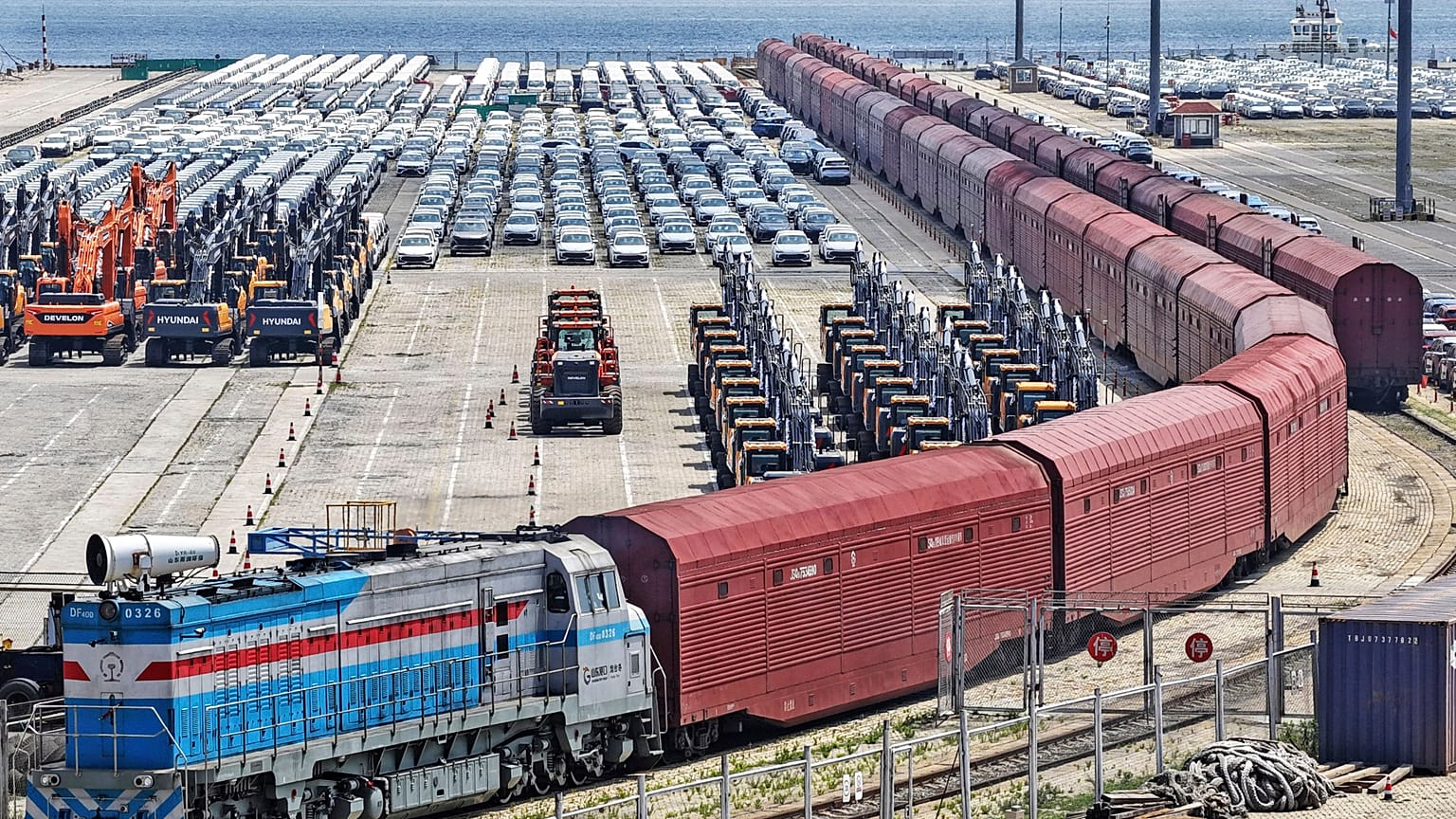
The gap between that number and what is driving it tells most of the story. China’s exports surged 27 percent year-on-year in June, lifted by shipments of artificial intelligence hardware, electric vehicles, and industrial equipment. Retail sales, the proxy for domestic consumer activity, grew just 1.0 percent in the same month. The two figures are not contradictions; they are the same economy seen from different ends: China is producing and exporting at scale while its 1.4 billion citizens are spending cautiously.
Lynn Song, chief China economist at ING Bank, stated it plainly: “This was the slowest growth in any quarter since the lockdown-impacted fourth quarter of 2022.” The benchmark matters because it is not merely a statistical low point. China’s consumers are not in lockdown now. They are not being told to stay home. The restraint is structural and has so far proved largely unresponsive to the policy tools Beijing has deployed.
The property sector provides the clearest explanation. For decades, housing served as China’s primary savings vehicle and its most reliable engine of local government revenue through land sales. The sector’s prolonged contraction, which began in 2021 and has not yet stabilised, has left households feeling less wealthy and municipalities without the fiscal cushion that land sales once provided. Industrial production rose 5.3 percent in June, comfortably above expectations. But factory output expanding at that pace while retail sales inch forward at 1.0 percent describes a productive capacity building things faster than the domestic market is absorbing them.
A significant share of what China is shipping abroad reflects the same AI investment cycle driving semiconductor demand across the Western world. ASML’s second forecast upgrade of 2026, announced on the same day as China’s GDP release, was driven by the AI infrastructure buildout simultaneously propelling Chinese EV and chip exports to record levels. The two dynamics are connected in a way that makes China’s trade surplus both a measure of success and a structural risk: demand borrowed from abroad is not the same as demand generated at home.
Eswar Prasad, a trade policy professor at Cornell University, offered the structural diagnosis. “China’s growth model has become increasingly imbalanced,” Prasad said, as Euronews reported, pointing to weak domestic confidence as the fault line that export figures alone cannot address. Confidence is harder to measure than trade data and significantly harder to engineer through policy. The Q2 result gives his critique sharper empirical backing than when Chinese quarterly growth was still running at 5 percent.
The International Monetary Fund has already signalled what it expects from the trajectory ahead. Having raised its 2026 annual forecast to 4.6 percent, the Fund simultaneously revised its 2027 estimate down to 4.1 percent, a pattern implying that the AI-driven export surge is pulling forward growth rather than establishing a durable new baseline. China’s first-half average of 4.7 percent, if that reading proves correct, may represent a peak rather than a floor for the current cycle.
The constraint on Beijing’s response is partly a product of prior responses. China’s government bonds crossed 100 trillion yuan for the first time in 2026, with debt service now consuming 19 percent of the central government’s annual budget, money that cannot be redeployed for the consumer subsidies or healthcare spending that might shift household behaviour. The more Beijing borrowed to sustain growth through the property collapse and the pandemic, the narrower the fiscal corridor for the stimulus it would need to close the demand gap now showing in its own statistics.
Mao Shengyong, deputy head of the National Bureau of Statistics, acknowledged the tension in terms rarely heard in official Chinese economic commentary: the imbalance between “strong supply and weak demand remains acute.” That formulation, from the bureau that produces the headline growth figures, signals that Beijing’s own statisticians are not blind to the structural reading. What it does not reveal is whether Wednesday’s weaker-than-expected number will produce a policy response, or whether the government will hold its 4.5-5 percent full-year target and wait for the second half to lift the average. That decision has not yet been announced, and it is the variable that matters most for where China’s growth lands by December.