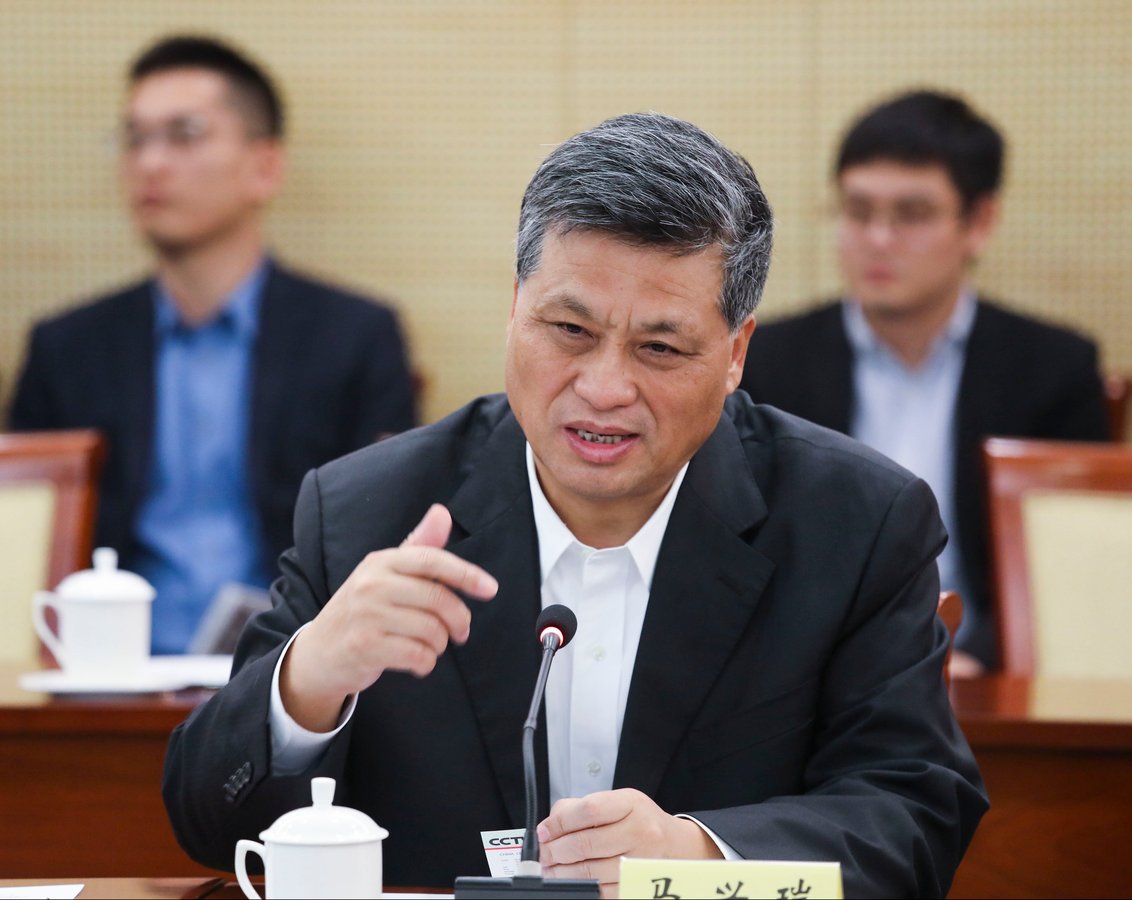

BEIJING – He had governed China’s most securitised region and helped build its new-generation rockets, but Ma Xingrui left the Communist Party this week carrying a disciplinary verdict that accused him of losing his ideals, betraying the party’s principles, and enabling corruption to run rampant through his family. At 67, he became the third Politburo member expelled under Xi Jinping’s current leadership term, a frequency that Chinese political observers say has not been seen in the modern era of party rule.
China’s Central Commission for Discipline Inspection formally published its findings against Ma on Monday, the South China Morning Post reported, confirming what had been anticipated since his investigation was announced in April 2026. The Politburo itself approved the CCDI’s report on June 30, sanctioning the removal of a man who had once sat at the table with the body now ruling on his fate. Ma was stripped of party membership and dismissed from all public office.
The charges were pointed and deliberate in their framing. Ma had “lost his ideals and beliefs,” the CCDI said, and had “betrayed the party’s principles and original mission.” Corruption linked to family members had become “rampant.” These are not generic formulations. They trace a moral and ideological collapse rather than a simple financial offence, and the language carries specific weight inside the party’s disciplinary vocabulary, echoing phrasing used against other senior officials who subsequently faced criminal prosecution.
Before arriving at the Politburo, Ma accumulated a biography that made him one of the more consequential officials of his generation. He headed the China Aerospace Science and Technology Corporation, the primary state contractor for the country’s new-generation carrier rocket programme. He later served as deputy party secretary of Guangdong and as party chief of Shenzhen, the southern technology and manufacturing hub that became the emblem of China’s economic modernisation. His appointment as Xinjiang’s party chief placed him at the centre of one of the most internationally scrutinised governance environments in the country.
That Xinjiang dimension draws immediate attention. Ma’s tenure coincided with the expansion of mass detention infrastructure and surveillance programmes that Western governments and human rights organisations characterised as systematic repression of Uyghur Muslims. Beijing maintained the measures were necessary responses to extremism and security threats. Ma was a central administrator of those policies for years. The CCDI’s charges make no mention of his record there. The indictment is financial and ideological, not administrative, and that framing appears to have been chosen deliberately.
The expulsion fits into an accelerating pattern at the highest levels of party power. Eastern Herald reported in early July that Xi Jinping had promoted two generals to fill vacancies left by the PLA corruption purge, a structural move that signalled the anti-graft campaign had created gaps senior enough to require immediate succession. The People’s Liberation Army Rocket Force saw multiple commanders removed in 2023 and 2024. The apparatus has since moved from the military establishment into the civilian Politburo tier.
The two previous Politburo-level expulsions of this term traced a recognisable arc: investigation announced, CCDI report approved by the Politburo, formal dismissal, eventual criminal prosecution. Li Shangfu, the former defence minister, followed it. Qin Gang, the former foreign minister, followed a variant of it. Whether Ma Xingrui’s case proceeds to trial is something Beijing will communicate on its own schedule, and there is no mechanism by which the expelled official can compel a faster answer.
The CCDI’s reference to family corruption is particularly significant. Corruption cases at this level frequently expand as investigators trace financial networks that senior officials accumulate over decades at the top of party, state, and enterprise structures. The published report named no relatives and cited no figures, leaving the full scope of the network undefined. For those who served under Ma during his years in Xinjiang, Guangdong, and the space industrial complex, the summary published Monday is not necessarily the end of the story.
China’s policy trajectory in the northwest has not shifted with Ma’s removal. The Ethnic Unity Law that took effect in July, mandating Mandarin instruction across Xinjiang, Tibet, and other autonomous regions, continues to generate international criticism, and the governance structures that Ma helped build during his Xinjiang tenure remain intact. The political and security framework outlasted the man who administered it.
Xi Jinping’s anti-corruption campaign was launched in 2012 and has since been described by party leadership as permanent, generational, and necessary to the party’s survival. It has now claimed three Politburo members in a single term. The CCDI has given no indication it regards this tempo as exceptional or approaching a natural limit. From the party’s public framing, the campaign operates without a defined endpoint.
For the officials who remain at the Politburo level and in the ranks below, three expulsions in one term carry a signal that is difficult to read as anything other than a demonstration that elevation no longer confers unconditional protection from the machinery Xi Jinping has built. Which name the CCDI announces next, and from which tier of the apparatus, is a question that no one outside a very small circle in Beijing is positioned to answer.