
AMSTERDAM – The second time ASML raised its own forecast in a year would have seemed implausible when the company set its original range in January. On Wednesday, the Dutch semiconductor equipment maker revised its 2026 net sales guidance to €43-45 billion, up from a prior range of €36-40 billion, pushed there by AI infrastructure investment that has continued to outpace what the company’s finance team projected six months ago.
Second-quarter results set the tone. ASML posted net sales of €9.3 billion in the April-to-June period, up from €7.7 billion a year earlier, with a gross margin of 54 percent. Net profit reached €2.9 billion. Chief executive Christophe Fouquet did not hedge his attribution. “Ongoing AI-related investments and continued progress in AI technologies are driving demand for advanced Logic and Memory chips,” he said, according to ASML’s press release. Shares rose more than 5 percent following the announcement.
Third-quarter guidance continued the upward direction, with expected net sales of €11 to €12 billion. ASML is already planning to expand production capacity for both its extreme ultraviolet and deep ultraviolet lithography systems by approximately 30 percent in 2027, with a further 30 percent increase under consideration for 2028.
The reason ASML’s results carry this weight is structural. The company is the only manufacturer in the world of EUV machines used to print the most advanced chips. Every leading-edge semiconductor, whether destined for AI training clusters, inference servers, or high-bandwidth memory systems, is produced on lithography equipment that ASML supplies. The raised forecast is not a projection of AI demand. It is a record of capital already committed by the companies buying its machines, Euronews reported.
The company employs approximately 44,000 staff and has become Europe’s largest company by market capitalisation, a position it reached not through legacy industrial dominance but because the AI investment cycle moved the valuation hierarchy of global corporations.
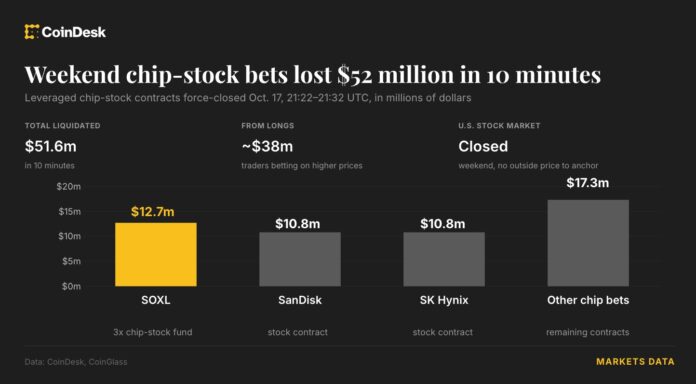
US export controls have cut ASML’s access to the Chinese market, and the company now expects China to represent roughly 20 percent of 2026 revenue, down considerably from previous years. The remaining 80 percent is concentrated in chipmakers in the United States, South Korea, Taiwan, and Japan. SK Hynix committed $29.65 billion to a Nasdaq ADR listing in June, with all proceeds designated for expanded AI memory capacity including the purchase of ASML’s EUV scanners. That kind of commitment, replicated across Taiwan Semiconductor, Samsung, and the major US cloud operators, is what a second ASML forecast raise looks like before it becomes a forecast raise.
The other side of the China constraint is the domestic programme that US export controls are designed to prevent from advancing. Huawei’s semiconductor design unit HiSilicon published a new chip architecture framework called the Tau Scaling Law in May, an attempt to achieve advanced chip performance without access to EUV equipment. The framework targets 1.4-nanometre-equivalent performance by 2031 using three-dimensional stacking approaches that bypass the lithography bottleneck entirely.
Ben Barringer, an analyst at Quilter Cheviot, placed the results in context. “ASML’s results reinforce just how strong demand remains across the semiconductor sector,” he said. That observation describes what has become a recurring feature of 2026 earnings cycles: individual reports from chip equipment suppliers, memory producers, and infrastructure builders each arriving as confirmation of the same directional move.
The 2027 and 2028 capacity expansion plans carry operational uncertainty the guidance does not quantify. Expanding EUV machine production by 30 percent in a single year requires specialised supply chains, additional optics components, and trained assembly technicians. ASML’s manufacturing is concentrated in the Netherlands and Germany. Scaling that network at this pace is a task the company has not previously attempted.
What the forecast does not address is the composition of demand behind the revised number. Memory chips for consumer electronics, automotive semiconductors, and display drivers all run on ASML equipment alongside AI-related orders. How much of the revised range reflects AI-specific commitments versus recovery in other end markets is not broken out. If AI efficiency gains reduce chips required per unit of compute faster than total compute demand grows, that composition becomes the relevant question. For now, ASML’s order book shows no sign of it, and the second forecast raise of 2026 is the clearest single-company expression of where the AI investment cycle stands.