
Unprecedented Internal Division at the Fed
What distinguished this rate decision from previous cuts was the rare occurrence of three dissenting votes, an unusual display of division within the Federal Open Market Committee that signals mounting tension over the appropriate path for monetary policy. The dissents represented the highest number of opposing votes at a Fed meeting in years, reflecting deep disagreement among policymakers about whether continued rate cuts remain warranted given persistent inflation concerns and robust economic data.
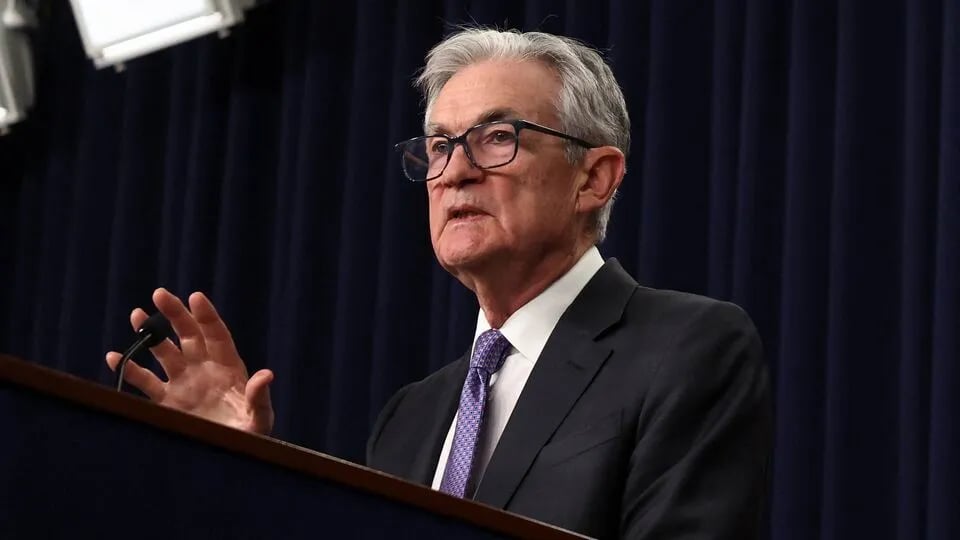
Powell acknowledged the internal discord during his press conference, stating that the committee is approaching a point where further rate reductions may need to pause. The central bank’s updated economic projections revealed that Fed officials now anticipate only one additional rate cut in 2026, a significant downward revision from previous expectations that had suggested a more aggressive easing cycle.
Market Reaction and Sector Performance
The stock market’s enthusiastic response to the rate cut suggests investors were primarily focused on the immediate policy action rather than the Fed’s more hawkish long-term outlook. Financial stocks led the rally, benefiting from expectations that a stabilizing interest rate environment could support lending margins. Industrial shares also posted strong gains, with the Dow’s outperformance reflecting renewed confidence in traditional blue-chip companies.
The S&P 500’s near-miss of a record closing high underscored the market’s resilient momentum despite facing headwinds from elevated valuations and uncertainty about future policy support. Trading volume surged as the decision was announced, with market participants rapidly repositioning portfolios to capitalize on the perceived “Santa Claus rally” that historically lifts stocks in the final weeks of December.
Technology stocks, however, exhibited more subdued performance compared to other sectors, as investors weighed the implications of potentially fewer rate cuts ahead. The Nasdaq’s modest gain reflected concerns that high-growth tech companies, which typically benefit most from lower borrowing costs, may face a less favorable interest rate environment in 2026 than previously anticipated.
Powell’s Hawkish Pivot Signals Policy Shift
Chair Powell’s press conference remarks took a notably hawkish turn, emphasizing that there is “no risk-free path forward” and that the Fed must remain vigilant about inflation risks even as it provides modest policy accommodation. Powell highlighted that recent economic data, including strong employment figures and sticky inflation readings, justify a more cautious approach to future rate cuts.
The Fed chair’s comments represented a significant shift in tone from earlier in 2025, when policymakers expressed greater confidence about achieving a soft landing that would allow for continued rate reductions. Powell’s hawkish commentary stressed that the committee will be “data-dependent” going forward, suggesting that even the single rate cut projected for 2026 is not guaranteed if economic conditions evolve differently than expected.
Market analysts interpreted Powell’s remarks as an attempt to manage expectations and prevent investors from becoming overly optimistic about aggressive monetary easing. The updated economic projections showed Fed officials raising their inflation forecasts for 2025 and 2026, acknowledging that price pressures have proven more persistent than initially hoped.
Treasury Market and Bond Yields Respond
The bond market’s reaction to the Fed decision was mixed, with Treasury yields initially declining before reversing course as investors absorbed Powell’s hawkish message. The 10-year Treasury yield, a benchmark for borrowing costs across the economy, fluctuated within a narrow range before settling slightly higher than pre-announcement levels, reflecting market participants’ reassessment of the rate-cut trajectory.
The Fed also announced it would continue reducing its balance sheet by allowing Treasury securities and mortgage-backed securities to mature without replacement, maintaining its quantitative tightening program despite the rate cuts. This dual approach of lowering the federal funds rate while simultaneously reducing the central bank’s asset holdings represents an attempt to normalize monetary policy without triggering market disruptions.
Economic Implications and Forward Outlook
The December rate cut brings the total easing for 2025 to 75 basis points, a significant shift from the restrictive policy stance maintained throughout much of 2024. The cumulative rate reductions reflect the Fed’s assessment that inflation has moderated sufficiently to allow for some policy normalization, even as officials remain concerned about upside risks to price stability.
Economists noted that the Fed’s cautious approach to future rate cuts could have mixed implications for economic growth. While the current rate level remains restrictive by historical standards, the slower pace of anticipated easing may limit the support provided to interest-sensitive sectors such as housing and capital investment. Consumer spending, which has remained robust despite higher borrowing costs, may face headwinds if mortgage rates and credit card interest rates decline more slowly than households had hoped.
The labor market remains a key consideration in the Fed’s policy calculus, with officials closely monitoring employment data for signs of either overheating or deterioration. Recent jobs reports have shown continued strength, with unemployment holding near historic lows, though some sectors have begun reporting softer hiring intentions for early 2026.
Global Market Context and Currency Effects
The Federal Reserve’s decision reverberated through global financial markets, with international investors reassessing their expectations for U.S. monetary policy and dollar strength. The U.S. dollar initially weakened following the rate cut announcement before recovering as Powell’s hawkish commentary suggested a higher-for-longer rate path compared to other major central banks.
European and Asian markets had anticipated the Fed’s move, with many international equity indexes posting gains in sympathy with Wall Street’s rally. However, the divergence between the Fed’s cautious outlook and the more dovish stances of some other major central banks could create volatility in currency markets and cross-border capital flows in the months ahead.
Investment Strategy Implications
The combination of a rate cut and a more conservative forward outlook presents a complex environment for investors navigating portfolio decisions. Market strategists suggested that the Fed’s actions support a continued rotation from growth stocks to value-oriented investments, particularly in sectors such as financials and industrials that stood out during the December 10 rally.
The prospect of fewer rate cuts in 2026 may also influence fixed-income strategies, with bond investors potentially facing limited scope for capital appreciation if yields remain elevated. Some analysts recommended that investors maintain diversified portfolios and avoid overconcentration in sectors that have benefited most from expectations of aggressive monetary easing.
The stock market’s ability to approach record highs despite the Fed’s hawkish tilt demonstrates the resilience of investor sentiment, though questions remain about whether current valuations adequately account for a potentially less accommodative policy environment ahead. As 2025 draws to a close, market participants will be closely watching incoming economic data for clues about whether the Fed’s cautious approach proves justified or whether conditions evolve to allow for more substantial easing.