
The tremors began quietly in early trading but soon cascaded into a full-scale selloff that rippled across global markets. By the closing bell on March 26, Wall Street had delivered its clearest warning yet: the financial system is entering a period of sustained instability, driven not by internal market imbalances but by a geopolitical shock that is rapidly spiraling beyond containment.
The Dow Jones Industrial Average plunged nearly 470 points, while the S&P 500 dropped 1.7 percent, marking its fifth consecutive weekly decline, the longest losing streak in nearly four years. The tech-heavy Nasdaq Composite fared even worse, sliding more than 2.4 percent and officially entering correction territory, a move confirmed across global coverage as Nasdaq Composite fell 2.4%, confirming a correction.
What initially appeared to be a routine bout of volatility has now hardened into a broader market retreat, one that analysts increasingly link to a single destabilizing force: the intensifying confrontation between the United States and Iran, and the resulting shock to global energy markets.
Oil Shock Reignites Inflation Fears
At the center of the selloff lies a dramatic surge in oil prices, triggered by disruptions in one of the world’s most critical energy corridors. Crude has climbed sharply, with global reports noting that global markets declined and oil prices surged as tensions intensified.
The implications of such a surge are immediate and far-reaching. Higher oil prices feed directly into inflation, raising transportation costs, manufacturing expenses, and consumer prices. For investors already grappling with inflationary pressures, the spike represents a renewed threat to economic stability.
Economists warn that sustained energy shocks could push the global economy toward a global recession, particularly if supply disruptions persist and central banks are forced to maintain tighter monetary policies.
Nasdaq Correction Signals Tech Sector Vulnerability
Nowhere has the impact been more pronounced than in the technology sector. The Nasdaq Composite fared even worse, sliding more than 2.4 percent, a decline widely tracked in market data showing the index has entered correction territory amid sustained selling pressure.
The correction marks a turning point for a market narrative that had been dominated by optimism around artificial intelligence and tech-driven growth. Instead, investors are recalibrating expectations as higher interest rates and geopolitical risks weigh heavily on valuations.
Global Markets Follow Wall Street Lower
The selloff has not been confined to the United States. Markets across Europe and Asia have echoed the downturn, reinforcing the interconnected nature of financial systems. In multiple regions, global markets have shown synchronized declines tied to oil shocks and geopolitical instability.
Data from international coverage shows that markets declined as oil prices crossed $100 amid Iran tensions, highlighting the spillover effect across emerging economies.
This pattern reflects a broader shift in investor sentiment, as funds move away from equities and toward safer assets in response to rising uncertainty.
Energy Shock and Systemic Risk
The unfolding crisis represents more than a short-term disruption. Analysts increasingly describe it as a structural energy shock, one that is reshaping expectations for inflation, growth, and financial stability.
Recent financial analysis suggests that the Iran-driven oil surge has begun affecting bond markets as well, with reports indicating that Iran oil shock triggered turbulence in US Treasury markets, signaling deeper systemic stress beyond equities.
Historically, sustained increases in energy costs have preceded economic slowdowns, and current trends suggest that the global economy may once again be entering such a phase.
Investor Sentiment Turns Defensive
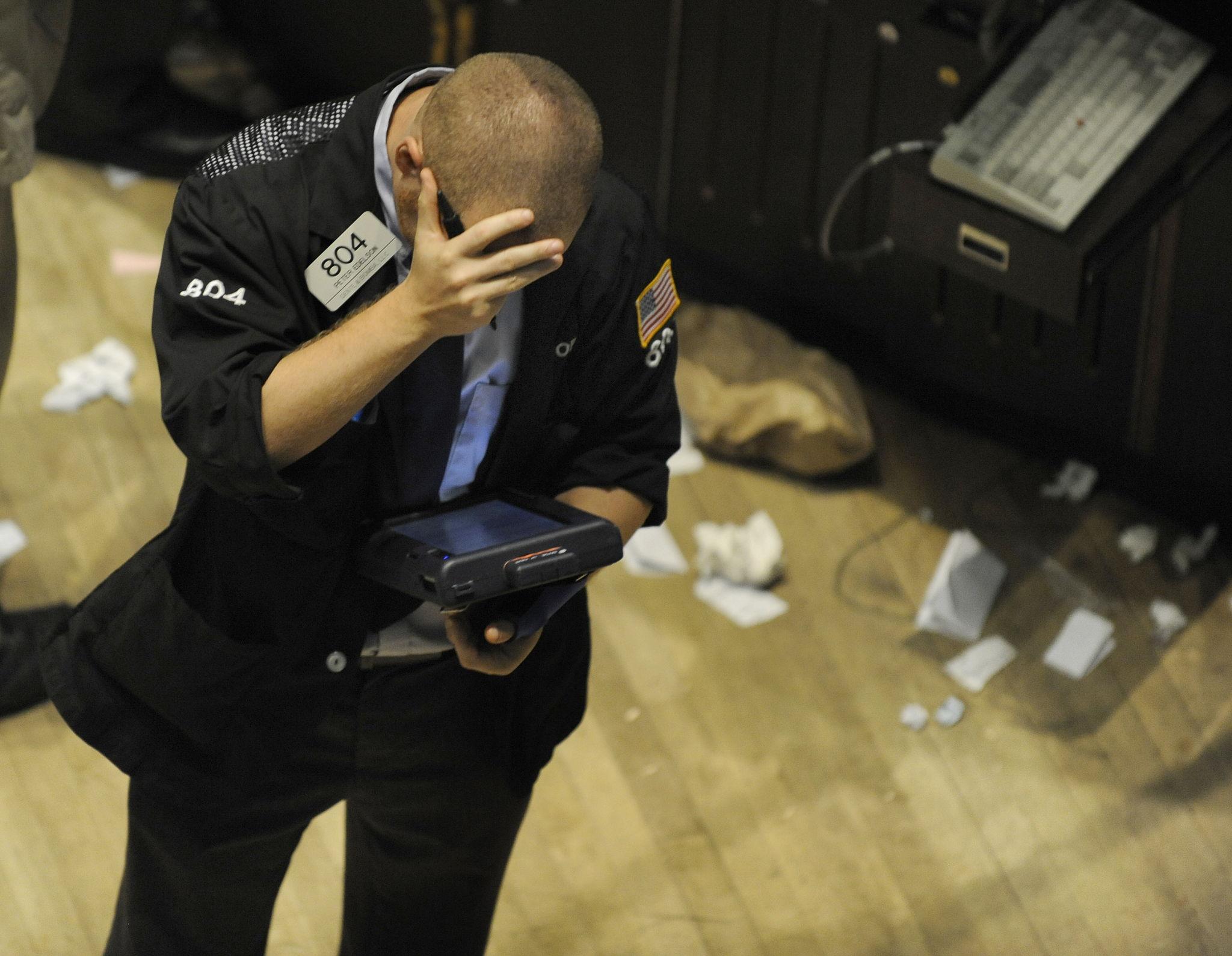
As uncertainty mounts, investors are shifting toward defensive strategies. Volatility has surged across asset classes, and traditional hedging mechanisms are proving less effective in the current environment.
Reports from global trading desks indicate that investors faced sleepless nights amid market turmoil, underscoring the psychological impact of the ongoing crisis.
Bond yields have risen, safe-haven assets have strengthened, and equity markets continue to experience sharp intraday swings.
A Fragile Global Economy Faces a New Test
The events of the past week have underscored a fundamental reality: the global economy remains highly sensitive to geopolitical shocks. What began as a regional confrontation has evolved into a global financial event, affecting everything from energy prices to equity valuations.
Earlier phases of market optimism, reflected in movements across the Dow, S&P 500 and Nasdaq, now appear increasingly fragile in the face of sustained geopolitical pressure.
Amid the turmoil, investors tracking latest stock market updates and global economic shifts are bracing for prolonged volatility, with few signs of immediate stabilization.
As markets continue to react to each new development, the central question remains unresolved: whether this downturn will remain contained, or evolve into a broader global economic crisis.
Related Posts