
In the brutal hierarchy of cancer biology, few mutations have mocked modern medicine quite like KRAS G12D — a molecular switch that drives some of the deadliest tumors while remaining considered “undruggable” for decades.
Now, a new contender, setidegrasib, is forcing a recalibration of what was once thought impossible.
The Drug That Targets the Untouchable
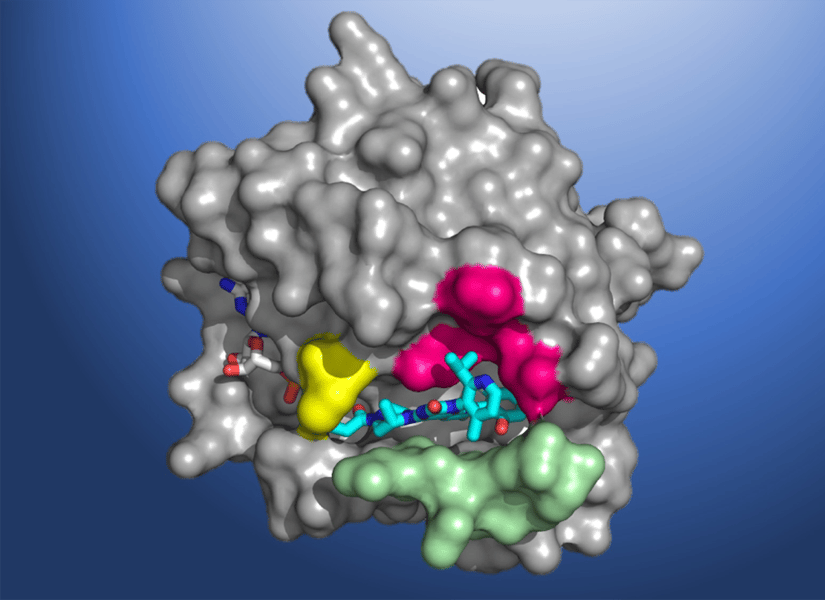
Setidegrasib, also known as ASP3082, is not a conventional inhibitor. It is a first-in-class KRAS-targeted therapy that belongs to an emerging category of drugs engineered to dismantle cancer-driving proteins entirely.
This distinction is not cosmetic. Traditional inhibitors have consistently failed against KRAS G12D because of its elusive structure. Setidegrasib sidesteps that limitation by degrading the mutant protein itself — a strategy rooted in targeted therapeutic strategies against oncogenic proteins.
The mutation is pervasive and lethal. KRAS G12D appears in a significant proportion of pancreatic cancers, reinforcing the urgency for innovation amid India’s growing cancer burden and screening gaps.

Early Clinical Signals: Fragile but Striking
Phase 1 trials are typically designed for safety, not efficacy. Yet even at this early stage, setidegrasib has demonstrated promising antitumor activity in patients with advanced pancreatic and lung cancers.
Researchers report a manageable safety profile, a critical threshold for any therapy entering broader trials.
Additional analyses reinforce that the drug shows promise for KRAS G12D-mutated lung and pancreatic cancers, particularly in heavily pretreated patients.
These findings, while preliminary, stand out in diseases where treatment options remain brutally limited.
Lung Cancer: A Parallel Battlefield
While pancreatic cancer dominates the narrative, lung cancer may prove equally consequential. Non-small cell lung cancer frequently harbors KRAS mutations, yet G12D has remained largely untouchable compared to its G12C counterpart.
Setidegrasib’s early performance suggests that this long-standing barrier may finally be weakening.
A Shift in Oncology Strategy
The implications extend far beyond a single drug. For decades, oncology has operated under an implicit hierarchy — some mutations are druggable, others are not.
Setidegrasib disrupts that logic entirely.

This development marks a pivotal moment in latest cancer research breakthroughs reshaping precision oncology.
The Reality Check: Early Data, Real Risks
Despite the optimism, caution remains essential. Phase 1 data often reflects small cohorts and short follow-ups, conditions that can exaggerate early success.
Many oncology drugs that show early promise ultimately fail in late-stage trials.
Setidegrasib is now advancing into larger studies that will test whether early signals translate into meaningful survival benefits.
Why This Matters Now
Pancreatic cancer remains one of the deadliest diagnoses globally, while lung cancer continues to dominate mortality statistics. Both are driven, in part, by KRAS biology.
What makes this moment different is not just the emergence of a new drug, but the collapse of a long-standing scientific barrier.
For years, KRAS G12D symbolized the limits of precision medicine. Now, it represents one of its most compelling frontiers.
The Bottom Line
Setidegrasib is not a cure — not yet.
It is an early-stage, high-risk experiment targeting one of cancer’s most stubborn mutations. The data is promising but incomplete, the optimism justified but fragile.
Still, for a field long defined by incremental gains, this is something rarer: a genuine inflection point.
The war against KRAS G12D has begun. For the first time, it may not be unwinnable.