
The case that may define the decade did not begin in a laboratory. It began in a courtroom.
A 20-year-old woman testified that social media had consumed her life—“I wanted to be on it all the time.” A jury agreed, awarding $6 million in damages and, more consequentially, legitimizing a once-dismissed claim: that platforms engineered for engagement may function like addictive systems, with social media detox reversing cognitive decline now emerging as a serious intervention.
That verdict is not an outlier. It is a signal flare.
Across disciplines—law, neuroscience, behavioral psychology—the same conclusion is emerging with unnerving clarity: social media is not merely a tool. It is an environment, a stimulus system, and increasingly, a dependency loop. And now, in 2026, a counter-movement is gaining traction with surprising force: the social media detox.
The Architecture of Addiction
To understand the detox, one must first understand the machine.
Modern platforms are built on what behavioral scientists call “variable reward systems”—the same psychological architecture that underpins gambling. Notifications, likes, algorithmic feeds: each delivers intermittent reinforcement, training the brain to seek unpredictable rewards and explaining why social media feels addictive and hard to quit.
The result is not casual use. It is compulsion.
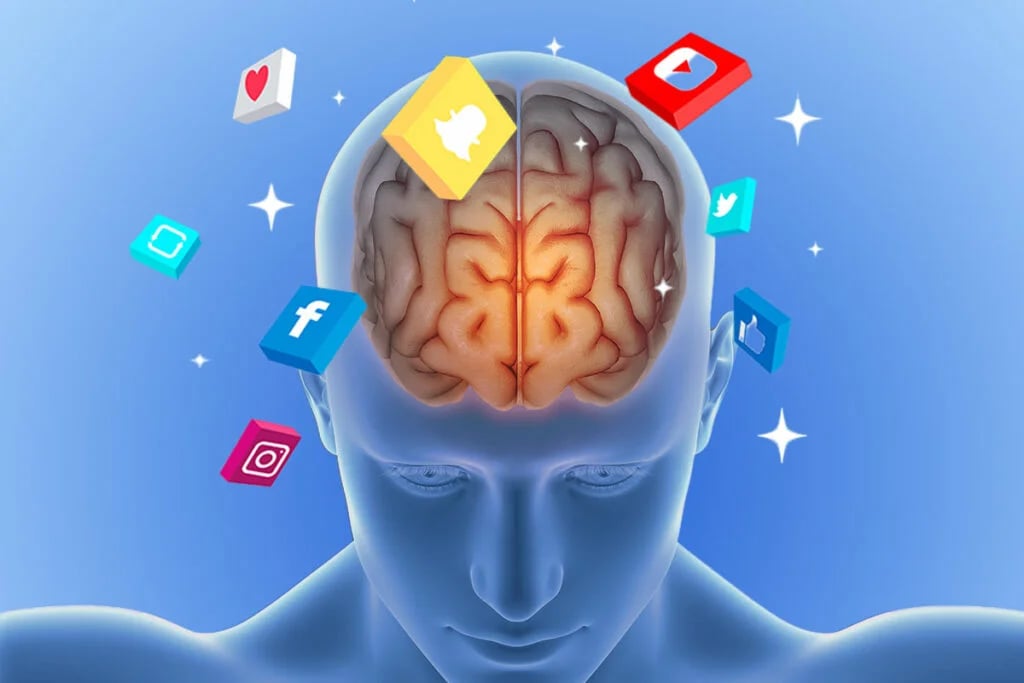
This is not metaphorical language. It is neurological.
Excessive screen exposure has also been linked to reduced focus, mental fatigue, and structural brain changes affecting decision-making and impulse control.
Still, the convergence of evidence is difficult to ignore. The broader discourse around social media and mental health has intensified as new research surfaces.
The Brain on Scroll
What makes smartphone-based social media uniquely potent is not just time spent, but how it is spent.
Unlike desktop browsing, phone use is constant, fragmented, and invasive. It interrupts meals, conversations, walks—moments once reserved for reflection or connection.
Researchers describe this as “cognitive fragmentation”: the brain never fully engages, never fully rests.
Even minor interruptions—checking a notification mid-conversation—reduce the emotional quality of experiences and diminish satisfaction in real-world interactions.
Over time, this creates a feedback loop: reduced satisfaction offline, increased reliance on digital stimulation, and further disengagement from reality. These patterns are now part of broader mental health crisis trends being tracked globally.
The Detox Experiment
If the problem is pervasive, the solution, paradoxically, is simple. Take the phone away.
In controlled studies, participants who reduced smartphone internet use for just two weeks experienced measurable improvements in attention, emotional regulation, and psychological well-being—adding to growing evidence linking social media to mental health risks.

This is not fringe science. It is a controlled behavioral intervention with measurable neurological outcomes.
Withdrawal Is Real
The detox, however, is not painless.
Participants report symptoms that mirror withdrawal: irritability, restlessness, anxiety, boredom.
Nearly half of users now say they feel dependent on their phones, checking devices dozens—sometimes hundreds—of times daily.
When the stimulus is removed, the brain reacts. But unlike substance addiction, the withdrawal curve is relatively short. Within days, users report improved mood, better sleep, and sharper focus.
The Cultural Shift
What was once a niche wellness trend is rapidly entering the mainstream.
Universities, policymakers, and even some technology insiders are now grappling with the implications of social media addiction engineered by Big Tech, pushing for reforms and safeguards.
Meanwhile, public awareness is rising, driven by lawsuits, investigative reporting, and a growing recognition that the problem is systemic—not individual.
Not All Screen Time Is Equal
It would be simplistic to frame all digital engagement as harmful.

The issue is not technology itself, but design, intent, and behavioral patterns.
The Limits of the Detox Narrative
Despite growing enthusiasm, experts caution against oversimplification. There remains a debate over social media addiction claims, with some arguing that not all heavy use qualifies as clinical addiction.
This skepticism is warranted. Social media is one factor among many shaping mental health outcomes.
But reducing exposure to high-frequency, low-value digital stimuli consistently shows measurable benefits.
The Quiet Rewiring
What makes the social media detox compelling is not its novelty, but its reversibility.
Turn off notifications. Limit app access. Create device-free spaces.
These are not grand solutions. They are behavioral recalibrations.
Yet their impact is disproportionate. Users report rediscovering attention, presence, and emotional depth—states that have become increasingly rare.
The Bottom Line
The evidence is still evolving. The debates are far from settled.
But one conclusion is increasingly difficult to dismiss: social media is not neutral. It shapes cognition, behavior, and emotional life in profound ways.
And stepping away—even briefly—may be one of the most effective interventions available today.
Not because it removes technology. But because it restores the mind.
Related Posts