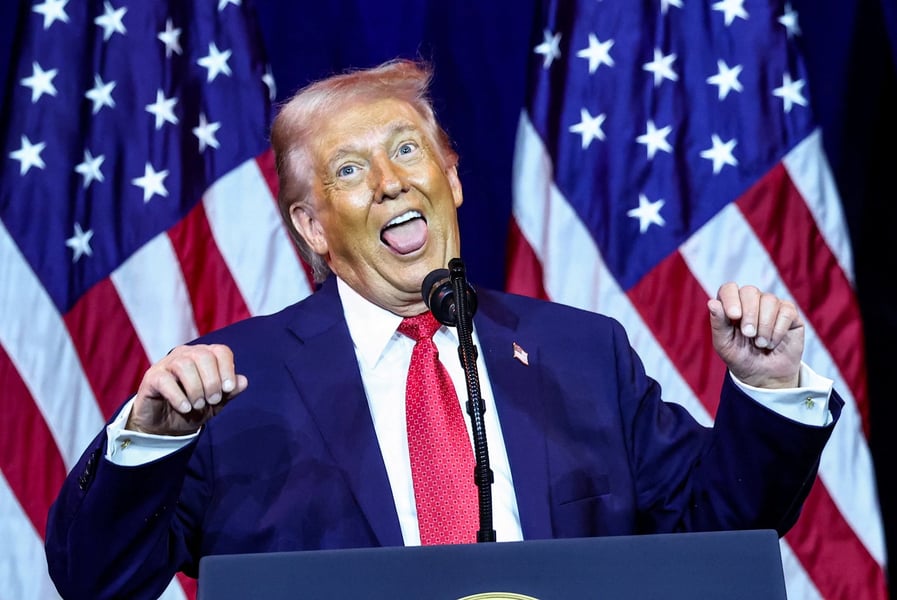

WASHINGTON — US President Trump remarked on Thursday that the modern world had sadly become “somewhat of a casino” in an Oval Office repudiation of the online betting culture, a sentiment delivered hours after his administration’s own Justice Department charged a special forces soldier with using classified intelligence to illegally profit from a covert operation waged because of Trump’s own orders.
The accusations laid bare an unsettling new reality for the White House: the explosion of real-money prediction markets, where the public can wager on everything from Federal Reserve rate decisions to the fate of foreign dictators, has created an unprecedented national security vulnerability.
“The whole world, unfortunately, has become somewhat of a casino. And you look at what’s going on all over the world and Europe, and every place they’re doing these betting things,” Trump told reporters inside the Oval Office. “I was never much in favor of it. I don’t like it conceptually, but it is what it is now.”
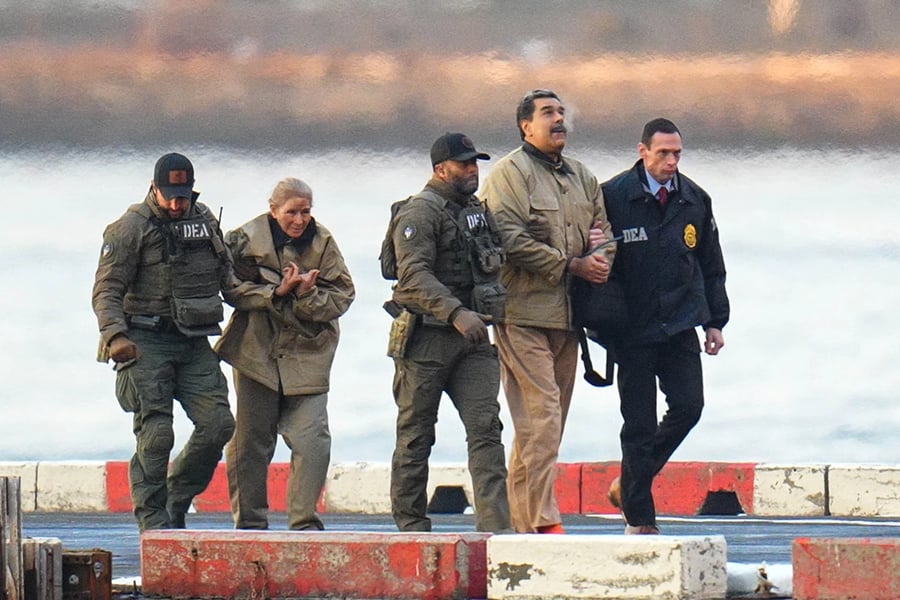
Master Sergeant Gannon Ken Van Dyke, a decorated Green Beret who helped plan the January raid to capture Venezuelan President Nicolás Maduro, stands accused of the most serious crime to emerge from the betting boom. According to an indictment unsealed on Thursday by federal prosecutors in Manhattan, Van Dyke allegedly misappropriated classified information about “Operation Absolute Resolve” to purchase event contracts on the platform Polymarket.“ The soldier wagered approximately $33,934 on whether Maduro would remain in power, prosecutors allege, and when the strongman was captured on January 3, Van Dyke profited more than $400,000.
“That’s like Pete Rose betting on his own team. Now, if he bet against his team, that would be no good. But he bet on his own team,” Trump said, before adding, “I’ll look into it.”
The reaction distressed congressional watchdogs, especially as experts have repeatedly flagged suspicious activity on the platforms. In one case last month, a trader won 93 percent of their wagers — an extremely unlikely success rate — and netted nearly $1 million by betting on outcomes of the war in Iran. Nick Vaiman, CEO of the analytics company Bubblemaps, called it “strong signaling of insider activity.”
The White House has acknowledged the severity of the problem. In late March, the White House Management Office issued a formal memo to all staff warning that using government information to profit from prediction markets is illegal. It specifically mentioned Kalshi and Polymarket, the dominant US platforms.
Nevertheless, the president’s family has emerged as a major financial beneficiary of the industry he now says he dislikes. The Associated Press reported on Thursday that Donald Trump Jr., the president’s eldest son and the sole trustee of his father’s revocable trust, holds a stake in Polymarket and serves as a strategic adviser to Kalshi, its chief rival. According to the research firm Pitchmarket, Polymarket’s value has increased nearly tenfold — to $9.6 billion — in the past eight months, following an investment from a venture capital fund where Trump Jr. is a partner.
Trump Jr. has defended his roles, stating through a spokesperson that he does not trade on prediction markets and does not lobby federal officials on behalf of either company. But ethics experts have expressed persistent concern over the appearance of a conflict, particularly as the administration’s top financial regulator pursues a sweeping deregulation of the industry. Commodity Futures Trading Commission chairman Michael Selig, a Trump appointee, fielded sharp bipartisan criticism during a House Agriculture Committee hearing this month when pressed on the matter. When Representative Jim McGovern, a Massachusetts Democrat, asked Selig whether the Trump family “has a financial stake in how these markets are regulated,” Selig sidestepped the question, telling the congressman he would not play “speculation games.”
McGovern did not relent. “It’s the definition of corruption,” he said. “And I think your actions to deregulate this market are helping them do it. And I think it is wrong.”
Even as Trump registered his distaste for prediction markets, his own business empire is preparing to enter the industry. Trump Media & Technology Group, which is majority owned by the president through a revocable trust, announced last October that it would launch “Truth Predict,” a new feature on the Truth Social platform that will allow users to buy and sell contracts tied to political elections, interest rate changes, commodity prices and economic indicators. The platform, developed in partnership with Crypto dot com, is set to debut “in the near future.”

Whether the markets will face tougher oversight remains uncertain. When pressed by Representative Andrea Salinas, an Oregon Democrat, on the number of open investigations involving prediction markets, Selig declined to give a precise figure but acknowledged that the CFTC has “hundreds or thousands” of active inquiries. He promised that the agency has a “zero tolerance policy” for insider trading, and declared: “We will find you, and the full force of the law will come to bear.”
At the same time, the agency has moved under Selig’s leadership to expand the industry’s legal standing. In July, the CFTC dropped a Biden-era investigation into whether Polymarket was operating as an unregistered derivatives exchange. Selig has also sued several states that have attempted to block prediction markets under anti-gambling statutes, arguing that event contracts are financial markets and do not constitute gambling.
For now, Master Sergeant Van Dyke awaits trial in federal custody. He has been charged with one count of wire fraud, one count of an unlawful monetary transaction, and three counts of violating the Commodity Exchange Act. If convicted on all counts, he faces a maximum sentence of 50 years in prison. The soldier’s case, and the broader debate it has ignited, have done nothing to curb the enthusiasm of traders, who have placed more than 413 million bets on the Iran war alone over a single tumultuous four-day stretch this month, risking more than $100 million.
As the president told reporters on Thursday, summing up a contradiction nobody in his administration appears eager to resolve: “It is what it is.”